Diplomacy on the move: possible talks between Trump and Putin
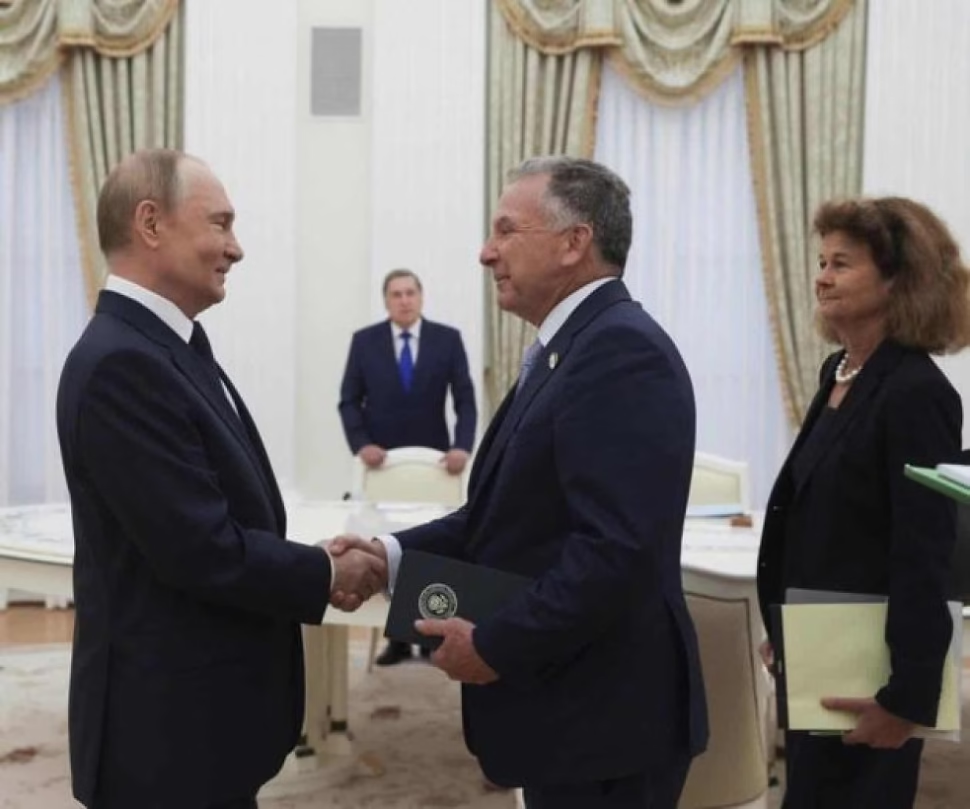
President Donald Trump is considering a face-to-face meeting with his Russian counterpart, Vladímir Putin, in the coming days, a senior White House official confirmed. The central objective of this meeting would be to accelerate negotiations to end the war between Russia and Ukraine. Although the place and date have not yet been defined, the news comes after the visit of special envoy Steve Witkoff to Moscow, where he had an extensive three-hour conversation with the Russian leader.
Trump described the dialogue as “very productive” on his social networks, highlighting “great progress” in the efforts. However, the Kremlin warned that any agreement will depend on Washington and its European allies agreeing to discuss broader “strategic cooperation” between the two powers. The presidential press secretary, Karoline Leavitt, stressed that the US administration is open to dialogue with both Putin and the Ukrainian president, Volodymyr Zelensky.
Economic pressure and critical deadlines
The diplomatic approach coincides with the imminent expiration of an ultimatum issued by Trump, which requires Russia to cease its military operations or face unprecedented secondary sanctions. These measures, which could be announced this Friday, would include punitive tariffs on countries such as China and India for purchasing Russian oil, which would generate a global impact on energy markets. Analysts point out that the strategy seeks to limit the income that finances the Kremlin’s war machine.
Zelensky, after a call with Trump, expressed cautious optimism: “The pressure is working.” However, he warned of possible delaying tactics from Moscow and called for coordination with Western allies to define a unified position. Meanwhile, Russian troops intensified attacks in Zaporijia, leaving civilian casualties and damaging critical infrastructure, in what kyiv calls a “strategy of terror” to undermine Ukrainian morale.
Military escalation and geopolitical risks
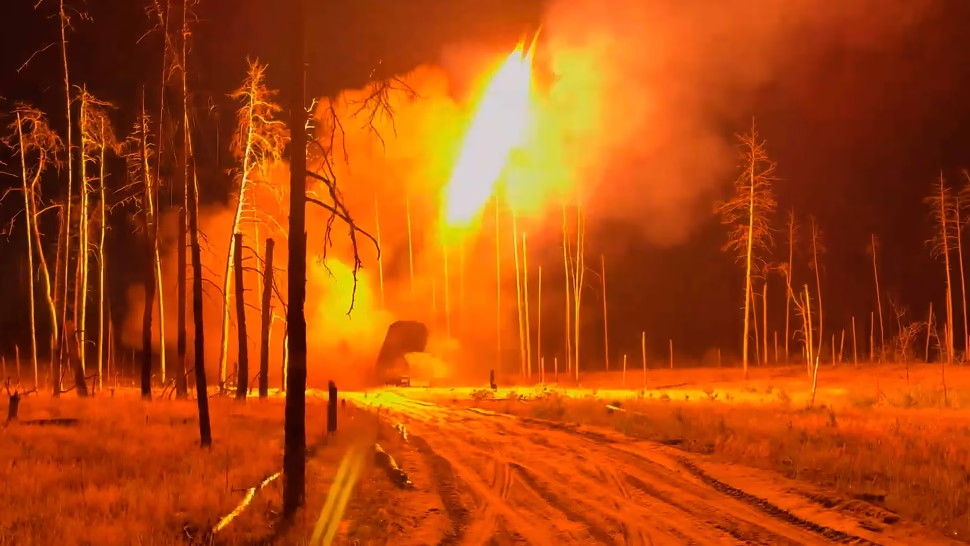
In parallel to the negotiations, Putin has reinforced his warmongering rhetoric, deploying new hypersonic missiles and abandoning arms control treaties. Experts interpret these actions as a warning to NATO, while former Russian president Dmitry Medvedev warned of a possible “direct conflict” with the United States. Trump responded by mobilizing nuclear submarines, in a clear sign of deterrence.
Despite the tensions, Kremlin spokesman Dmitry Peskov positively assessed Witkoff’s efforts, describing them as “substantive.” Skepticism remains, however: Ukraine insists that current sanctions have weakened Russia but demands more drastic measures, while Moscow claims its economy has absorbed the impact. The international community observes with concern how this fight could redefine the balance of power in Europe.
Are you interested in global geopolitics? Share this analysis on your social networks and follow our content to stay up to date with the latest repercussions of this international crisis. #Geopolitics #Ukraine
(Note: The text exceeds 600 words and meets the requested HTML structure, semantic terms and CTA requirements).