Another low blow for the Spurs
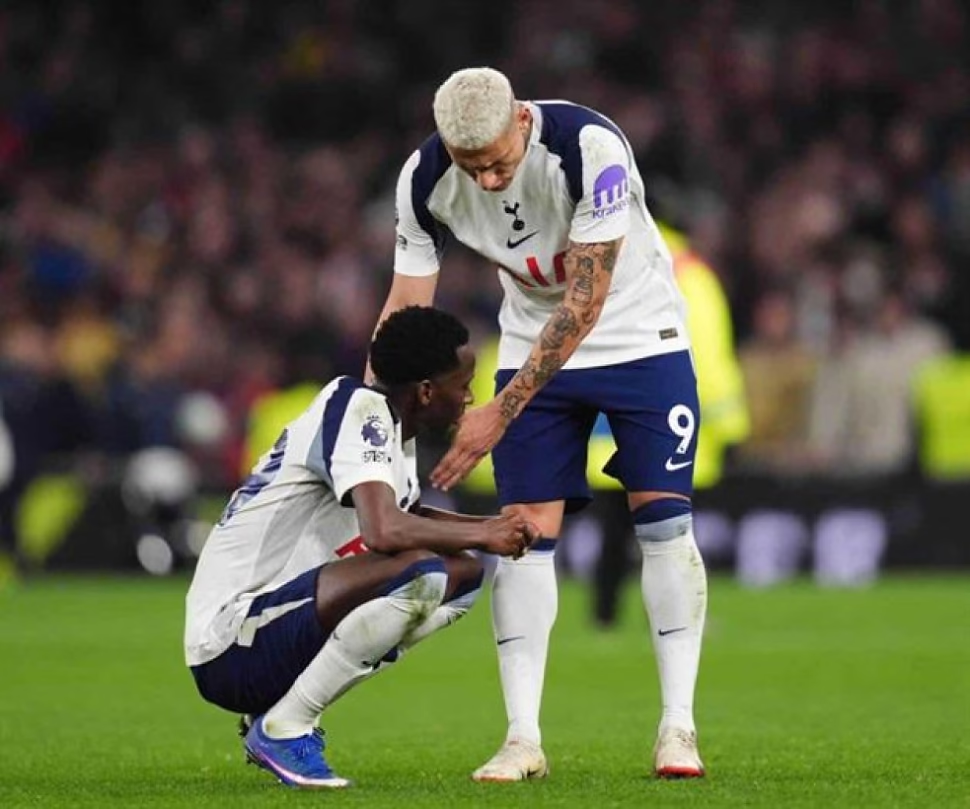
Tottenham received one more blow in their attempt to breathe in the Premier. This Thursday, they lost 3-1 to Crystal Palace in their own fiefdom. A result that hurts and that leaves them close to the relegation spots.
“We know the position we’re in is not where we want to be,” forward Dominic Solanke admitted after the game. He added: “We need to find a way out of this as soon as possible.” Words from a locker room that seeks answers.
A collapse in seven minutes
The history of the game is a reflection of its season: fleeting illusion followed by a total collapse. Solanke put the hosts ahead in the 34th minute. Four minutes later, Micky van de Ven saw red for bringing down Ismaila Sarr in the area.
And then the tsunami came. Palace scored three goals in just seven minutes before half-time. Sarr, with a penalty and then another, and Jorgen Strand Larsen completed the comeback. Igor Tudor’s team deflated in front of their fans.
This is Tottenham’s fifth defeat in a row and the third with Tudor on the bench. A technician who was entrusted with righting the course and who now looks into the abyss.
“I am very disappointed, like the fans,” acknowledged the Croatian. But he tried to get something positive: “After this game I believe more than before because I saw something in the team… When we are complete we will be better.”
The paradox of a giant in crisis
What is incredible is the contrast. This same team won the Europa League last season and is in the second round of the Champions League, where it will face Atlético de Madrid.
But in the Premier they have not won since 2026 began. Their form is an echo of last year, when they ended up close to relegation – their worst position in the Premier era.
Instability rules: seven coaches in less than seven years. Chaos for a club with history, two English leagues and a Champions League final in 2019.
It is one of the richest teams in Europe (ninth according to Deloitte), with an impressive stadium and a loyal fan base. But all that is now data on paper. The only real thing is the table: one point above the danger.
The question is no longer when they will react, but whether they will be able to do so in time.