War redraws world oil routes
The war in the Middle East has changed everything. The global energy map is being rewritten in real time, and one of its key points is the Strait of Hormuz.
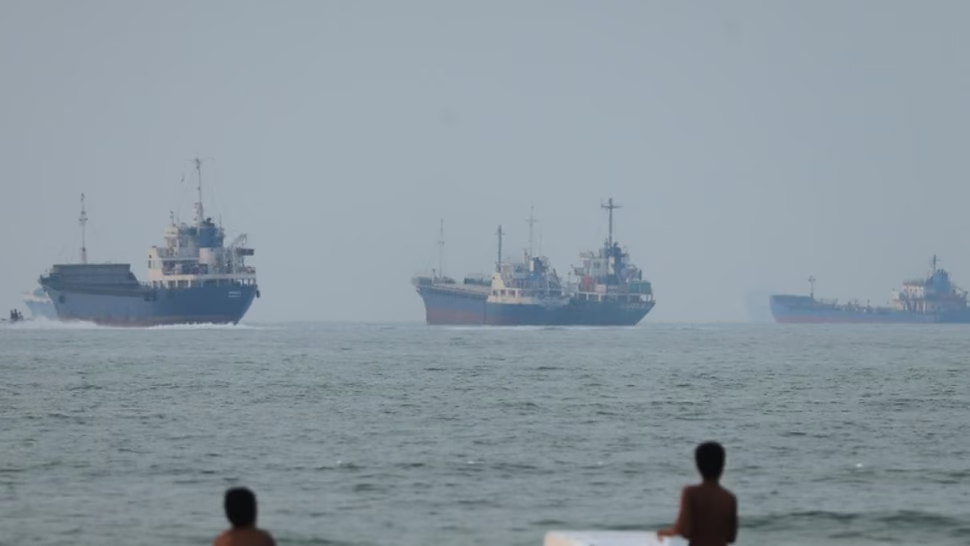
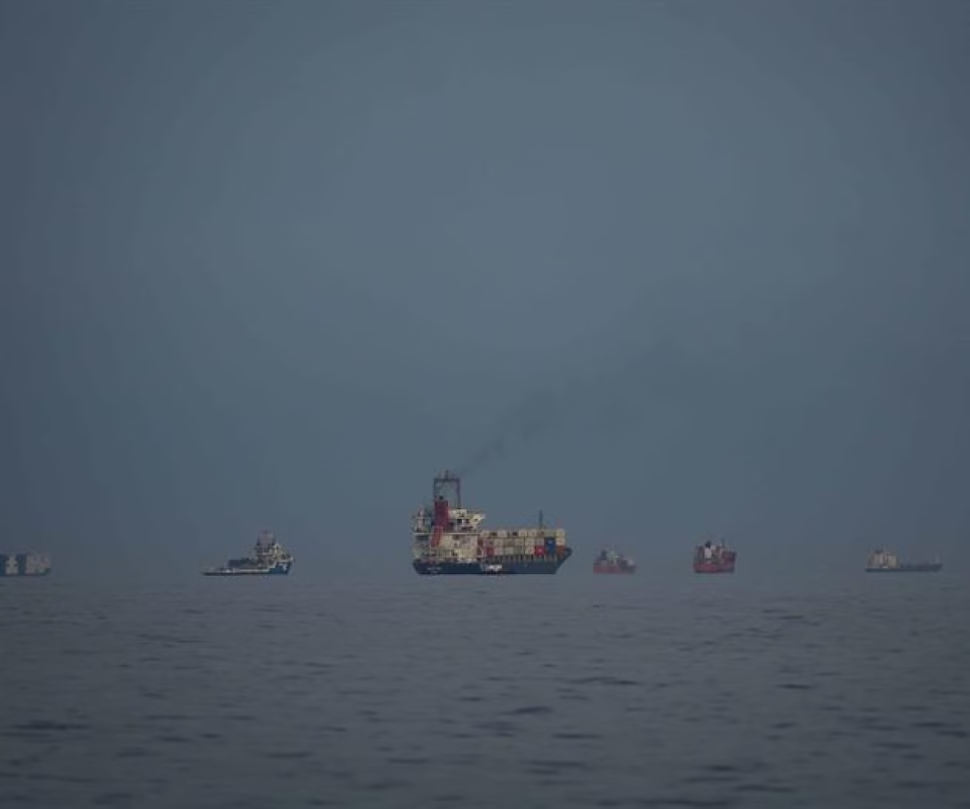
It’s not that the oil has stopped flowing. It does, but in a different way. According to data from specialized firms, some 90 vessels have managed to cross this vital artery since the conflict with Iran broke out.
But here’s the key: much of that traffic is now clandestine. It is a practice to evade sanctions and escape the watchful eye of the international community.
Many of these ships maintain links with Iran or with countries that have commercial relations with Tehran, such as China.
It’s a game of shadows on the high seas. Meanwhile, geopolitical tension only grows. Every ship that navigates these waters does so by calculating risks and protecting its interests at all costs.
What is fascinating—and what reveals the complexity of this region—are the diplomatic efforts behind the remaining traffic. Countries like India and Pakistan have had to move their pieces on the board to facilitate the passage of some ships.
This tells us two things. First, Hormuz remains as strategic as ever. Second, when official channels are closed, others… more opaque ones immediately open.
The flow continues because the global economy demands it. But its nature has mutated. From being an open and regulated route, it is now a high-risk corridor, veiled negotiations and furtive transits.
The question is not whether the oil will reach its destination. The real question is at what price—economic and political—and under what new rules of the game are we learning to live.