The ruling that made athletes millionaires turns 50 years old

An arbitration ruling forever changed the power of athletes, transforming the business of professional sports on a global level.

The ruling that redefined the game (and bank accounts)

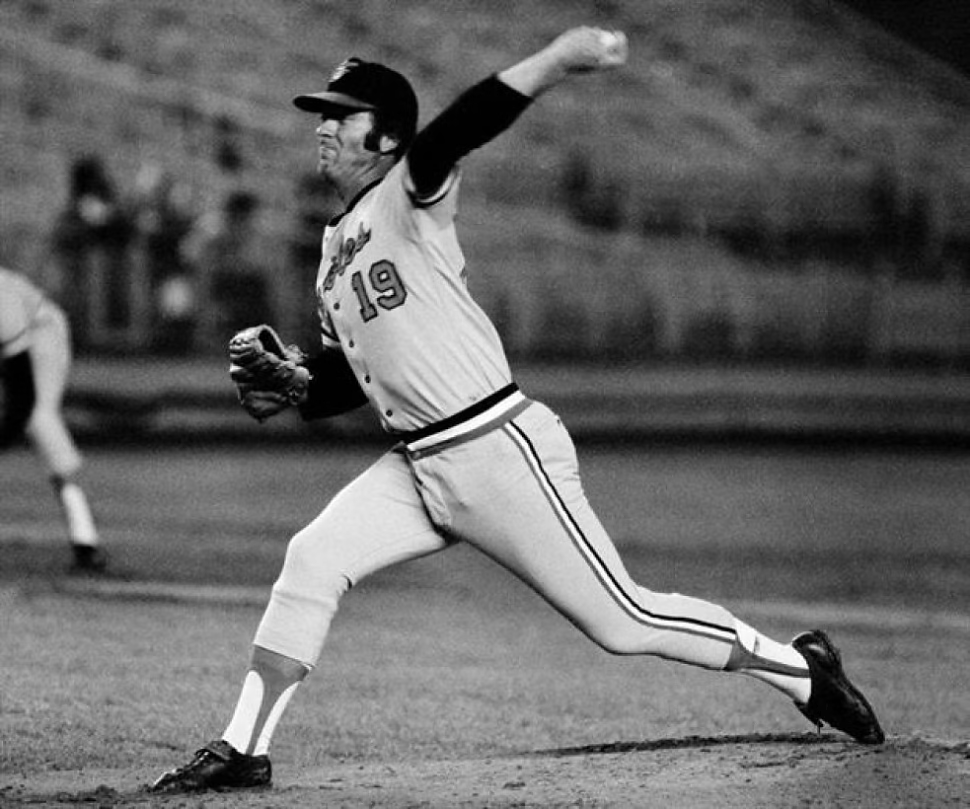
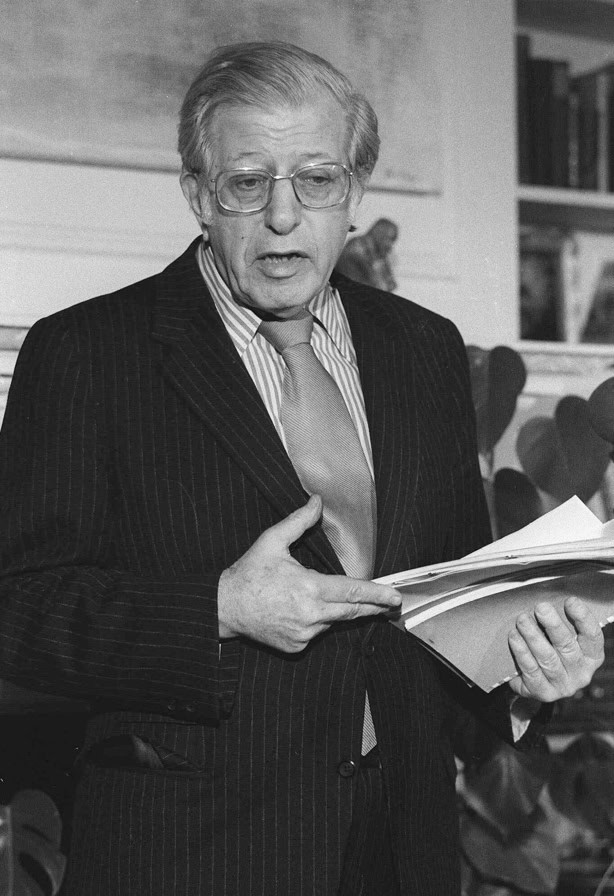
Five decades ago, American sports were rocked by a revolution led by a guy who couldn’t even hold a bat. No, he was not an athletic phenomenon, but a lawyer involved in labor disputes. His feat: putting to rest the reserve clause of the Major Leagues, that anachronism that tied players to their teams as if they were servants of the 19th century. The thing is that no one, absolutely no one, could foresee that the 65 pages of arbitrator Peter Seitz’s award – issued on December 23, 1975 – were going to unleash a financial tsunami that would turn thousands of athletes into multimillionaires. Seitz, with a sarcasm worthy of memes, even compared the team owners to “the French barons of the 12th century.” And he was right.

As former pitcher David Cone said, “the real flood opened after that.” Players across sports opened their eyes: “Hey, this is what real free agency looks like.” While the doomsayers of the apocalypse shouted that this would ruin the sport, the opposite happened: the game improved, a lot. The proof is in the numbers, which are enough to make you cry (with envy). The average salary in baseball was $44,676 in 1975. Today it is around 5 million. Yes, you read that right: a 112-fold increase. To give you an idea, adjusting for inflation, that average salary in the 1970s would be about $260,909 today. Basically, what a minor league player now makes. The Dominican Juan Soto, with his record contract of 765 million with the Mets, is the maximum symbol of this earthquake.

RelatedMajor League Baseball will implement robot referees in 2026

The domino that knocked down all sports

The effect was a global paradigm shift. Seitz’s decision did not remain on the diamond. Immediately afterwards, free agency infected the NFL, the NBA, the NHL and even European soccer. “There were synergies,” admitted Tony Clark, the head of the players’ union. In other words, it was the perfect butterfly effect: an arbitrator in the United States moved a chip and the world sports board was completely reconfigured.

The road was not easy. Curt Flood had already lost a lawsuit in 1972. But the final spark came on a technicality: Catfish Hunter was released because the eccentric owner of the Oakland Athletics, Charlie Finley, forgot to pay $50,000 into a fund. Hunter ended up signing with the Yankees for 3.2 million, a figure that at the time sounded like science fiction. The players saw that and thought: “Wait, my talent is worth a million too.”

The union’s strategy, led by the brilliant Marvin Miller, was to look for a test case to challenge the indefinite renewal of contracts. Those chosen were pitchers Andy Messersmith and Dave McNally, who played the 1975 season under renewal and then argued that, after that extra year, they should be free. After a marathon hearing, Seitz agreed with them. The owners, predictably, were furious. They fired the referee that afternoon and promised to take him to court. Their attitude, according to Miller, was one of total immobility: “We are not going to change a single thing about the reservation system, we like it the way it is.” But they lost. Over and over again in the courts.

The ruling was not a moral issue, Seitz insisted in his writing. It was not about emancipating serfs. It simply interpreted the rules that the parties themselves had signed. And that interpretation, apparently technical, was what freed capital. By July 1976, there was a new agreement: the players would earn the right to free agency after six seasons. Legends like Reggie Jackson and Rollie Fingers were among the first to collect the bill for freedom. The rest, as they say, is history (and history of lots and lots of money).

Can you imagine modern sports without free agents or stratospheric contracts? Share this story of the day athletes gained their power and explore more content about the moments that changed the game forever on our social networks.
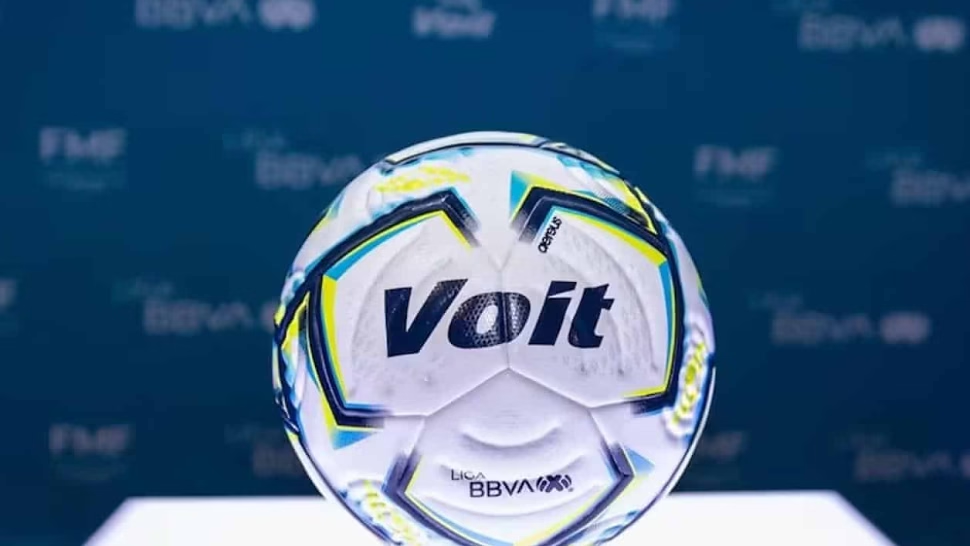

Liga MX and Voit present the official Aereus 40 Pro III ball

Liga MX and Voit renew alliance with new ball and uniforms for the 2026-27 season.

Liga MX and Voit have launched the Aereus 40 Pro III, the ball that will be used in the 2026-27 Mexican soccer season. The event was headed by Francisco Iturbide, general director of Operations of Liga MX, and José Carlos Elizondo, general director of Voit, within the framework of an alliance that has been celebrating four decades.

News about the ball and uniforms

In addition to the ball, the uniforms that will be used by referees for the next football year were presented. Voit will also be the sponsor of the ball for the Liga MX Femenil and will provide clothing to the Liga MX all-star team that will face the United States in the All-Star Game.

“Forty years of history, four decades of playing together on the fields, of shouting goals, promoting matches and witnessing the path taken in the growth of the Liga MX. We know that the great protagonist of our sport is the goal and, during the 25-26 season, an average of 2.9 goals per game was recorded, with 458 scores in the Clausura 2026,” declared Iturbide.

This agreement reinforces Voit’s commitment to the development of football in Mexico. Both the ball and the referee uniforms will be of high quality for next season.

Continue reading

Spain defeats Belgium and advances to the World Cup semi-finals

The Spanish team will face France after a key 2-1 victory.

Victory that brings the title closer

Spain defeated Belgium 2-1 in a high-tension match. The result grants them a place in the World Cup semi-finals, where they will face France.

The team showed a solid performance during the 90 minutes. The Belgian defense tried to contain the Spanish attack, but the Iberian team found the spaces to score two goals.

The match was held in an atmosphere of maximum demand. Both teams arrived with firm aspirations, but Spain knew how to impose its style of play.

With this victory, the Spanish team is positioned among the candidates for the championship. The fans already have high expectations for the team ahead of the duel against France.

The next phase will be a major challenge. France arrives with a quality squad, but Spain trusts in its system to continue advancing in the tournament.

Continue reading

Javier Aguirre leaves Tricolor; Offers from Korea and Arabia sound

Aguirre leaves the Tricolor after the second round; Márquez takes command towards 2030.

End of cycle on the national bench

Javier Aguirre concluded his third stage at the head of the Mexican National Team. After reaching the round of 16 in the World Cup, the “Vasco” confirmed his departure at a press conference and handed the project to Rafael Márquez, who will lead the way to the 2030 World Cup.

Aguirre announced that he plans a break and seriously evaluates retirement, closing more than three decades as technical director. However, that decision is not sealed. The possibility of continuing depends on the interest of other national teams that have already begun approaches.

Possible destinations on the horizon

According to Fox Sports, the South Korean Football Federation has Aguirre on its radar. The Asian team, eliminated in the group stage after losing to Mexico, is looking for a coach for its new cycle. In the next few days there could be a formal contact. In addition, Saudi Arabia would also have shown interest in the services of the Mexican strategist.

Aguirre will analyze his future with his family. The accumulated experience and international respect make him an attractive candidate for projects abroad. For now, his legacy with the Tricolor is marked by the passage to the second round and the orderly transition to Rafael Márquez.

Continue reading