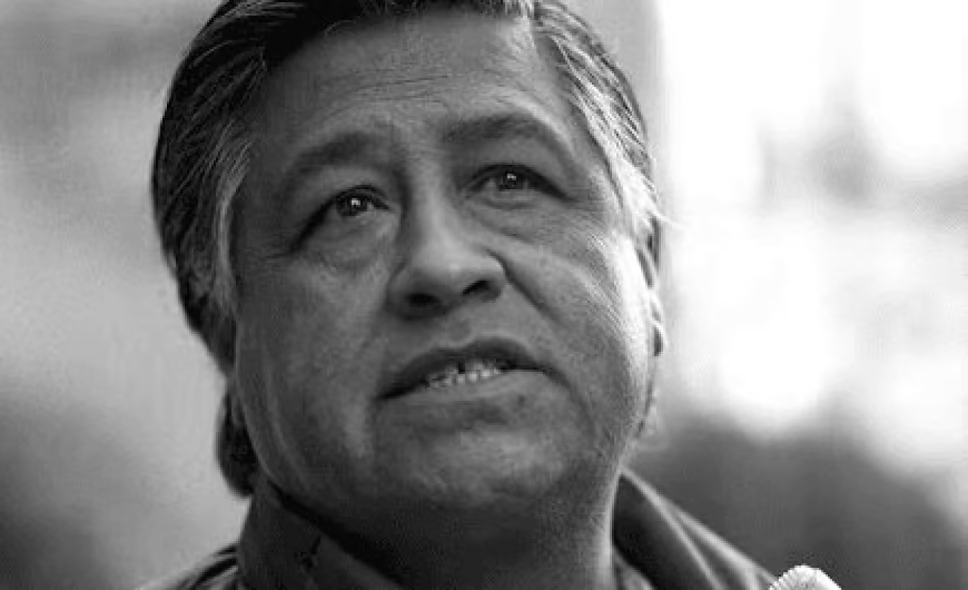
The hero with feet of clay
César Chávez, the iconic face of the fight for day laborers’ rights in the United States, now has a shadow that no one mentioned in the history books. The same hand that organized historic strikes and boycotts is being blamed for something much darker.
The New York Times revealed in an investigation that he has been accused by several women, including his fellow fighter, Dolores Huerta, of sexual abuse.
There’s the detail. The Times investigation does not speak of rumors, but of concrete accusations. And they don’t come from strangers, but from women within their own circle. How many monuments do we have to erect before we ask ourselves what is behind the bronze?
The most revealing thing: the victims never reported it. His collaborators hid the abuses for decades. That institutional silence smells rotten from Arizona to Washington.
While receiving the posthumous Presidential Medal of Freedom in 1994, did anyone wonder why so many women’s voices were silent? Collective memory is selective: we remember the union organizer but forget to ask who he stepped on to reach such a height.
Until 2026 it was the undisputed benchmark. Now his legacy has deep cracks. The same power structures he faced – agricultural businessmen, indifferent authorities – find an uncomfortable parallel in his own behavior.
Does this change its impact on labor rights? No. Negotiated contracts are still real. But it does change how we look at our heroes. It reminds us that no one is monolithic, that even those who fight for justice can be unjust where no one is looking.
The next time you see your image on a banner or mural, ask: Who is missing from that portrait? Silenced voices always tell the other half of the story.