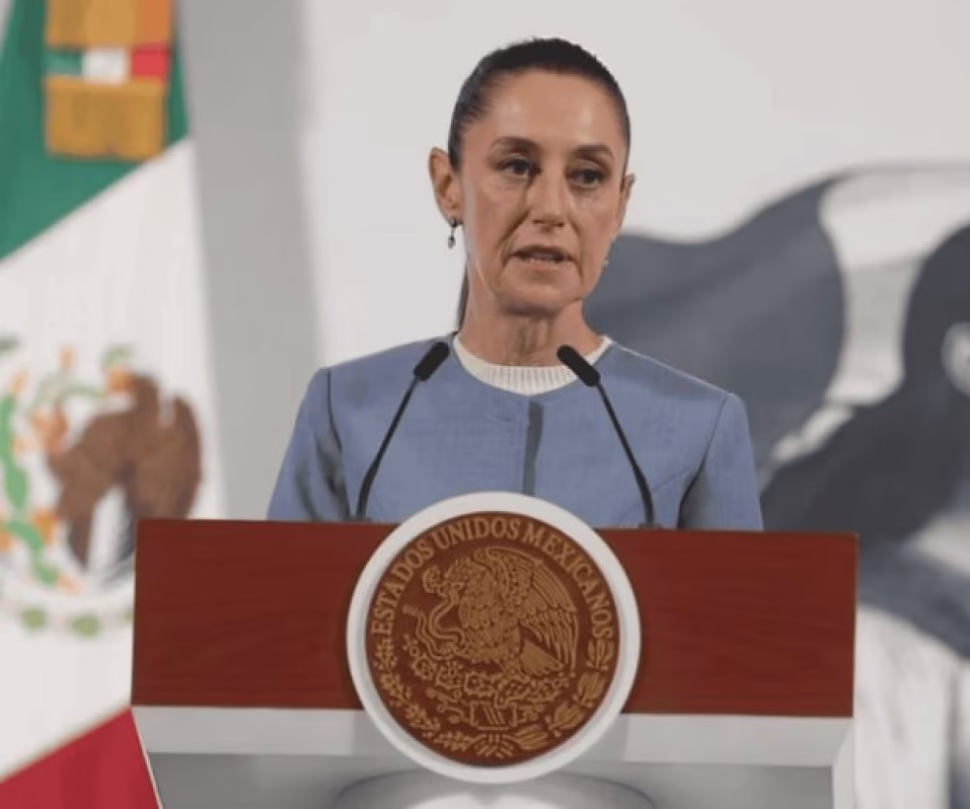
Sheinbaum reports 96% acquisition of oncology drugs

The federal administration ensures progress in supply, but challenges persist in three critical drugs.

Current situation of the supply of oncological drugs in Mexico

In response to the mobilizations organized by oncology patients and their families due to the shortage of essential drugs, President Claudia Sheinbaum reported during her morning conference that the federal government has managed to acquire 96% of the required oncology medications. However, it acknowledged difficulties in the supply of three specific drugs, attributing the problem to limitations in the production chain and not to failures in the bidding processes.

Details on distribution and strategic reserves

Sheinbaum emphasized the existence of a strategic reserve of specialized medications, designed to expedite delivery to patients in critical situations. “We have implemented an additional distribution scheme to ensure that supplies reach even the most remote communities,” he declared. This system, currently in the implementation phase, seeks to correct geographic disparities in access to treatments.

RelatedSheinbaum addresses the shortage of supplies in Pemex hospitals

According to data provided by the administration, the centralized purchasing scheme has allowed resources to be optimized, although bottlenecks persist in highly specialized drugs. The president stressed that transparency in management has been a priority: “Since the beginning of this administration, we have reported progress and challenges clearly.”

Analysis of pending challenges

Despite progress, the lack of three key medications reveals structural vulnerabilities. Experts in pharmaceutical logistics point out that these cases could be related to dependence on single suppliers or international regulations. A 2024 report from the Pan American Health Organization (PAHO) warned of risks in global supply chains for cancer therapies, especially in countries with fragmented health systems.

The creation of a permanent supply team, mentioned by Sheinbaum, responds to this problem. However, civil organizations such as Con Ganas de Vivir demand specific deadlines to normalize supply and independent audits to validate the official figures.

Impact on patients and next steps

While the government ensures that 96% of purchases cover primary demand, affected families report interruptions in treatments. Data from public hospitals show that 78% of complaints about shortages correspond to the three drugs not purchased, all of them used in hematological and metastatic cancers.

The new distribution model, which will include traceability technology, aims to reduce these cases. “We are prioritizing municipalities with less medical coverage,” explained an official from the Ministry of Health on condition of anonymity.

Are you interested in learning more about public health policies? Share this analysis on your social networks and follow our coverage on strategies to strengthen the national medical system. #HealthForAll
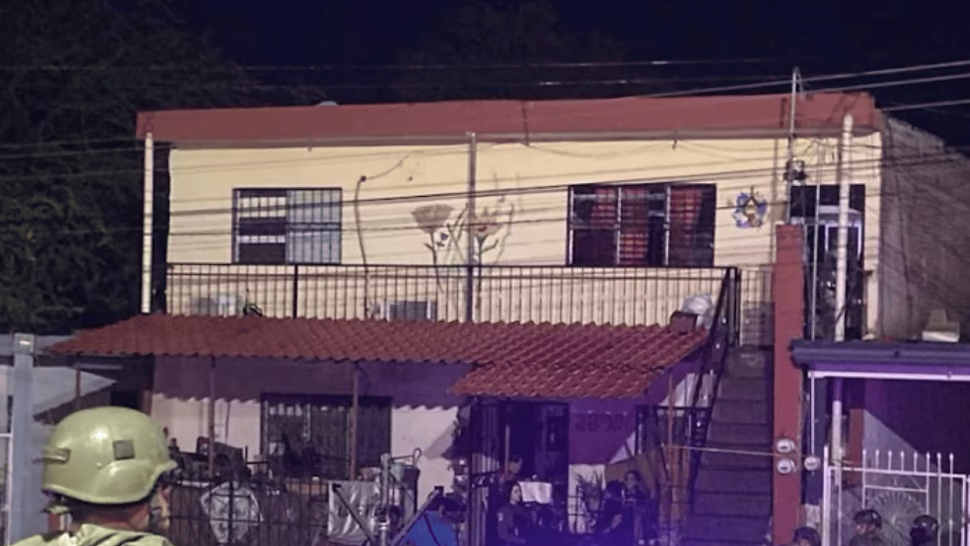
Culiacán begins July with four violent homicides

Four people lost their lives in different armed attacks in Culiacán on the first day of July.

Culiacán: four homicides on the first day of July

The capital of Sinaloa started the seventh month of the year with four homicides in different parts of the city. In all cases, the victims were attacked with a firearm.

The first incident occurred in a taqueria in the Barrancos sector, to the southeast. Jorge “N”, 44, was having dinner at the restaurant when he was shot and died at the scene. A waiter was injured by shrapnel in the leg and was treated by Red Cross paramedics.

Shortly after, in an apartment in the Emiliano Zapata neighborhood, Jesús “N”, 23 years old, was also killed by multiple gunshots. The attackers fled and have not been located.

In front of a secondary school in the Villa Bonita subdivision, authorities found the body of a young man wrapped in plastic and with bullet holes. His identity is still unknown.

The fourth case was recorded on the side of the Culiacán-Eldorado highway, in the Costa Rican administration. Relatives identified the victim as Raúl Francisco “N”, 18 years old, a resident of the area.

The events have generated concern among residents, who demand greater security and concrete actions from the authorities to stop violence in the region.

Continue reading

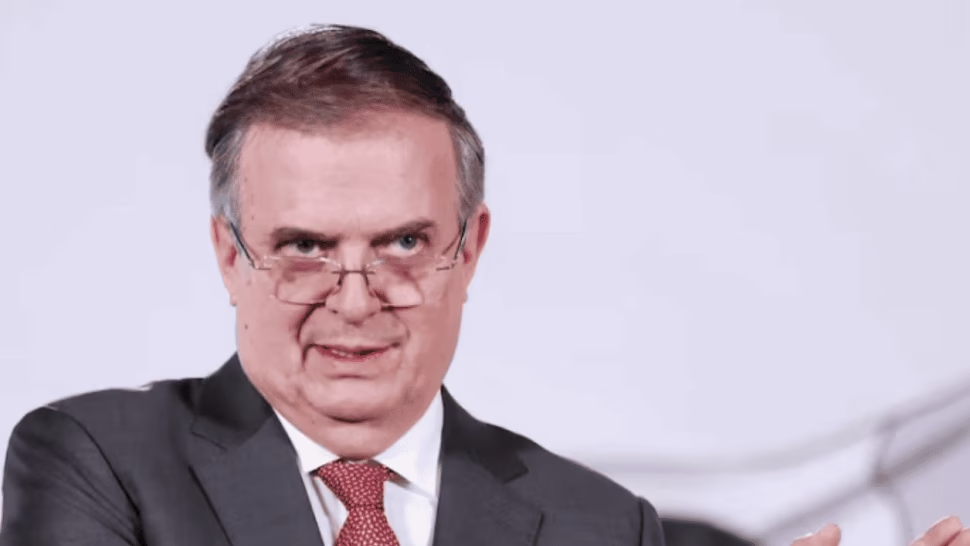
Ebrard: Mexico must address claims from the US and Canada regarding TMEC

Mexico must address complaints from the US and Canada about the USMCA, says Ebrard.

Concerns at the trilateral table

Marcelo Ebrard, head of the Ministry of Economy, stated that Mexico must respond to the concerns of the United States and Canada regarding the USMCA. The country still depends on others in sectors such as pharmaceuticals, electronics and artificial intelligence.

“The Treaty has probably been the most successful in the world, but they have legitimate concerns. If we want it to remain in force and expand, we must address them and look for spaces for cooperation,” he declared during the morning conference on July 2.

Dialogue to maintain certainty

Ebrard recalled that the three countries agreed to maintain the USMCA until 2036. He explained that the dialogue has been built with arguments, information and patience, as President Claudia Sheinbaum has instructed. “One of our main objectives was for the United States not to withdraw from the Treaty,” he said.

The secretary mentioned that Donald Trump has proposed modifying or canceling the agreement, so annual reviews will be key. “My task is for these revisions to be successful and not affect the content of the Treaty,” he said.

Ebrard highlighted the importance of the trilateral relationship: “Mexico is the United States’ main client. They have a strategic interest in our doing well. Reporting our progress on their concerns limits the scenario for the review.”

President Sheinbaum highlighted that the peso remained stable after the virtual meeting, trading at 17.54 per dollar. “There was no nervousness about the Mexican economy,” he said.

Continue reading

High demand for Olinia; Sheinbaum seeks partners to produce it

Sheinbaum reports high demand for Olinia; They are looking for private partners to manufacture the electric car.

Olinia moves towards production with mixed investment

President Claudia Sheinbaum confirmed that the Olinia electric vehicle, promoted by the federal government, arouses great interest among state governments and citizens. After passing the design phase, the project now enters the manufacturing stage.

Sheinbaum explained that the objective is a public-private alliance: not only the Mexican State, but also automotive companies with experience in distribution and manufacturing. “The objective is for there to be a mixed investment,” he stated.

“We have already passed the design phase and now we are in the production phase. The objective is that there is a mixed investment, that not only is a vehicle produced by the Mexican State, but that there is also investment from some other companies that already have the facility, for example, of having distribution agencies in different places and that already manufacture some vehicles.”

The president announced that a type of contest will be launched to select the right partner. In addition, necessary regulatory adjustments will be made for both Olinia and other mini electric vehicles. “And yes, there is a lot of demand. Not only from governments, but also from people who liked the vehicle,” he indicated.

The Olinia project seeks to offer a sustainable and accessible mobility option. The combination of public and private investment aims to accelerate its production and distribution in the country.

Continue reading