A diplomatic meeting within the framework of the 2026 World Cup draw
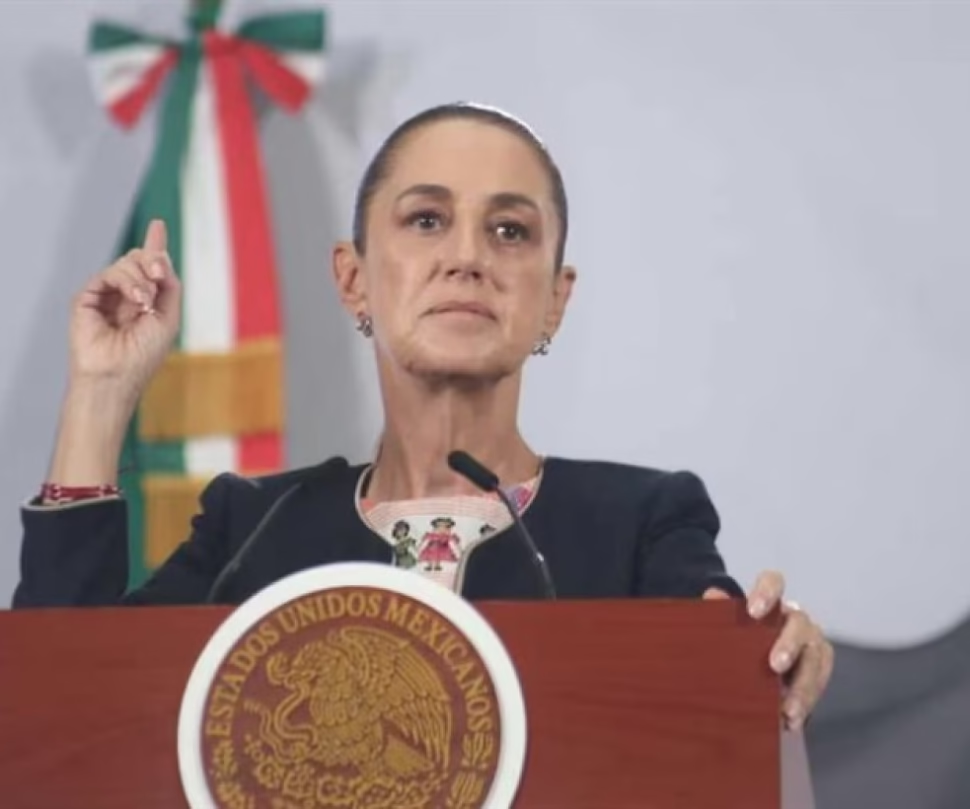
The Secretary of the Interior, Rosa Icela Rodríguez, confirmed that the president of Mexico, Claudia Sheinbaum, will hold a bilateral meeting with the president of the United States, Donald Trump, during her visit to Washington. This diplomatic act is part of the activities prior to the draw for the 2026 Soccer World Cup, an event co-organized by Mexico, the United States and Canada. According to the official explanation, the central objective of the dialogue will be to address specific issues on the shared international agenda and establish mechanisms for future collaboration between the three North American nations.
The head of domestic policy specified that the head of state’s meetings will be brief and will be held separately with each of her counterparts. In his statements, Rodríguez conveyed Sheinbaum’s expressed interest in “talking about the issues that concern them to see… how the three of us continue to work together.” This approach underlines a pragmatic and structured approach, aimed at the continuity of the trilateral relationship beyond the ceremonial context of the sporting event.
Extended agenda: migrant community and political commemoration
After the diplomatic commitments in the US capital, and before her return to Mexican territory, the president plans a significant meeting with fellow nationals residing in the American Union. This segment of its agenda reflects a social and human dimension of foreign policy. Secretary Rodríguez described this group as “migrant sisters and brothers” who emigrated in search of opportunities and who “contribute a lot to our nation,” calling them “heroes and heroines.” This gesture symbolizes official recognition of the diaspora and its potential link with cross-border public policies.
The president’s international tour concludes just before a highly relevant domestic political event. The day after her return, on Saturday, Claudia Sheinbaum will lead the commemoration of the seventh anniversary of what is called the Fourth Transformation in the Presidency of the Republic in the Zócalo of Mexico City. This chronological sequence—from a high-profile meeting on the global stage to a celebration of domestic political consolidation—illustrates the duality of the government’s agenda, balancing international commitments with the national political narrative and project.
Taken together, this series of activities constitutes a carefully orchestrated diplomatic exercise. The meeting with Trump, although brief, establishes a first direct contact in this new leadership configuration, essential to manage a complex and multifaceted binational relationship. At the same time, the interaction with the migrant community operates as a humanitarian counterweight and a reminder of the social ties that unite both countries. Finally, the immediate reintegration into internal political commemoration reinforces the connection between the government’s external projection and its support base and its programmatic identity at the local level.
Are you interested in understanding the impact of these diplomatic relations on the economy and society? Share this analysis on your social networks and explore more specialized content on foreign policy and international cooperation on our platform.