Sheinbaum guarantees exhaustive investigation in case of fiscal huachicol

The president assures that the investigation is progressing without distinction, while key evidence is collected to prosecute the case.

Comprehensive investigation against fuel smuggling

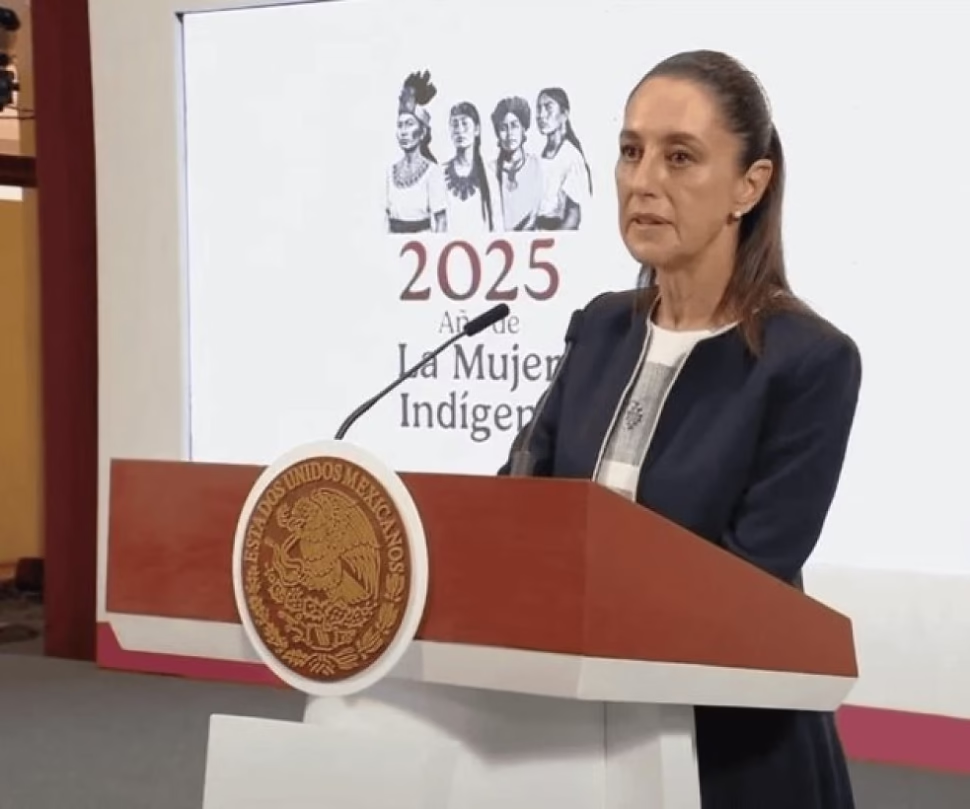
President Claudia Sheinbaum confirmed that the investigation into illegal hydrocarbon trafficking from the United States – called “fiscal huachicol” – extends without hierarchical exclusions. During his morning conference at the National Palace, he emphasized that the judicial process prioritizes the meticulous collection of evidence before making arrests. “The investigation covers all institutional and sectoral levels. Only when the evidence is consolidated will the progress be made public,” he declared.

Mechanisms of crime and complicities

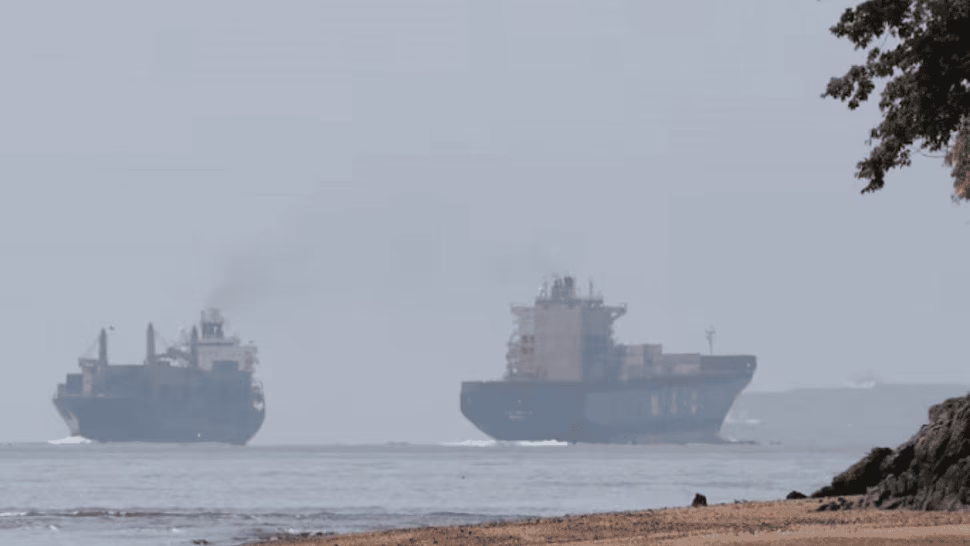
The tax evasion scheme involves sophisticated logistics: colluded boats, railway cars, clandestine pipelines and gas stations. According to official data, this black market operates through front companies that simulate legal activities, with the alleged participation of public officials and private actors. The president stressed that recent seizures—including fuel and financial documentation—have made it possible to trace transnational networks.

RelatedMorena calls for special commission against millionaire tax evasion

“Stopping a suspect requires a robust investigation portfolio,” Sheinbaum explained. “The authorities must guarantee that the evidence is irrefutable to present it before a judge. This rigor avoids subsequent impunity.” Analysts consulted agree that illicit fuel distorts local prices and deprives the treasury of billions in annual taxes.

Advances and challenges in criminal prosecution

The legal team of the Attorney General’s Office (FGR) is working to link those involved through financial tracing and protected testimonies. However, energy security experts warn about the adaptability of these organizations, which often fragment their operations in the face of government pressure.

The president recognized the complexity of the case: “This organized crime transcends borders. We require international cooperation, especially with US agencies, to dismantle monetary flows.” Data from the Ministry of Finance reveal that gasoline and diesel smuggling represents 12% of national consumption, with annual losses exceeding 30,000 million pesos.

What’s next? The next few weeks will be crucial to execute arrest warrants against the identified ringleaders. Meanwhile, the federal administration promises to strengthen surveillance in ports, customs and strategic pipelines.

Share this information to make visible the impact of the fiscal huachicol on the national economy. Explore more analysis on energy security on our portal.

El Niño will intensify and hit Mexico in 2026

Intensifying El Niño between July and September will bring heat waves, droughts and torrential rains globally.

The World Meteorological Organization (WMO) predicts a rapid evolution of the El Niño phenomenon towards a strong episode between July and September 2026. This will increase the probability of extreme events such as heat waves, droughts and intense rains in several regions of the world.

What implications does it have for Mexico?

The WMO monthly bulletin indicates that El Niño will continue to strengthen during the northern hemisphere autumn, extending its influence to many areas. In the equatorial Atlantic, temperatures will remain above average.

“We are already observing conditions typical of an El Niño episode, and they are expected to intensify until they become a strong episode,” warned Celeste Saulo, Secretary General of the WMO.

The National Oceanic and Atmospheric Administration (NOAA) explains that El Niño occurs when temperatures in the tropical Pacific rise more than normal. The name, used by Peruvian fishermen, arose because the warming of the sea coincided with Christmas, affecting fishing.

Experts foresee uneven but clear impacts for Mexico:

  • Increase in extreme rains in the central-north.
  • Increased risk of intense hurricanes in the Pacific.
  • Possible periods of drought in some regions.
  • High risks for agriculture, water and security.
  • Intensification of forest fires and effects on fishing.

The WMO insists that the international community must prepare for these events, as the probabilities of extreme events increase significantly in the coming months.

Continue reading

Sheinbaum congratulates Isaac del Toro for victory in the Tour de France

The Mexican won the second stage in his debut in the Tour.

President Claudia Sheinbaum celebrated the triumph of Mexican cyclist Isaac del Toro in the second stage of the Tour de France. Through her official account, the president wrote:

“Congratulations to Isaac del Toro for his victory in the second stage of the Tour de France.”

Victory on the hill of Montjuïc

Del Toro, 21, crossed the finish line first in Barcelona, beating his UAE Team Emirates teammate, Tadej Pogacar, who gave way to give him the win. The Slovenian Remco Evenepoel came third and the Dane Jonas Vingegaard, fourth, maintaining the yellow jersey. Mattias Skjelmose, also Danish, came within three seconds.

The Mexican participates for the first time in the Grande Boucle and his performance generated enthusiasm among national fans. The victory reinforces his projection in international cycling.

Sheinbaum highlighted the achievement at a key moment for Mexican sport, where cyclists gain visibility in high-level competitions.

Continue reading

World Cup piracy grows in the heat of 2026

World Cup fever triggers the sale of pirated items in CDMX.

The piracy boom at the 2026 World Cup

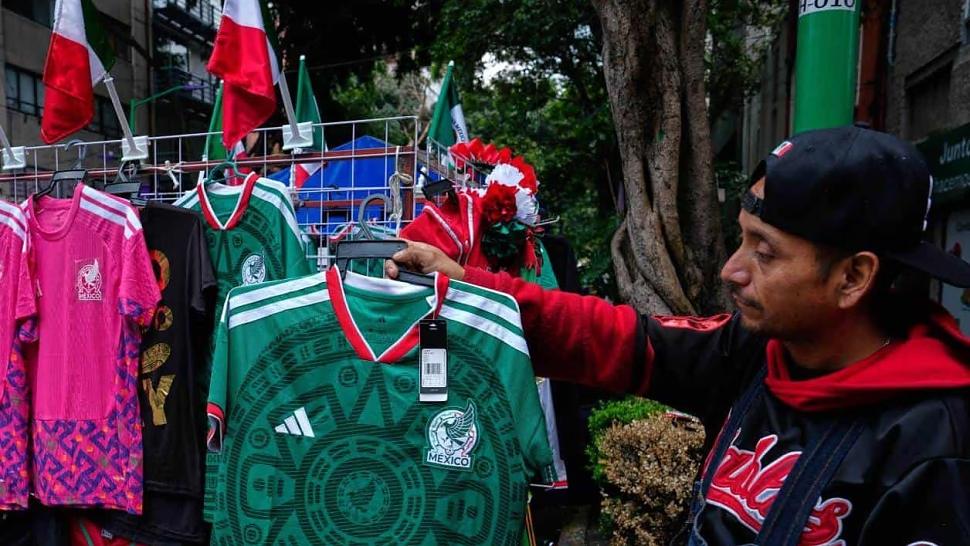
The 2026 World Cup fever has boosted the sale of pirated merchandise in Mexico City. Informal merchants offer t-shirts, trophies and mascots at prices well below the official ones. In the Historic Center and markets like La Lagunilla, a Mexican National Team shirt costs around 250 pesos, while an official jersey exceeds 2 thousand pesos.

Specialists point out that the phenomenon is intensified by impunity, corruption in customs and the growth of informal trade. The high cost of original items leads thousands of consumers to opt for unauthorized products, both in markets and on digital platforms.

Francisco Rivas, general director of the National Citizen Observatory, warns that piracy is a growing problem. He points out that, in addition to the lack of controls, organized crime has found a source of income in this market, even putting pressure on formal merchants through extortion.

“Piracy not only affects brands, but also fuels illegal networks,” said Rivas.

According to the report Mapping Global Trade in Fakes 2025 by the OECD and EUIPO, Mexico ranks seventh in the world as a buyer of counterfeit merchandise. This situation is strongly reflected during events with high commercial impact such as the World Cup.

Given this, sports product companies have reinforced their promotional strategies and digital campaigns to encourage the purchase of official merchandise. The federal government has made seizures and promoted reforms to protect intellectual property. However, specialists consider that the fight against piracy requires comprehensive actions: strengthening surveillance, combating corruption and raising consumer awareness about the economic and social impact of this illegal market.

Continue reading