Federal Government Activates Emergency Protocols After Intense Rainfall
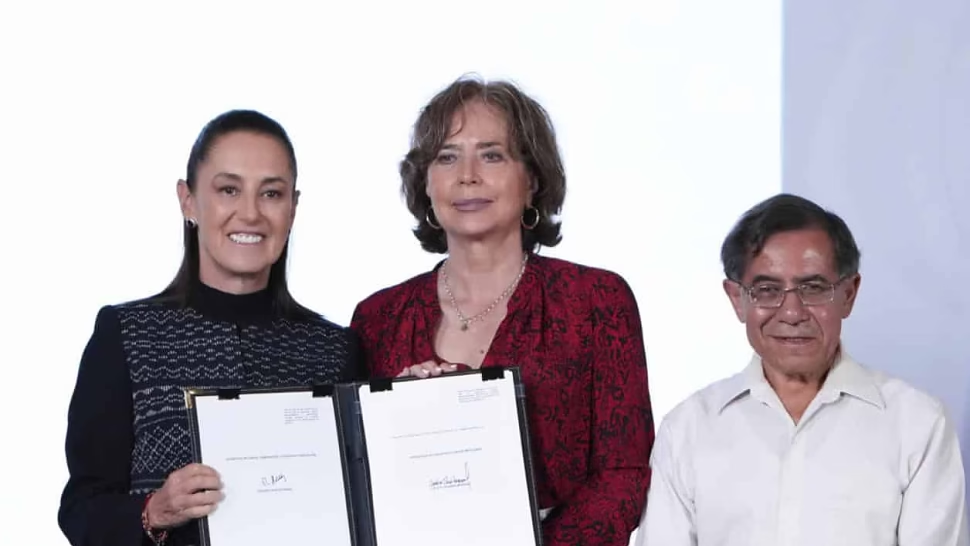
The President of Mexico, Claudia Sheinbaum, led a critical work session with the heads of the executive of Veracruz, Hidalgo, Puebla, Querétaro and San Luis Potosí. The central objective of this meeting was to carry out a meticulous update of the accumulated damages and urgent needs in each municipality impacted by the recent storm. This intergovernmental coordination represents the cornerstone of the crisis management strategy deployed to address the climate contingency.
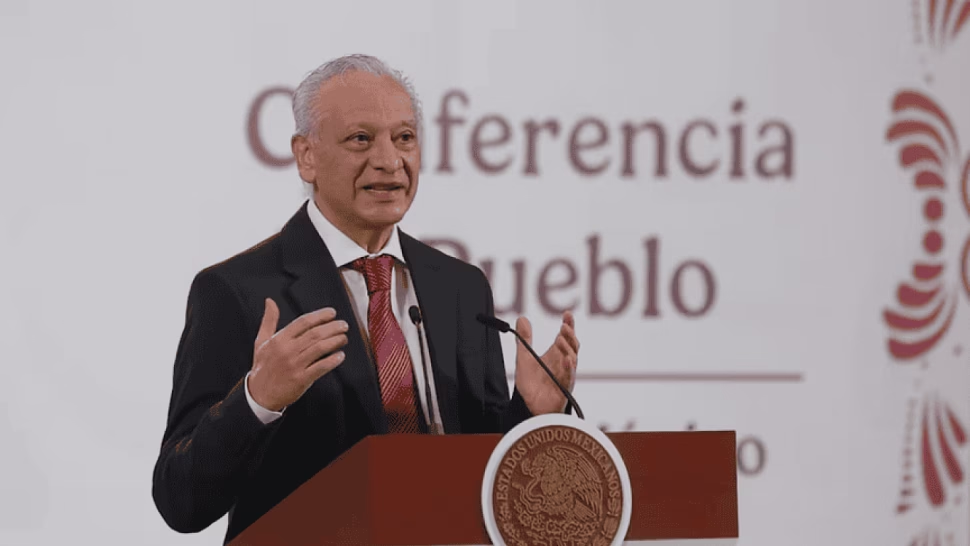
Through an official statement distributed on its digital channels, the federal president specified that the National Civil Protection Coordination will be the entity responsible for issuing a detailed report with the conclusions and agreements reached during the meeting. In addition, a new follow-up session was established, scheduled for 7:00 p.m. on this same October 11, which underlines the dynamic nature and high priority given to this national emergency.
A Comprehensive and Multilevel Response
The work meeting had the participation of a wide spectrum of authorities from the federal government, integrating efforts to address the complex emergency situation that has affected vast regions of the country. The tragic balance of these meteorological events, so far, reports the unfortunate loss of 37 human lives, in addition to hundreds of incidents and material damage that have impacted infrastructure, homes and the local economy. The presence of multiple federal agencies seeks to ensure an agile and multifaceted response.
In a gesture addressed to the grieving families, President Sheinbaum expressed her deepest condolences and solidarity. He reiterated his administration’s unwavering support for all people who have suffered the loss of a loved one. In parallel, he addressed the affected population to offer certainty and tranquility, guaranteeing them that they will have all the necessary support and that they will not lack any type of assistance during this critical stage of recovery.
It is essential to highlight that, as part of the relief operation, troops and specialized teams from the Government of Mexico are already deployed in the five mentioned states. The priority mission of these teams on the ground focuses on two key fronts: the opening and rehabilitation of roads and communication routes that have been obstructed, and the direct and timely attention to communities that are isolated or have been severely affected. This logistical deployment is vital to allow the flow of humanitarian aid and accurately evaluate the real situation in the most difficult to access areas.
The magnitude of this climatic event highlights the vulnerability of certain regions to extreme hydrometeorological phenomena, which, according to expert analysis, could increase their frequency and intensity. The coordinated response that is being implemented not only seeks to alleviate the immediate effects, but also to lay the foundations for a longer-term adaptation and resilience strategy. The participation of state governments is crucial, since they are the ones who have detailed knowledge of the territory and the specific needs of their localities, facilitating a more efficient and effective distribution of resources.
Prompt action and constant communication between the different levels of government are essential elements to manage a crisis of this magnitude. The implementation of these emergency protocols reflects an effort to systematize the response and optimize available resources. Civil protection thus stands as the articulating axis of these actions, demonstrating the importance of having strengthened institutions with the capacity for immediate reaction. Collaboration between the federation and the states is, without a doubt, the pillar on which the national response capacity in the face of natural disasters is built.
Citizens have responded to the call from the authorities, following safety recommendations and reporting incidents, which contributes to a more comprehensive management of the emergency. This type of collaboration between the population and institutions is a vital component for community resilience. The path to full recovery will be gradual, but the support structure put in place aims to accelerate this process and mitigate the suffering of those affected. Transparency in information and accountability for the actions carried out will be essential to maintain the trust of the population throughout the reconstruction process.
Share this crucial information on your social networks to keep your community informed and help us amplify the message of support and solidarity. Explore more content on natural disaster preparedness and our government’s actions in our section dedicated to emergency management.