Federal government assists Querétaro after rains with emergency budget

The federal government deploys an unprecedented operation with thousands of brigade members to census and support the communities affected by the intense rainfall.

Government Response to the Emergency in the Sierra Queretana

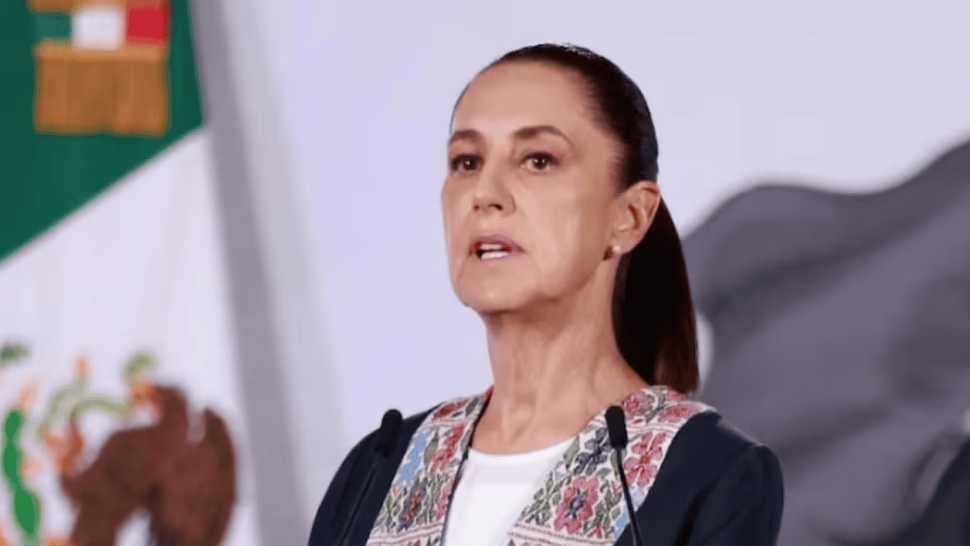
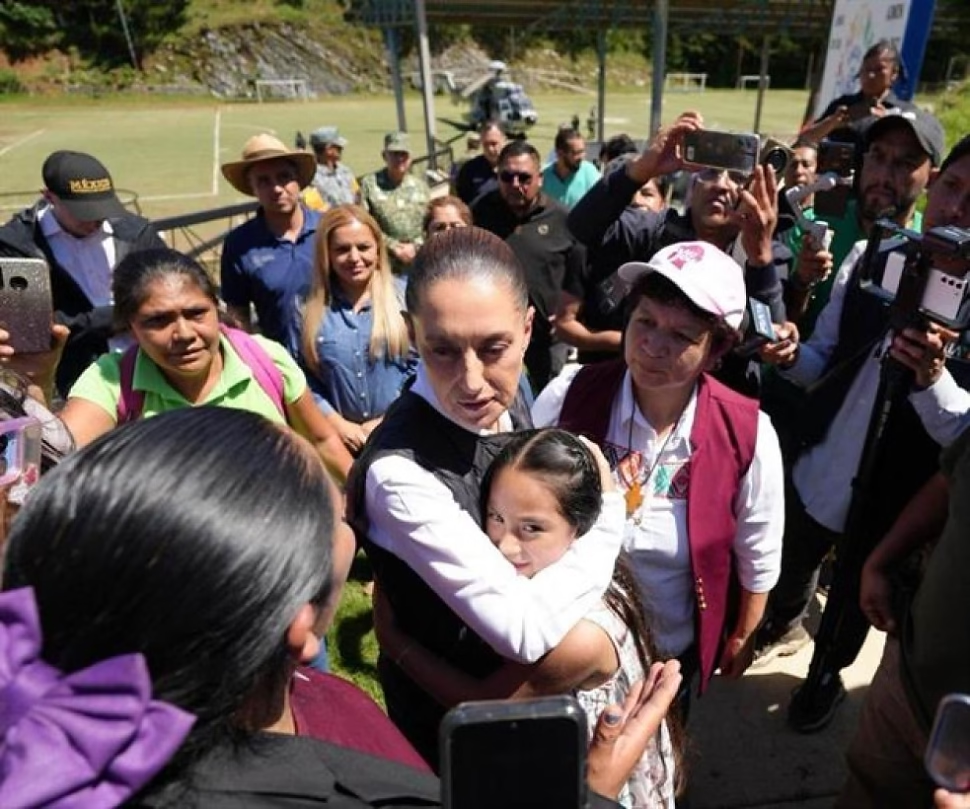
The President of Mexico, Claudia Sheinbaum Pardo, carried out a supervision and coordination visit in the municipality of Pinal de Amoles, Querétaro, one of the areas most impacted by the recent extreme rainfall that has affected several entities in the country. During her tour of the territory, the federal president transmitted a message of certainty and response capacity, emphasizing that the Government of Mexico has the necessary financial resources to address the contingency and assist the affected population.

The Chief Executive used her platforms on social networks to directly communicate the state of the situation: “In Querétaro we toured Pinal de Amoles, a community affected by the past rains. We are still in the territory; there is enough budget to support all families. We will move forward.” This statement underscores the federal administration’s commitment to maintaining a physical presence in disaster areas to assess damage firsthand and expedite humanitarian aid.

RelatedGovernment begins national census due to rain damage

National Emergency Response Strategy

In the framework of the morning press conference, called “The morning of the people”, President Sheinbaum detailed the logistical and operational strategy that is being implemented at the national level. His immediate agenda includes visits to the states of Querétaro and Hidalgo this Monday, October 13, with subsequent tours scheduled for San Luis Potosí and a new visit to northern Veracruz. These actions are part of a continuous evaluation and support operation, which began the previous day with visits to the states of Puebla and Veracruz, where work meetings were held with local inhabitants to coordinate relief efforts efficiently.

A fundamental pillar of this response is the specific budget allocation for contingency. For the current fiscal year, the federal government has allocated a global allocation of more than 19 billion pesos (mp) exclusively for emergency care. From this fund, approximately 3 billion pesos have already been used to address the serious damage caused by Hurricane Erick in the states of Guerrero and Oaxaca, which demonstrates the capacity for financial mobilization in the face of adverse natural phenomena.

Unprecedented Territorial Deployment

The operational phase of the government response was intensified with the massive deployment of specialized personnel in the most affected states. Starting this week, a contingent of 600 intervention brigades, made up of approximately 3 thousand public servants from the Ministry of Welfare, began an exhaustive household census in the states of Veracruz, Puebla, Hidalgo, Querétaro and San Luis Potosí.

This door-to-door evaluation methodology has the primary objective of accurately quantifying the specific needs of each family and the material damage to their homes. The information collected will allow resources to be focused and expedite the delivery of the first financial and in-kind support, which will begin to be distributed starting this week. This systematic procedure seeks to guarantee that aid reaches those who need it most in an orderly, transparent and priority manner, avoiding duplication of efforts and ensuring optimal distribution of resources.

The magnitude of this operation reflects a modern and proactive civil protection doctrine, which combines the technical assessment of damage with an immediate humanitarian response. The presence of the highest executive authority in disaster zones not only has symbolic value, but also facilitates inter-institutional coordination and on-site decision-making, streamlining bureaucratic processes that usually delay aid in critical situations. The combination of a substantial emergency fund and a human device deployed in the territory constitutes a comprehensive approach to disaster management, aimed at early recovery and reconstruction of the social and economic fabric of the impacted communities.

This care model, which prioritizes proximity to citizens and the efficient allocation of resources, seeks to set a precedent in comprehensive risk management in Mexico, transforming the traditional reactive response into a more resilient and people-centered system.

Do you know anyone in the affected areas? Share this information on your social networks to keep your community informed and help us make more people aware of the reconstruction efforts. Explore more news about government actions in our national section.
Mexico reinforces humanitarian aid to Venezuela after earthquakes

Mexico adds 71.2 tons of aid to Venezuela after earthquakes.

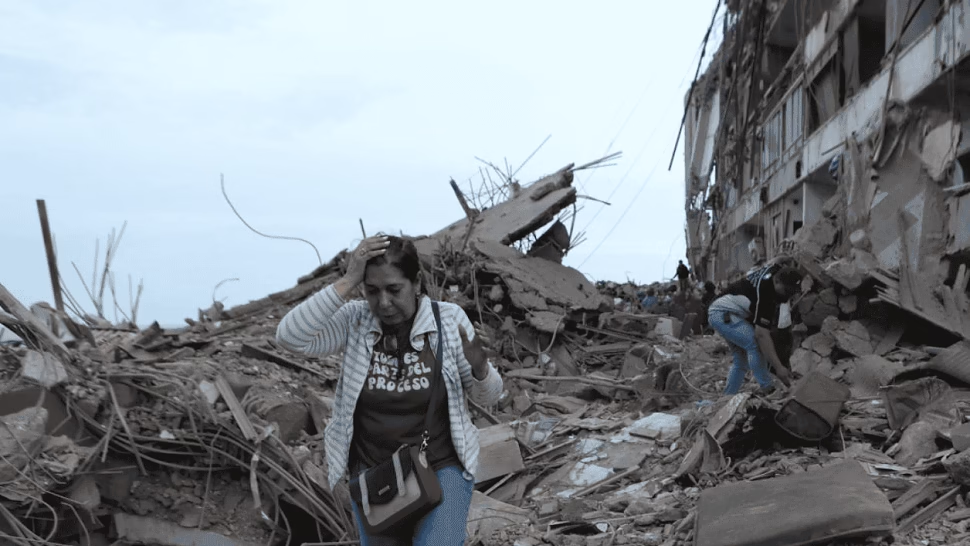
The Government of Mexico continues to send humanitarian aid to Venezuela after the earthquakes registered in that country. President Claudia Sheinbaum reported that 250 specialized elements have been deployed, along with 71.2 tons of food, medicines and power plants. In addition, the Secretary of the Navy is preparing a ship with more supplies.

Actions in Venezuelan territory

Sheinbaum explained that on July 2, 28 tons of supplies—non-perishable foods and medicines—were transported in response to the request of the Venezuelan government. This brings the total to 71.2 tons. On June 30, five power plants and 80 kilograms of Red Cross material were sent. The following Wednesday, another three plants with lighting systems.

“In total, eight plants with a lighting tower and solar panel have been transported, in addition to 80 kilograms of Red Cross material, in two logistics flights,” said the president.

The Mexican team continues its work in coordination with local authorities. Between June 26 and July 1, two people were rescued alive, 40 dead bodies were recovered, and a dog was rescued. 1,411 medical and first aid consultations were also provided, and 13.1 tons of medicines were delivered.

The head of the Executive announced that the support will continue: “A Navy ship will be sent, probably tomorrow, with the collection that has been made from different places to continue supporting Venezuela.”

Continue reading

They capture the Bengal tiger that escaped in Edomex

After four days of operation, the tiger Kenzo was secured without incident.

Four-day operation concludes successfully

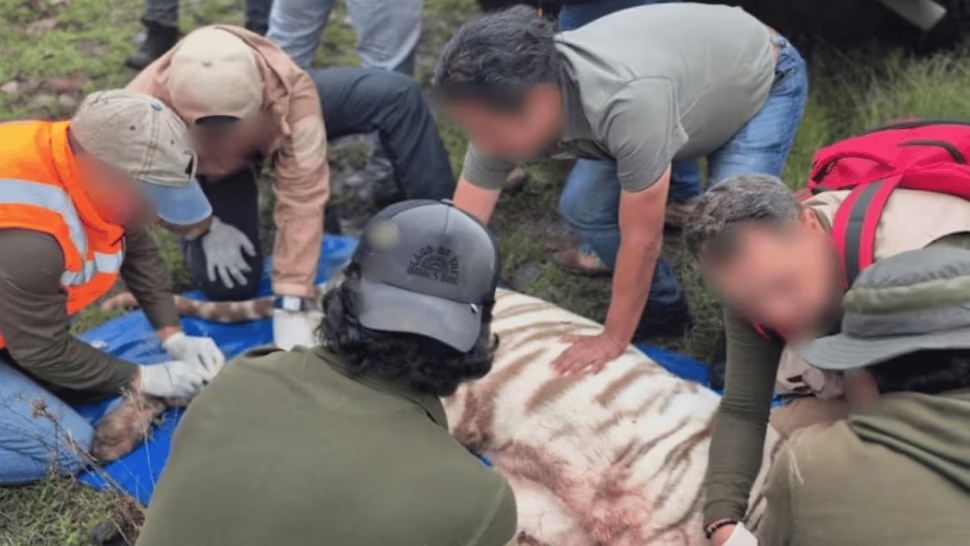
The municipal president of Tepetlaoxtoc, Diana Morales, confirmed this morning the capture of the Bengal tiger that escaped last Saturday from a wildlife center. The animal, identified as Kenzo, had caused the mobilization of federal and local authorities.

The escape occurred on the Property or Facility that Manages Wildlife outside of its Natural Habitat (PIMVS) called Animal Experience México. The Federal Environmental Protection Agency (Profepa) reported that the feline is already receiving medical attention.

Capture details

According to the official report, the operation lasted four days until the specimen was contained without any violent events or damage to people being recorded. Authorities did not detail the exact capture method, but noted that the safety of the community and the animal was prioritized.

Kenzo is under veterinary observation. Profepa will evaluate the conditions of the PIMVS and determine possible sanctions. The case revives the debate on the regulation of centers that house exotic species in areas close to residential areas.

Continue reading

Sheinbaum defends security in Mexico in response to the United Kingdom alert

President responds to British alert and announces new measures after deaths.

The United Kingdom government issued a travel alert for its citizens due to risks of crowds and robberies during the celebrations of the next Mexico vs England match. President Claudia Sheinbaum responded: “It is safe to visit the country, there is no problem.”

Measures after incidents in El Ángel

Last Tuesday, four people died during the celebrations for Mexico’s victory over Ecuador at the Angel of Independence. Sheinbaum explained that, in coordination with the capital government, actions will be implemented to avoid new mass concentrations.

“Based on what happened, the City government is taking measures to put up more screens throughout Reforma. This way people disperse and do not congregate in a single point,” he said at a conference.

Call to responsibility

Sheinbaum made a direct call to the fans: “Act responsibly, avoid excess alcohol. We appeal to the responsibility of everyone, both Mexicans and visitors.”

The president reported that she maintains contact with the head of government, Clara Brugada. “I personally spoke with her. They have done their job well and now take precautions to avoid dangerous crowds.”

Response to the British alert

Asked if her cabinet had already coordinated with the CDMX government before the next game, Sheinbaum responded: “We are in contact. It is difficult to contain a million people with police. The idea is to guide and prevent.”

He reiterated that traveling to Mexico is safe: “We have seen it throughout the World Cup. There is no problem.” The strategy focuses on dispersion of attendees and surveillance without repression.

Continue reading