Austerity as a New War Cry
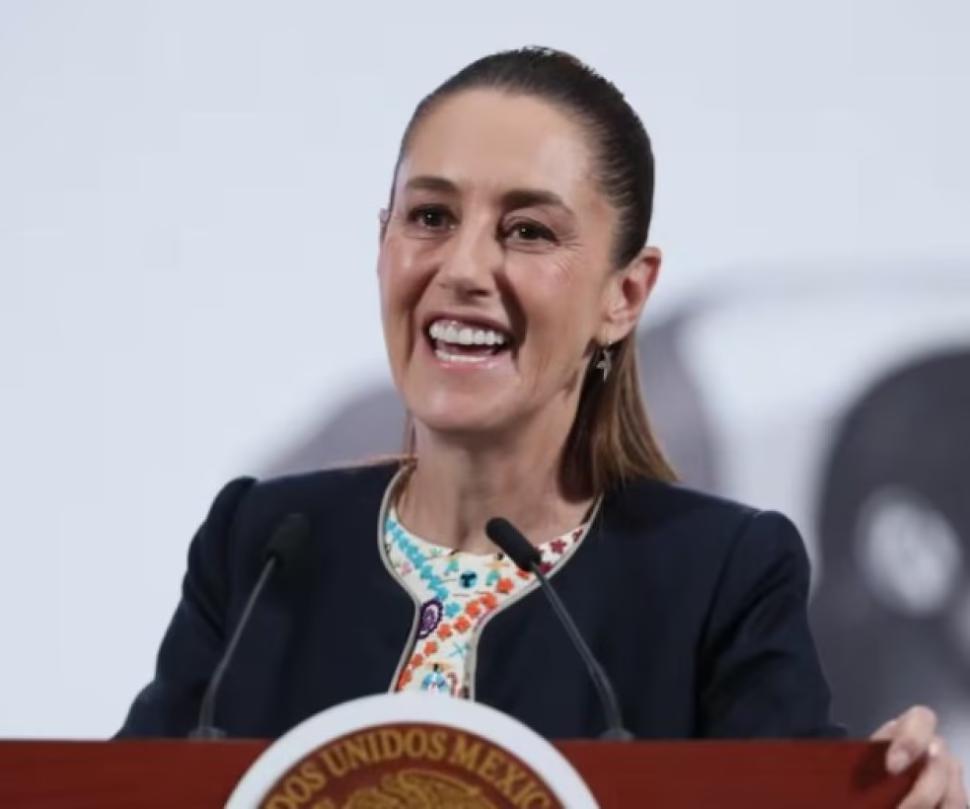
It seems that the slogan this year will not be Long Live Mexico!, but Long Live Austerity! In a twist that no one saw coming (or perhaps everyone, because it is the usual speech), President Claudia Sheinbaum Pardo has decided that the country’s most iconic celebration, the Cry of Independence, deserves a treatment so sober that it almost borders on boring. He announced, with the solemnity of someone revealing a state secret, that the ceremony in the capital’s Zócalo will be “very austere, very very austere.” So austere that we will have to imagine fireworks? So sober that the ringing of the bell will be a whisper?
In her morning conference, a ritual as predictable as the Grito itself, the president detailed that the event will essentially be made up of the members of her legal cabinet. Wow, an intimate party… of a few dozen people in a square that holds hundreds of thousands. Because nothing screams “independence” and “people” like a private meeting of officials in the largest public space in Latin America. The irony is so thick that it could be cut with a ceremonial sword.
The Parade: Where Austerity Takes a Break (But Just a Little)
But not everything will be bread and water in the national commemoration. The next day, for the civil-military parade, austerity seems to take a strategic pause. Sheinbaum clarified that for this event invitations will be extended to representatives of the Legislative and Judicial Powers, as well as to foreign ambassadors. Thank goodness! For a moment we thought they were going to greet them from a small window on Zoom. At least diplomats will be able to witness in person our spectacle of national unity… strictly divided by powers and invitations.
The million-dollar question that floats in the air, heavier than a charro hat, is: why the difference? Isn’t the cabinet enough for the parade? Or do ambassadors need to be impressed with tanks and soldiers, but not with the austere vision of a government that leads by example? Coherence, it seems, is also in savings mode.
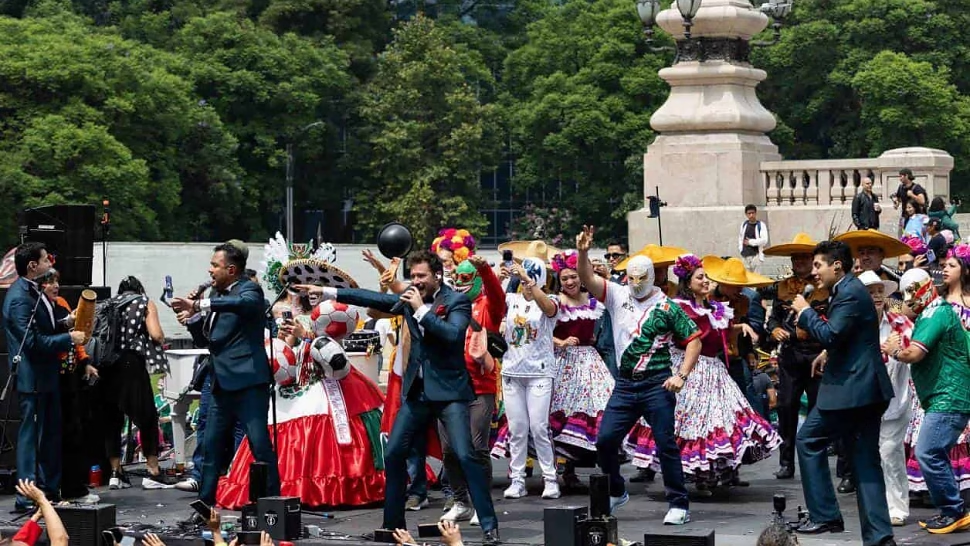
And to break with the solemnity of so many festive cuts, last week the most revolutionary act of all was announced: the election of the musical group. La Arrolladora Banda El Limón will be in charge of “enlivening” the evening. Because nothing says “reflection on the sacrifices of the heroes who gave us our country” like the sounds of the drum and the accordion. It is a choice as popular as it is unexpected, a nod to the common people in the middle of a ceremony that has closed the door on them. An imaginary tequila toast, if you will.
One cannot help but marvel at the political genius of the situation. The ceremony is reduced to its minimum expression, but a famous band is hired. Access to the town is limited, but ambassadors are invited to watch the military parade. It is a message as clear as lemon water: the priority is the international image and the demonstration of force, while the popular celebration is reduced to a work meeting with a soundtrack. Long live the contradiction!
In short, this Cry of Independence promises to be a case study in the semantics of power. Does “austere” mean cutting out the superfluous or simply alienating the public? Is it a measure of true budget containment or a symbolic act to mark distances with more wasteful past administrations? The speculations are served, and they are tastier than any typical dish that can be imagined in the empty square.
So now you know. This September 15, while the Zócalo looks unusually clear, you can live the full experience from home. Imagine the speech, imagine the cheers, imagine the band… because the essence of the party, it seems, is now ethereal and, above all, very, very austere.
Did you like this gem of national politics?Share it on your social networks and spread the word about the great austere event. And if you want to explore more content related to the peculiar decisions of our rulers, be sure to check out our other publications.