A historic moment on the presidential balcony
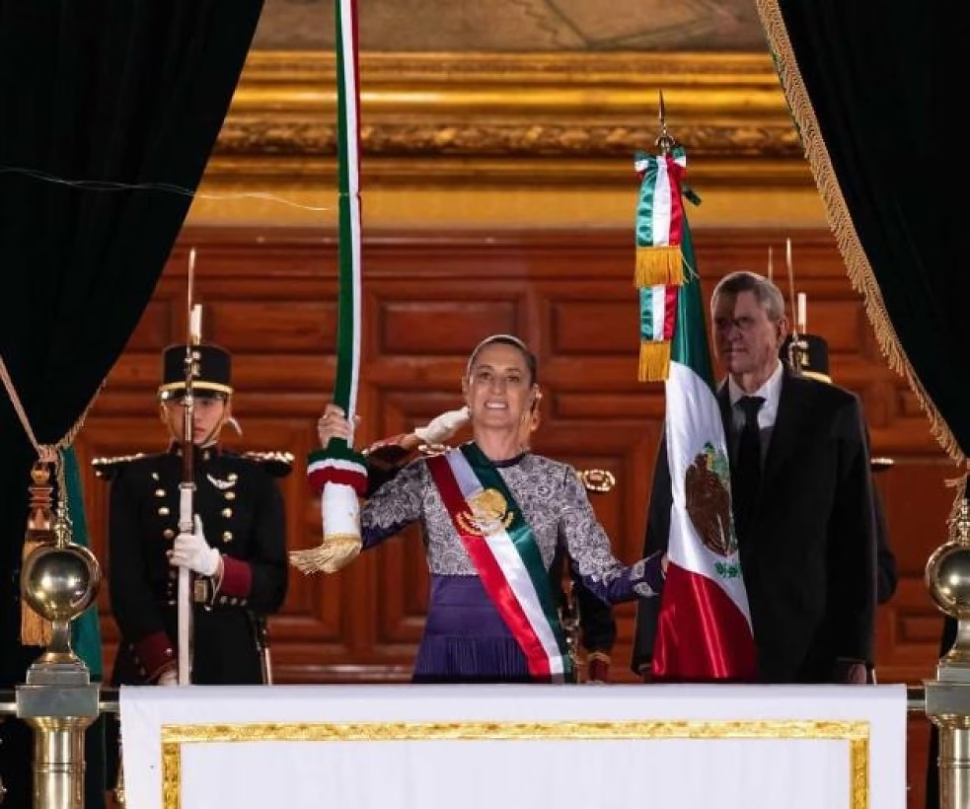
The night of Monday, September 15, was a milestone in the political history of Mexico, as it was the first time that a woman, President Claudia Sheinbaum Pardo, led the Cry of Independence ceremony from the main balcony of the National Palace. This protocol act, loaded with deep symbolism, marked the rupture of an exclusively male bicentennial tradition, representing a significant advance in the inclusion and recognition of female leadership in the highest sphere of national executive power.
The president, dressed in a purple dress made by hand in Tlaxcala and wearing the presidential sash, appeared on the balcony accompanied by her husband, Jesús María Tarriba Unger. Punctually at 11:00 p.m., he received the national flag from the hands of the military escort and proceeded to ring the Dolores Bell, a replica of the one used by Miguel Hidalgo y Costilla in 1810 to call the people to the insurrection. The Plaza de la Constitución, with a full capacity, witnessed this moment of great emotional and patriotic charge.
The presidential harangue and its symbolic load
The head of state began her proclamation with the phrase “Mexicans, Mexicans!”, and then stated a total of 22 cheers that structured her speech. This list was distinguished by its emphasis on the historical vindication of women, explicitly integrating female figures and groups traditionally marginalized from the official narrative. The analysis of the sequence of harangues reveals a clear intention to reconfigure the national imagination, prioritizing values such as equality, justice and diversity.
A detail of meticulous historical research was the mention of Josefa Ortiz with her maiden name, Téllez-Girón, instead of the conventional name of “Ortiz de Domínguez.” This decision, far from being anecdotal, constitutes an act of recognition of her individual identity prior to marriage, placing her as a historical figure on her own merits and not based on her marital status. This gesture aligns with a contemporary perspective that seeks to rescue the historical agency of women outside of patriarchal canons.
Analysis of the vivas: a new national narrative
The content of the presidential address can be broken down into several thematic categories that reflect the priorities and approach of government. After the formal cheers to Independence and to the fundamental heroes such as Hidalgo and Morelos, there is an immediate incorporation of heroines: Leona Vicario, Gertrudis Bocanegra and Manuela Medina, “La Capitana”. The mention of “unsung heroines” expands this recognition beyond individual figures, honoring the collective and often invisible contribution of women.
Subsequently, the proclamation extended recognition to specific sectors of the population, dedicating cheers to indigenous women and migrant communities, two demographic groups of crucial importance in the Mexican social structure and frequently subject to discrimination. The sequence culminated with an exaltation of abstract but fundamental values: the dignity of the people, freedom, equality, democracy and justice, to end with the reaffirmation of a free, independent, sovereign Mexico and the traditional three cheers to the nation.
The enthusiastic response of the crowd gathered in the capital’s Zócalo and in civic squares throughout the country sealed an event that transcends the ceremonial. This first Grito led by a female president not only fulfills a constitutional mandate, but establishes a historical precedent and sends a powerful message about the direction her administration seeks to take, one that integrates the gender perspective and social inclusion at the heart of the national narrative.
This act will be analyzed in the coming years as a turning point in the symbology of power in Mexico, demonstrating how traditions can evolve to reflect social changes and the desires of a citizenry that demands broader and more equitable representation in its history and future.
Did you find this historical analysis interesting?Share this article on your social networks to expand the conversation and explore more content related to the political and cultural history of Mexico on our website.