A victory on paper, a challenge on the payroll
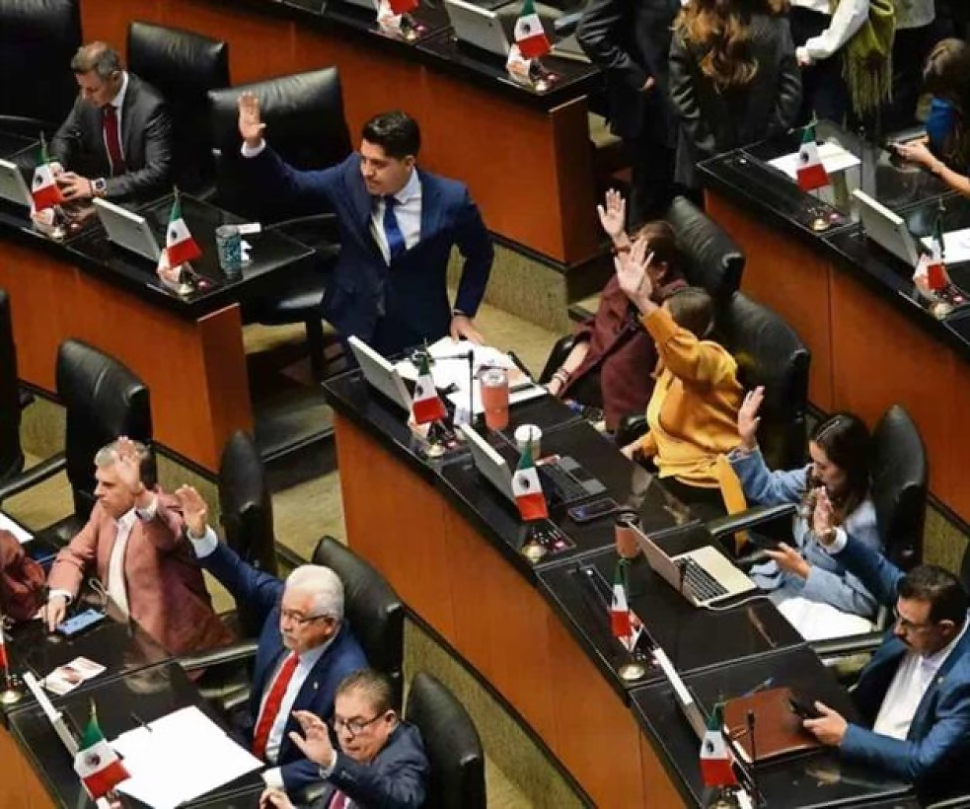
The full Senate unanimously approved something that should be obvious: paying a woman less than a man for the same work is violence. They classify it as workplace violence. Sounds good, right? Until you remember that this should have been banned for decades.
The reform modifies article 11 of the General Law on Women’s Access to a Life Free of Violence. Now, illegal refusal to hire, impediments to breastfeeding, humiliations and, of course, the wage gap, fall into that category.
“In formal employment, women earn on average 16,434 pesos compared to 19,361 pesos for men,” according to ENOE 2025.
Those numbers are not cold statistics. They are the official price of discrimination. In informal employment things get uglier: they receive 7,449 pesos compared to 11,490 for them. The Inegi summarizes it by saying that for every 100 pesos a man earns, a woman earns 75.
Here is the legal-social trick: laws against wage discrimination already existed. The problem was never a lack of rules, but rather a lack of enforcement and a business culture that normalizes what is unfair. Changing a word in an article does not automatically change the spreadsheets.
The reform was referred to the Chamber of Deputies. That is, it moves to the next step in the legislative process where, theoretically, it could stall or be modified.
My professional cynicism forces me to ask: how many companies will actually be investigated? How many workers will have the support to report without fear of reprisals? I applaud the gesture, but I save the loud applause for when I see the first real fines and the first salary adjustments forced by law. Justice is not in the official bulletin, it is in the wallet.