Epidemiological context and alarming figures
The state of Chihuahua faces a critical outbreak of measles with 1,803 confirmed cases in 39 municipalities, according to official data updated as of June 2. The epidemic has claimed its fourth fatality: a 2-year-old Rarámuri girl belonging to a family of agricultural laborers in a situation of health vulnerability. This death shows recurring patterns: all the deceased lacked the complete vaccination schedule and had preventable comorbidities.
Analysis of risk factors
The State Health Secretary detailed that the minor died at the Ojinaga Comprehensive Hospital due to a multisystem condition that included pneumonia, severe dehydration and gastrointestinal complications. Epidemiological studies show that measles has a fatality rate of 10% in populations with malnutrition or immunosuppression, conditions prevalent in rural communities and marginalized groups. The data reveals that:
- 100% of deaths occurred in non-immunized patients
- 75% corresponded to minors
- The most frequent comorbidities were pulmonary diseases (100%) and metabolic diseases (25%)
Cases such as the two Mennonite children who died in May (7 years and 11 months) illustrate how herd immunity is compromised when vaccine coverage falls below 95%. Particularly serious was the case of the infant whose mother was also not vaccinated, depriving him of protective maternal antibodies.
Containment strategies and logistical challenges
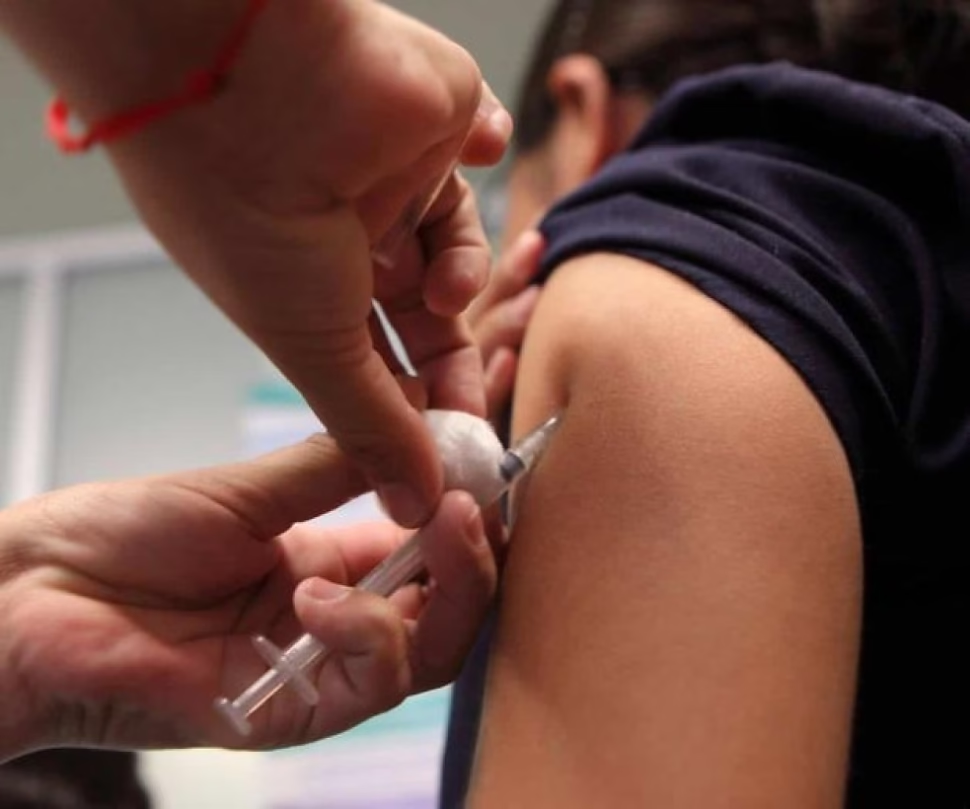
The authorities have implemented mobile macro vaccination centers in 5 priority municipalities (Villa López, Ocampo, Bocoyna, Jiménez and Parral), with emphasis on:
- Application of SRP (measles-rubella-mumps) doses to children between 12-18 months
- Reinforcements for the population aged 10-49 with incomplete schemes
- Post-exposure prophylaxis in contacts of confirmed cases
However, structural barriers persist: geographic dispersion, seasonal labor migration and cultural resistance in some communities. The Municipality of Cuauhtémoc, epicenter of the outbreak with 804 cases (44.6% of the total), requires focused interventions that consider social determinants such as access to basic services and health education.
Why get vaccinated? Scientific evidence confirms that two doses of the MMR vaccine generate lasting immunity in 97% of recipients. Immunization not only prevents childhood deaths, but also late complications such as subacute sclerosing panencephalitis, a neurological degeneration that can manifest up to a decade after infection.
Share this information on your social networks to raise awareness about the importance of vaccination. Explore more content on public health in our specialized section.