
Measles outbreak in Mexico reports 78 new infections

The virus mainly affects the unvaccinated child population, with a worrying pattern of national expansion and fatal consequences.

Analysis of the Advancement of the Measles Outbreak in Mexico

The General Directorate of Epidemiology of the Secretary of Health (Ssa) has confirmed an increase of 78 new cases of measles in the national territory, raising the accumulated figure from 5,153 to 5,231 infections between epidemiological weeks 44 and 45, corresponding to the period from November 7 to 14. This data reflects a continuity in the active transmission of the virus, a highly contagious pathogen that was considered controlled and that represents a significant challenge for Mexican public health.

The analysis of the geographical distribution of the disease confirms that the state of Chihuahua remains the undoubted epicenter of the disease. This federal entity reported an increase of seven infections, going from 4,429 to 4,436 confirmed cases. They are followed in magnitude by Jalisco, with 178 registered infections; Michoacán, with 150; Guerrero, with 120; Sonora, with 102; and Sinaloa, with 23. Other entities such as Zacatecas (21), Tamaulipas (12), the State of Mexico (10) and Mexico City (7) complete the panorama of the regions with the highest incidence. The viral spread is national, with presence in states such as San Luis Potosí, Oaxaca, Guanajuato, Colima, Campeche, Morelos, Baja California Sur, Chiapas, Quintana Roo, Tabasco, Hidalgo, Yucatán and Nuevo León, all of them with six cases or less.

RelatedCanada loses measles eradication status

Epidemiological Profile and Impact on the Population

A detailed examination of demographic data reveals that the most vulnerable age group continues to be children aged 1 to 4 years old, followed by the population segment aged 25 to 29 years. Within these groups, the majority of diagnosed cases affect women. The most critical variable identified in this outbreak is vaccination status. The epidemiological report strongly indicates that more than 90% of the individuals who contracted the disease lacked a documented vaccination history. Only 5% of the patients had one dose of the vaccine, and 3% had two or more, proportions that have remained unchanged in the weekly comparison, which underlines the effectiveness of immunization as a protective barrier.

The most serious consequence of this health event is materialized in the 23 accumulated deaths confirmed by the Ministry of Health until week 45. The majority of these deaths are concentrated in the state of Chihuahua, and in a fact that reinforces the scientific evidence, none of the deceased had a record of previous vaccination against measles. This fact establishes a direct correlation between lack of immunization and the risk of fatal outcome, highlighting the importance of complete vaccination schedules.

The situation described demands intensive epidemiological surveillance and the reinforcement of immunization campaigns, especially in regions identified as red hot spots. Containment of this outbreak depends largely on vaccine coverage and the health system’s ability to interrupt chains of community transmission.

Share this analysis on your social networks to contribute to raising awareness about the importance of vaccination and explore more content related to public health on our site.

Afore withdrawals and unpaid loans put millions at risk

Moreira and experts warn about the impact of early withdrawals and unpaid loans.

Risk for workers’ assets

Rubén Moreira, coordinator of the PRI in the Chamber of Deputies, warned that the increase in the overdue portfolio of mortgage and consumer loans, along with the increase in withdrawals from Afores due to unemployment, puts the assets and future pensions of millions of Mexicans at risk.

During the program “With Pears, Apples and Oranges”, Moreira pointed out:

The lack of employment has forced many families to stop paying their bank loans and resort to their retirement savings to cover basic needs such as food and medicine.

The legislator criticized the fact that there is not enough information about the consequences of withdrawing resources from the Afores, since this reduces accumulated savings for retirement.

He also warned about the growth of loans granted by fintech and digital banks, some of which can handle high financial costs and represent risks for users.

Mario Di Costanzo, specialist, reported that between January and June of this year more than one million workers made partial withdrawals of their Afores due to unemployment. He added that Infonavit’s overdue portfolio reached 410 billion pesos during the first quarter of 2026, while mortgage and consumer loans in arrears exceeded 110 billion pesos.

Miguel Ángel Sulub, for his part, explained that early withdrawals from Afores not only affect the amount available for retirement, but also the weeks of contributions necessary to obtain a pension.

Continue reading

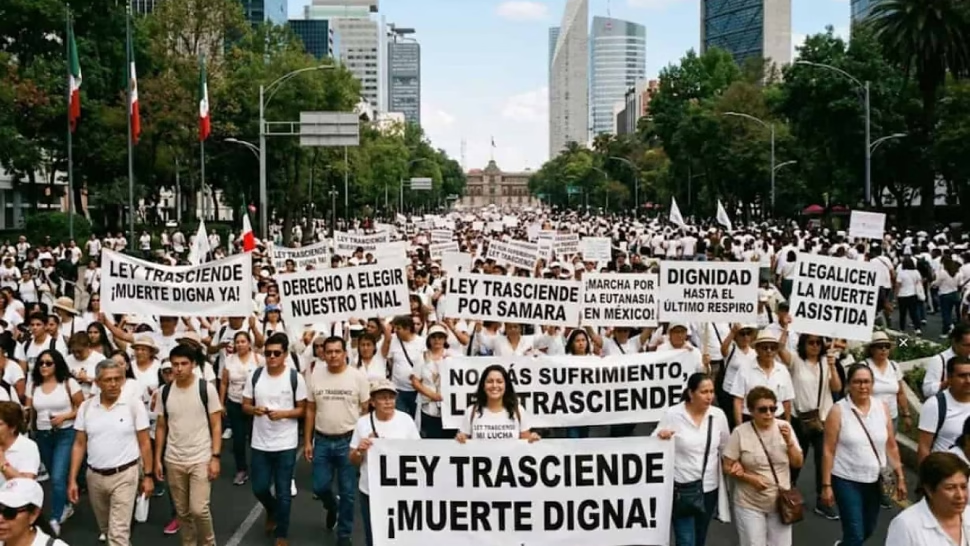
National march for dignified death in Mexico on August 28

Patient with kidney failure leads mobilization to modify the law.

The debate about the end of life regains strength in Mexico. A national march will demand legal changes to allow medically assisted dying in cases of terminal illnesses or irreversible conditions that seriously affect quality of life.

The fight of Samara Martínez

Samara Alejandra Martínez Montaño, a patient with end-stage chronic renal failure and systemic lupus erythematosus, heads the call. He has faced years of treatments: two failed kidney transplants, surgeries, hemodialysis, peritoneal dialysis, chemotherapies and constant use of steroids. His citizen petition, part of the Ley Trasciende project, has gathered more than 170 thousand signatures of support.

Transcend Law and mobilization

The march will take place on August 28 at 9:00 a.m., from the Palace of Fine Arts to the National Palace. It is aimed at patients with chronic diseases, family members, caregivers, academics and anyone who supports the right to decide about the end of life.

Martínez Montaño seeks to make his situation visible and generate legislative change. Its goal is that other patients in similar conditions have the option of a dignified death. The mobilization represents an opportunity for society to support the Transcende Law.

Continue reading

Mexico celebrates grandparents on three different dates

Did you know that in Mexico there is more than one date to celebrate grandparents? We explain the origins of each one.

Dates to honor grandparents

In Mexico there is more than one date to recognize grandparents, which raises doubts among families about which is the correct day. While Sunday, July 26, International Grandparents’ Day is commemorated in several countries, in Mexican territory the date with the greatest roots continues to be August 28.

The difference between both celebrations responds to the origin of each one. July 26 is related to the Christian tradition that remembers Saint Joachim and Saint Anne, parents of the Virgin Mary and considered, according to Catholic tradition, the grandparents of Jesus. The date was promoted in 1998 by the Messengers of Peace organization to recognize the importance of older adults.

In Mexico, Grandfather’s Day is traditionally celebrated on August 28. This date was established in 1983 and was promoted by public institutions and social assistance organizations. Its objective is to highlight the contribution of older people, promote respect and raise awareness about the need to guarantee them a dignified life.

Added to these dates is October 1, declared by the UN as the International Day of Older Persons. This commemoration seeks to make visible the rights of older adults and reflect on the social, economic and health challenges faced by a population that continues to grow worldwide.

Continue reading