Russia erases the identity of Ukrainian children to turn them into soldiers

OSCE documents Russian system of indoctrination and militarization of deported Ukrainian children.

An independent mission from the Organization for Security and Cooperation in Europe (OSCE) documented a Russian system designed to erase the national identity of Ukrainian children and turn them into soldiers. The report, prepared through the Moscow Mechanism, reveals systematic practices of indoctrination and militarization from an early age.

Documented practices

According to experts, minors are exposed to compulsory pro-war propaganda from the age of six. Between 13 and 18 years old, they receive training in weapons handling, tactical medicine and drone operation.

RelatedThe EU designs its own peace plan to pressure Russia

In addition, the report points out the elimination of teaching in Ukrainian and the persecution against those who express their national identity. Upon reaching the age of majority, adolescents are forced to join the Russian armed forces to fight against their country of origin.

The investigation also indicates that children forcibly deported to Russia have suffered violations of international humanitarian and human rights law.

Possible crimes against humanity

Experts Hervé Ascensio, Elina Šteinerte and Stefan Wolff concluded that these actions could constitute a crime against humanity in the form of persecution, and identified probable war crimes. They recommend that the return of Ukrainian children be a central element of any peace negotiations, without exchanges, and that Russia be held accountable.

Ukraine’s response

Given this situation, the Ukrainian Foreign Ministry invited Mexico to join the International Coalition for the Return of Ukrainian Children, made up of 47 countries and three international organizations.
New bombings in Iran raise regional tension

Attacks without responsibility attributed after end of US offensive.

Attacks without recognized authorship

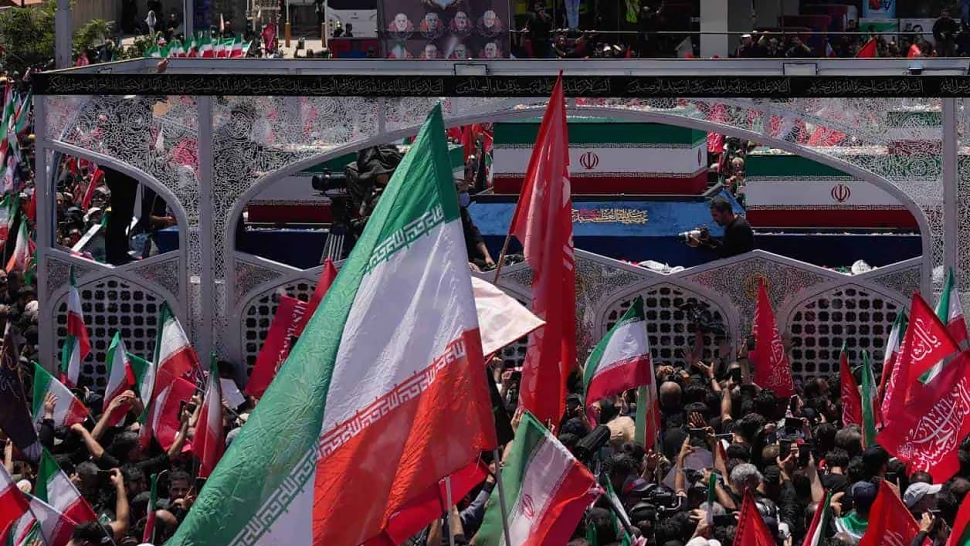
A new series of bombings against southern Iran increased uncertainty in the Middle East. They occurred on Thursday, as the country prepared to pay tribute to the late Supreme Leader Ayatollah Ali Khamenei.

According to official reports, the explosions reached the provinces of Bushehr and Sistan and Balochistan, as well as the cities of Ahvaz and Chabahar. Hours earlier, the United States Central Command had announced the end of a military operation that impacted 90 strategic objectives, but did not comment on these new attacks.

So far, no country or group has claimed responsibility for the bombings. The Iranian authorities avoided pointing out anyone directly responsible, although they issued warnings against the United Arab Emirates for alleged support for the US campaign.

Iranian response and replicas

In response, Iran launched a missile offensive against Bahrain, Jordan, Kuwait and Qatar. The anti-aircraft alarms were activated and the population sought refuge. Kuwaiti authorities reported at least one person injured, while defense systems intercepted projectiles.

US President Donald Trump reiterated that the military conflict had ended and that negotiations for a permanent agreement would continue. But the escalation once again put the fragile ceasefire at risk.

The Strait of Hormuz in suspense

The tension keeps the Persian Gulf countries on alert due to the Strait of Hormuz, through which about a fifth of the world’s oil and gas trade passes. Iran insists on exercising exclusive control and proposes charging fees to vessels. The United States recommends an alternative route through Omani waters. Maritime traffic decreased significantly.

Israel also did not claim responsibility for the attacks, although Defense Minister Israel Katz warned that his country is prepared to act again if it deems necessary. From Tehran, legislator Esmail Kousari accused the United Arab Emirates of collaborating with the United States and assured:

“He will pay the price”

With crossed threats, attacks without confirmed perpetrator and the dispute over the strait, the Middle East faces a scenario of high tension, despite diplomatic efforts.

Continue reading

Cuts affect a million women in humanitarian crises

One million women lose access to aid due to international cuts

Impact of funding cuts

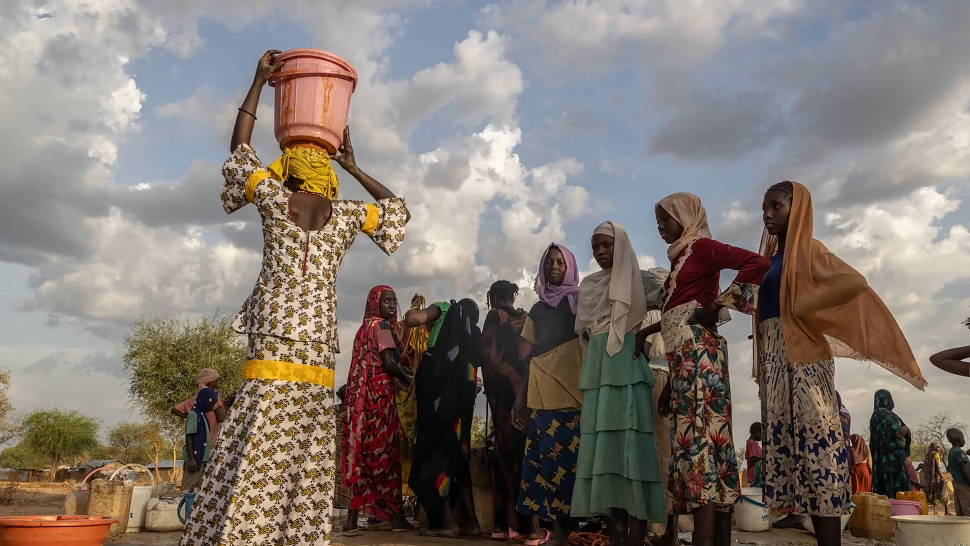
At least one million women and girls have been left without access to humanitarian aid and essential services over the past 18 months. This was warned by UN Women this Friday, pointing out that the reduction in international resources especially affects those living in contexts of conflict, displacement and humanitarian crises.

According to the organization, 84% of women’s organizations consulted reported an increase in care needs since January 2025. At that time, the government of US President Donald Trump began to cut foreign aid. In addition, almost nine in ten organizations stated that they no longer have sufficient funds to respond to the demand for support.

The situation is critical. Women and girls in conflict zones are the most vulnerable to these cuts. Without financing, health, protection and food assistance programs are interrupted. UN Women urgently called on the international community to restore funding and prevent a further humanitarian crisis.

Continue reading

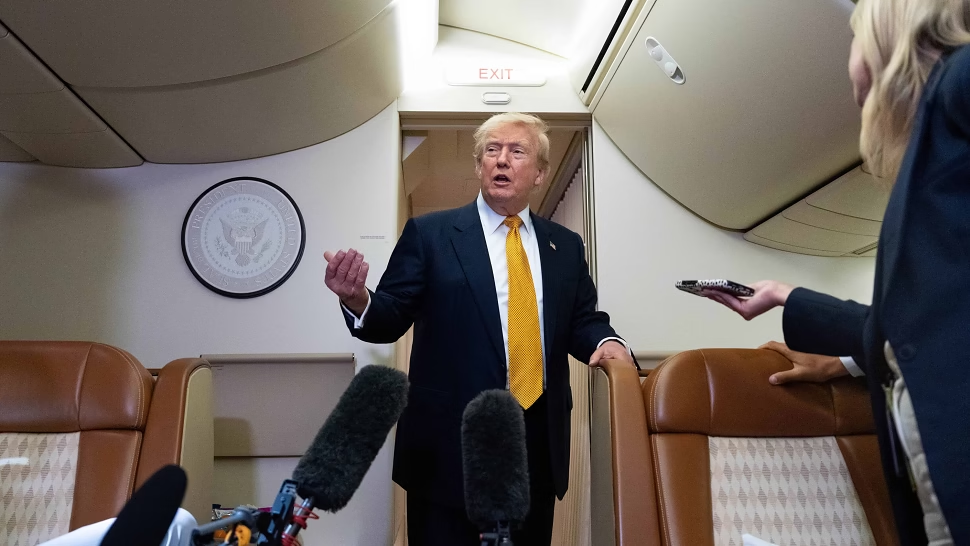
Trump removes two Democrats from the federal Election Commission

American president justifies the measure in search of greater security in the elections.

Trump removes two Democratic EAC commissioners

Donald Trump removed two Democratic members from the Electoral Assistance Commission (EAC), the federal body that supports the organization of elections in the United States.

The decision reactivated the debate about the independence of electoral institutions and the limits of presidential power.

The White House justified the measure by pointing out that the president has the power to remove officials who are not aligned with his strategy to guarantee electoral integrity.

The officials removed were Thomas Hicks and Benjamin Hovland, who were part of the bipartisan commission.

The action comes after the Supreme Court recently strengthened the president’s powers to dismiss members of independent agencies.

The Trump administration maintains that it seeks to strengthen electoral security, especially in verifying the citizenship of those who request to register to vote.

The EAC had previously rejected modifying the national voter registration form to require documents proving US citizenship. That proposal was promoted by Trump through an executive order, but a federal judge blocked it, considering that the Constitution reserves the authority to administer electoral processes to Congress and the states.

Democratic legislators accused the president of trying to politicize the electoral system months before the midterm legislative elections.

Continue reading