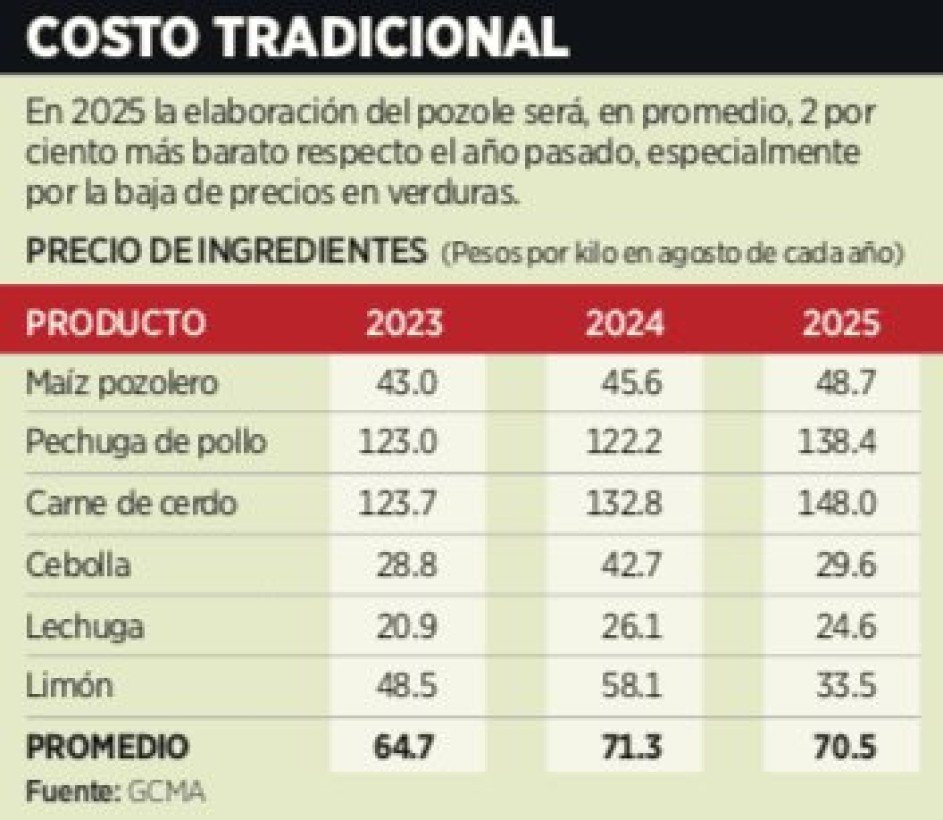
Analysis of the decrease in the cost of the traditional dish
The season of national holidays in Mexico receives encouraging news for the final consumer. A technical analysis carried out by specialists in the agricultural sector indicates a downward trend in the price of the essential ingredients for the preparation of pozole, one of the emblematic dishes of these celebrations. This reduction is directly attributed to a key climatological factor: the timely arrival of rain during the agricultural cycle in the main producing regions of the country.
According to the data and projections provided by the Agricultural Market Consulting Group (GCMA), it is estimated that the average cost to prepare this traditional stew will present a decrease of 1.9 percent compared to the values recorded during the same period of the previous year. This percentage, although apparently modest, represents a significant relief in the current economic context and translates into tangible savings for the domestic economies that are preparing to celebrate.
Climatic and market factors behind the phenomenon
The mechanics behind this price drop are a clear example of how climate patterns influence the supply chain and, consequently, commodity inflation. The rainfall substantially benefited the states that produce cacahuazintle corn, an essential grain for the authentic preparation of pozole. An adequate rainy season is positively correlated with an increase in yield per hectare and an improvement in crop quality, which increases the supply available in the market and puts downward pressure on prices.
This phenomenon is not limited to corn. The production of other complementary vegetables, such as radish, lettuce and oregano, as well as protein ingredients such as pork and chicken, was also favored by environmental conditions, contributing to the general lowering of the basic holiday basket. The interconnection between a good storm, subsistence agriculture and the final price to the public shows the vulnerability and resilience of the national agri-food sector.
The GCMA analysis not only considers primary production, but also the costs associated with transportation and logistics, which can be moderated by greater availability of local product, reducing the need for imports or long-distance interstate shipments. This combination of factors—favorable climate, greater local supply and reduction in logistical costs—constitutes the virtuous triangle that explains the decrease in the cost of preparing pozole for this year.
Understanding these dynamics is crucial for food industry actors and public policy makers. It underlines the importance of investing in irrigation infrastructure and rural support programs to mitigate the effects of drought and stabilize food prices in the long term, thus ensuring that culinary traditions like this remain accessible to the majority of the population.
Was this analysis of the economics behind our traditional dishes useful to you? Share this information on your social networks and help us reach more people interested in market trends and Mexican gastronomy. Be sure to explore our related content section to discover more articles on food culture and economic analysis.