Immediate health risks
The Pan American Health Organization (PAHO) warned that the greatest risks after the June 24 earthquakes in Venezuela do not only come from injuries. Limited access to vaccines, disruption of routine medical services and deficiencies in the supply of clean water are the main threats.
“In the coming weeks, the greatest health risks could arise not only from injuries caused by earthquakes, but also from disruptions in health services, conditions of access to medical care, deficiencies in water and sanitation, and access to vaccination and routine medical care,” said Jarbas Barbosa, director of PAHO, in a video conference from Washington.
PAHO collaborates with the Venezuelan Ministry of Health to detect outbreaks in shelters. Barbosa explained that respiratory diseases, like the flu, spread quickly in small spaces. Conditions resulting from the consumption of non-potable water or spoiled food are also of concern.
Damage and needs
Armando Denegri, PAHO representative in Venezuela, reported that three hospitals suffered structural damage and were evacuated. Another 24 had damages that temporarily compromised their operation, although most of them have already been repaired.
“50% of La Guaira’s health professionals were directly affected. Some disappeared, some died, others were greatly affected by the crisis, impacting their families,” Denegri detailed, without specifying more.
PAHO estimates that $24 million is required to cover urgent health needs until the end of the year. According to Barbosa, this amount will allow maintaining services, supporting rehabilitation and restoring facilities.
The magnitude 7.2 and 7.5 earthquakes occurred 39 seconds apart along the northern coastal mountain range of Venezuela, the United States Geological Survey reported. They were the strongest in the country in more than a century.
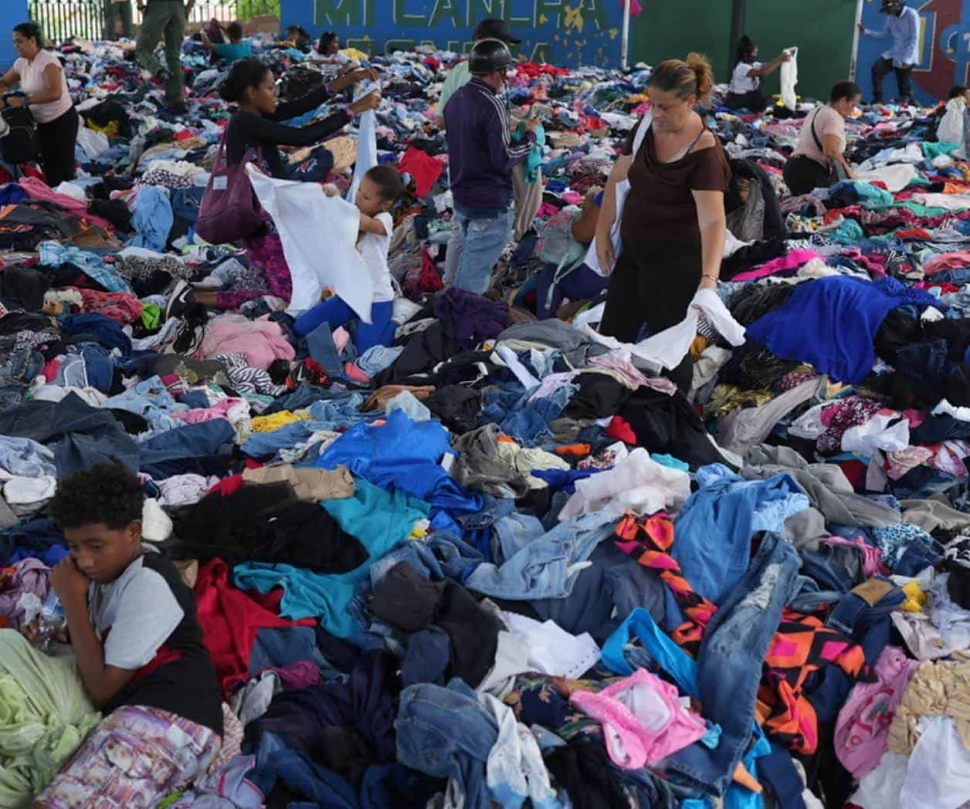
Venezuelan authorities reported 3,811 deaths and 16,740 injuries in Caracas, La Guaira and Miranda. Most of the deaths were concentrated in La Guaira, 20 kilometers north of Caracas. The government of interim President Delcy Rodríguez estimated that 18,000 people lost their homes and now live in schools, parks and public squares.