Mexico secures 96% of medical supplies by 2025 with mega investment

An ambitious plan will transform the distribution of medicines in Mexico, guaranteeing access even in the most remote areas.

An epic twist in public health: the announcement that will change millions of lives

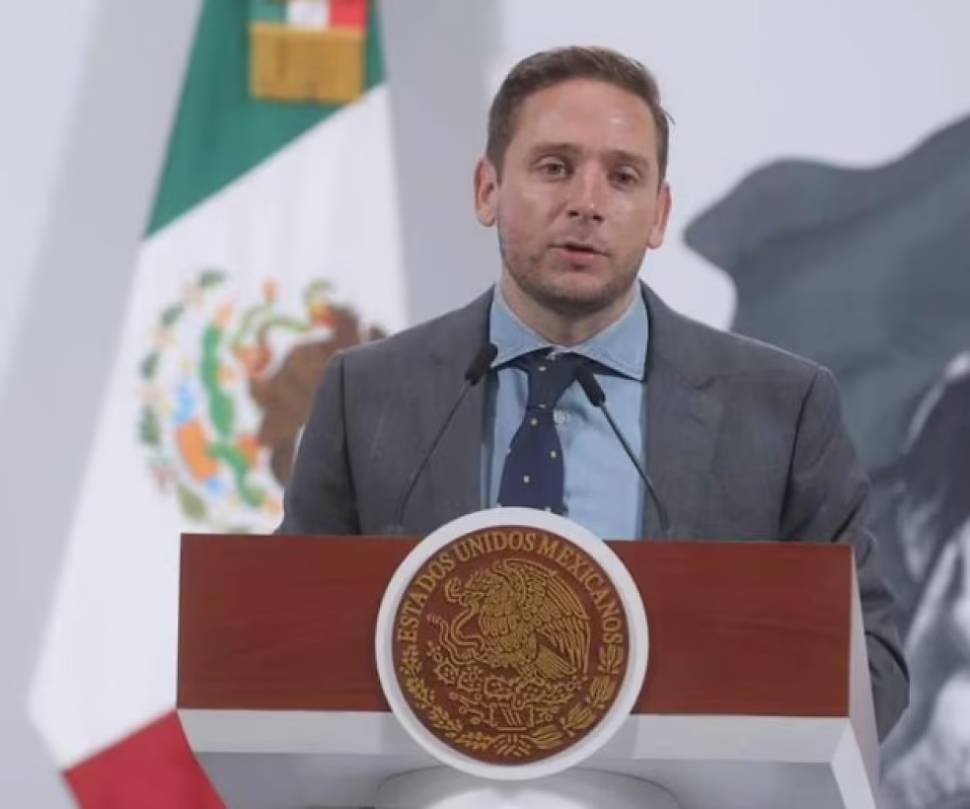
In a moment that will be recorded in the annals of history, Eduardo Clark, the undersecretary of Integration and Development of the Health Sector, raised his voice with a revelation that shook the foundations of the national medical system. 96% of the supplies to save lives are already insured! An unprecedented logistical feat, intended to shield public hospitals during 2025 and 2026. But that was not all… Between shadows of uncertainty and hope, he unveiled a project that would make the most daring pale: the “Health Routes”, a caravan of life that will leave in August to bring hope to every corner of the territory.

An investment that defies destiny: 284 billion pesos at stake

Under the spotlights of the National Palace, before the impassive gaze of President Claudia Sheinbaum, Clark revealed numbers that seemed taken from an epic: 416 million pieces of medicines will arrive as an unstoppable torrent to institutions such as the IMSS, the ISSSTE and the national health institutes. 60% more than in previous months! “The supply will grow like never before,” he declared with a solemn voice, while those present held their breath at such a promise.

RelatedIMSS Bienestar deploys second phase of Health Routes

But the bloodiest battle was fought on the cancer front. With 98% of anti-cancer drugs already secured, only 2% remained pending in this war against the clock. More than 300 thousand pieces will travel to the 32 states, while the mega pharmacy of Huehuetoca stands as a bastion, ready to send reinforcements to any trench where life is in danger.

The Routes of Health: when heroism has wheels

And then came the unexpected twist… 96 3.5-ton trucks, 38 smaller vehicles and 27 refrigerated boxes are getting ready to ply roads and trails, carrying with them not only drugs, but the promise of a tomorrow. “Flag departure in August!” Clark announced, as we imagined those caravans crossing mountains and deserts, escorted by personnel who already know each trail like the backs of their hands.

The numbers were as dizzying as the plan itself: 120 million pesos invested in fuel, packaging and brave drivers. A fraction of what it would cost otherwise, thanks to that anonymous army of health workers who have been mapping each community for decades. “It’s a watershed,” some whispered, while others simply couldn’t believe the magnitude of the undertaking.

For the unbelievers, Clark dropped one last piece of information: the portals monitoreocompra.salud.gob.mx and entregamedicamentos.salud.gob.mx would be the guardians of transparency, where each citizen could follow the trail of this historic feat.

Are we witnessing the dawn of a new era in public health? Share this news that is revolutionizing access to medicine in Mexico. May no corner of the country be left without knowing this milestone! And if you want to discover more about how this web of hope is woven, explore our related content. #HealthForAll
CRT foresees 85% of registered lines before staggered cuts

The CRT estimates that between 120 and 130 million cell phones will be registered before the progressive cut.

Mobile line registration: 85% will be linked before cuts

The Telecommunications Regulatory Commission (CRT) expects that between 120 and 130 million cell phones will be registered, which represents about 85% of the total active lines in the country.

Currently there are 144.6 million lines. Ricardo Castañeda Álvarez, general director of Regulatory Policy of the CRT, estimated that between 14 and 24 million will not be registered and will be deregistered as the process progresses.

The suspension process will begin on August 15. Lines ending in 0 will be deactivated first and then in stages until the end of the year, with the aim of avoiding technical saturations.

Castañeda explained that the extension was due to the risk that millions of users would not meet the original deadline, which would have generated operational complications similar to massive saturations in emergencies. He ruled out a new extension of the deadline.

He assured that the registry does not violate privacy because the information is managed by the operators. The main objective is to combat crimes such as extortion, fraud and virtual kidnappings.

Continue reading

They accuse the PAN of an irregular scheme in social support

Morena accuses the PAN of an alleged scheme to collect commissions on social programs.

Accusations for alleged diversion in social programs

Morena deputies in Mexico City accused PAN legislators of operating an irregular scheme through the sale and purchase of household products, supposedly disguised as a social support program in Tlalpan and Xochimilco.

According to the complaint, those involved acquired items such as water tanks, cisterns, solar heaters, washing machines, mattresses, laptops and screens through a civil association. They would then have resold them at higher prices to the inhabitants of those districts.

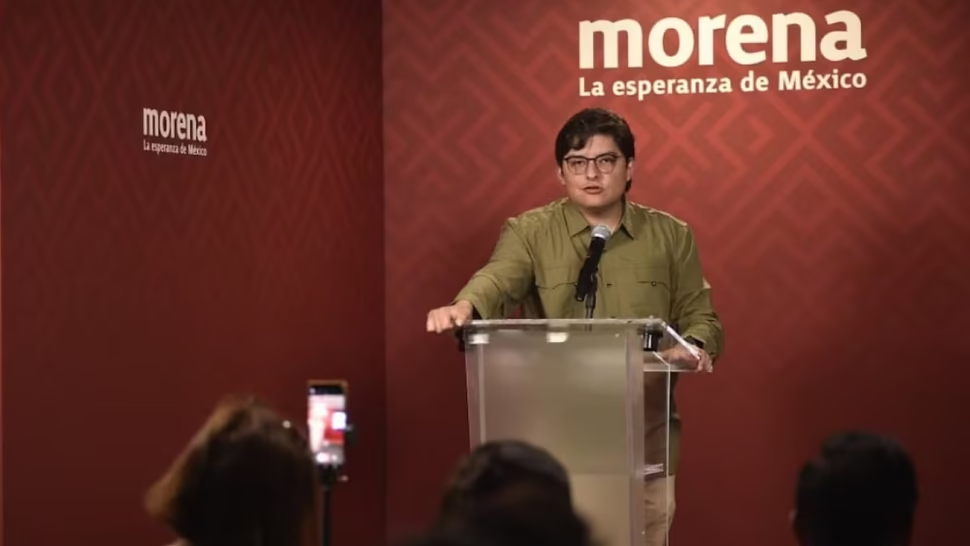
Morena spokesperson Paulo García stated that the mechanism included a triangulation of resources where the civil association paid commissions for each product delivered. In addition, legislators would have made profits between the purchase price and the resale price.

The Morenistas pointed out that the products carried names, photographs and partisan colors, which could constitute personalized promotion of public servants, prohibited by Article 134 of the Constitution outside of electoral campaigns.

The complainants announced that they will file complaints with the Electoral Institute of Mexico City so that the facts can be investigated.

For their part, PAN legislators denied the irregularities. They assured that these are operations between individuals through a foundation that sells products at low cost, without public resources.

The case has opened a debate about transparency and oversight of social programs in the capital’s mayors.

Continue reading

World Cup in Mexico: alert for increase in domestic violence

UN Women warns that attacks in homes increase up to 38% during the tournament.

Impact on homes

National and international organizations have raised alarms about an increase in different types of violence related to the Soccer World Cup in Mexico.

According to UN Women in Mexico, attacks within the home can increase between 26% and 38%, depending on whether the favorite team wins or loses. This tendency is aggravated when there is alcohol consumption, according to the same source.

The institutions warn that these episodes fall mainly on women, girls, boys and adolescents. The alert seeks to raise awareness and prevent damage during the development of the mega-event.

Continue reading