Mexico deploys humanitarian aid to Venezuela after earthquakes

Mexico sent more than 71 tons of supplies and rescue personnel to Venezuela after the June earthquakes.

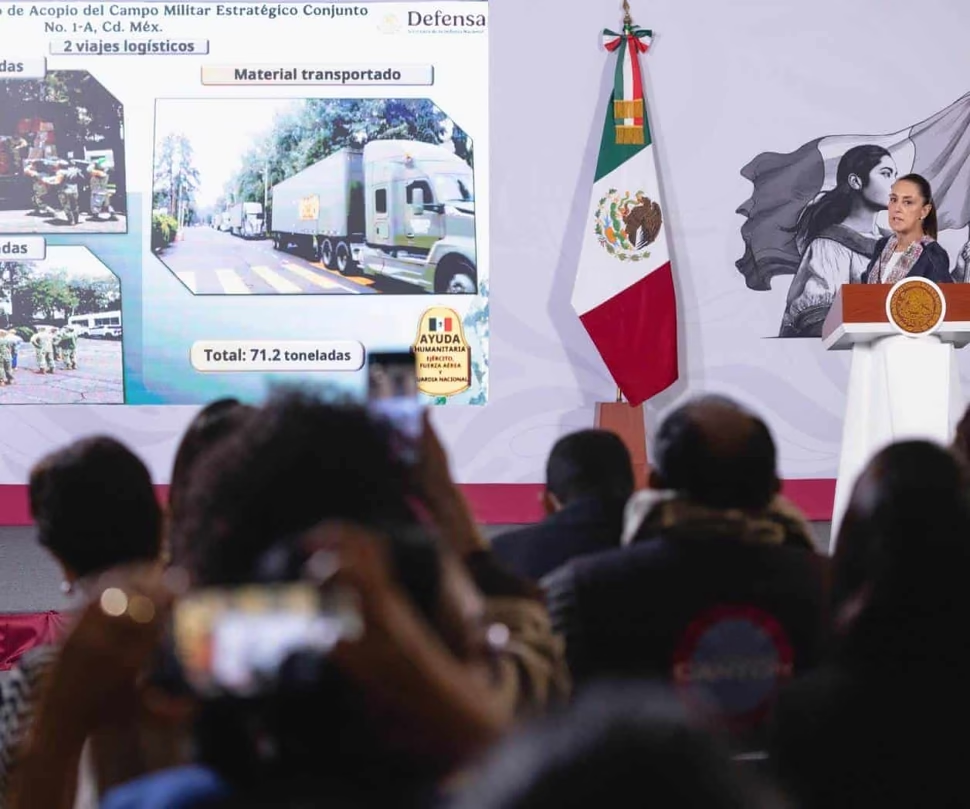
President Claudia Sheinbaum reported that the Government of Mexico, through the Ministry of Defense, has delivered 71.2 tons of supplies, eight electric power plants, 80 kilograms of Red Cross equipment and 13.1 million medications to the people of Venezuela. This, after the earthquakes that occurred on June 24.

Results of the rescue mission

Between June 26 and July 1, the Yumare Defense group rescued two people alive and recovered the remains of 40 deceased people. He also rescued a dog and provided 1,411 medical and first aid consultations. Sheinbaum added that a Navy ship will be sent tomorrow with more support.

RelatedMexico reinforces humanitarian aid to Venezuela after earthquakes

On July 2, 28 tons of supplies were transported, consisting of non-perishable food and medicines, in response to the request of the Venezuelan government. On June 30, five power plants and 80 kilograms of Red Cross material were sent. On Wednesday, three more emergency plants with lighting systems were added.

“In total, eight plants with a lighting tower and solar panel have been transported, in addition to 80 kilograms of Red Cross material, in two logistics flights,” said the president.

Sheinbaum highlighted that the Mexican humanitarian aid team continues in Venezuela, coordinated with local authorities. He also advanced:

“A Navy ship is going to be sent, probably tomorrow, with supplies from different places to continue supporting Venezuela. This is the report.”

Assistance includes medical supplies, power plants, medications and personnel specialized in rescue and emergency care.


SICT revokes Magnicharters certificate; definitive closure

The SICT revoked Magnicharters' certificate after suspending operations in April. Profeco reports 491 complaints.

End of an era for the tourist airline

The Secretary of Infrastructure, Communications and Transportation (SICT) made official the revocation of the Magnicharters air services operator certificate. The measure closes a supervision process initiated after the sudden suspension of operations last April.

The company’s website has since been disabled. It only shows a thank you message and an email for requests. The so-called “Mexico tourist airline” stops flying after more than three decades.

491 complaints and a debt with passengers

The Federal Consumer Attorney’s Office (Profeco) reported that the company accumulated 491 complaints for the interruption of activities when there were still paid vacation packages. Of the total, 57 were received at central offices and 434 at the Consumer Protection Offices.

Users reported empty counters and lack of response in official channels. To recover their money, Profeco directed them to go through commercial channels. They must appear as creditors in mercantile bankruptcy file 46/2026 before the First District Court for Commercial Bankruptcies. The process can be monitored on the portal of the Federal Institute of Commercial Bankruptcy Specialists.

Founded in 1994 and based in Monterrey, Nuevo León, Magnicharters operated a fleet of 12 Boeing 737 aircraft before its bankruptcy. Its closure leaves a precedent in the Mexican airline industry.

Continue reading

SNTE demands that SEP define a new system for a teaching career

They urge the SEP to replace the USICAMM with a transparent system for teachers.

New system for teachers

Alfonso Cepeda Salas, national leader of the SNTE, asked Mario Delgado Carrillo, head of the SEP, to specify the mechanism that will definitively replace the USICAMM. The objective is to guarantee transparent processes that respect the labor rights of teachers.

During the meeting, the teacher leader requested to maintain the route so that the Federal Government initiative is presented in the next legislative period.

Pension reform and local problems

Cepeda Salas also proposed a reform of the pension system. The union has a proposal supported by actuarial studies that demonstrate financial viability to improve retirements. He considered an analysis table with the Ministry of Finance and Public Credit to be a priority.

The sectional secretaries exposed local problems such as benefit arrears in Tabasco, Nayarit and Michoacán, as well as delays in basifications and reinstatements.

Mario Delgado endorsed the institutional will to serve the teaching profession and recognized the legitimacy of the SNTE leadership. Regarding pensions, he stated that the government is not evading the situation and invited the union to participate in the construction of a public insurance company for retirement. In addition, he requested collaboration for the consultation that will begin in the coming weeks in public schools, in order to design the mechanism that will replace the USICAMM.

The problems presented reflect the current situation of the teaching profession in several entities, where debts and delays directly affect education workers.

Continue reading

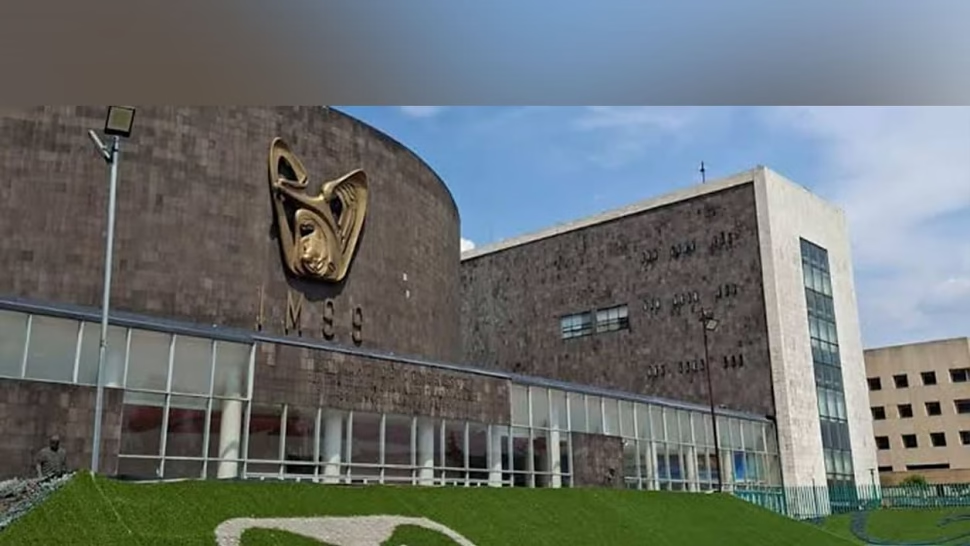
IMSS warns about financial pressure due to pensions and aging

IMSS alerts: pressure from pensions and chronic diseases threatens its financial viability.

Financial pressure on the IMSS

The Mexican Social Security Institute (IMSS) warned that spending on retirements and pensions represents severe pressure on its finances. In its most recent report to the Permanent Commission of Congress, the institution urged the implementation of strict spending control and optimization measures to guarantee its viability.

The document points out demographic and labor factors such as informality, the aging of the eligible population and the increase in chronic-degenerative diseases. The red lights are concentrated on the Health and Maternity Insurance, specifically on medical expenses for pensioners.

Given this, the IMSS proposed migrating towards home care schemes, reasoned prescription of cost-effective medical supplies and rigorous supervision of disabilities. It will also seek mandatory budget compensation mechanisms with the Ministry of Finance.

Digitalization will be key. Platforms such as the Digital Health Ecosystem and the Harmonized and Transparent Finance system will allow spending to be tracked and improved collection. The objective is to protect institutional liquidity without affecting coverage.

Continue reading