The strategy that seeks to restore their childhood
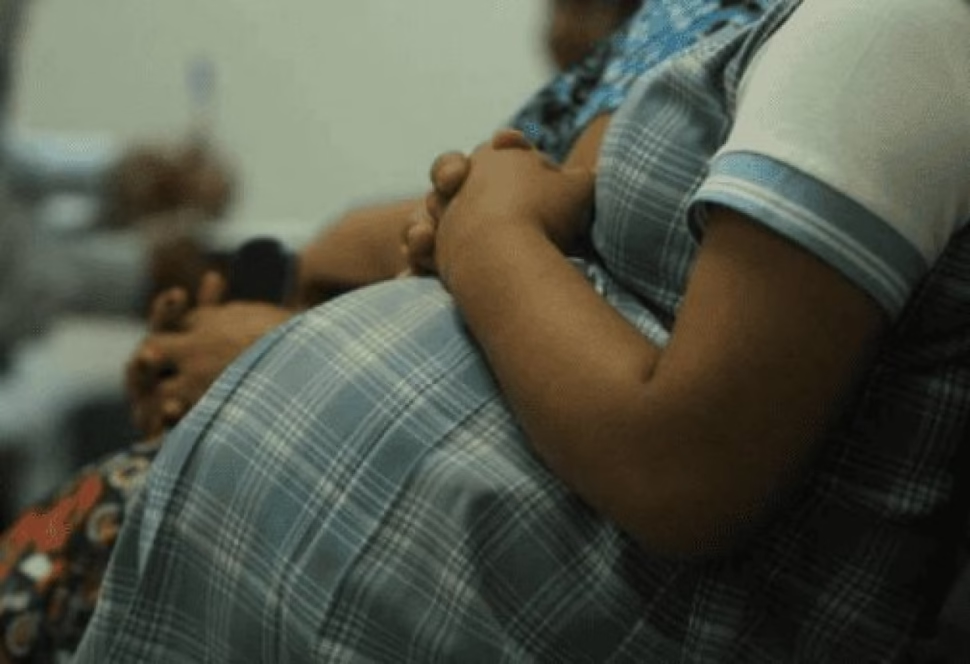
The figures are a dagger. In Mexico, when a girl between 10 and 14 years old becomes pregnant, it is not an “accident.” It is, in the vast majority of cases, the brutal consequence of sexual abuse. The Women’s Secretariat says so. The statistics scream it. And now, the federal government is trying to respond with a program that goes straight to the heart of the problem.
It’s called Free and Safe Girls and Adolescents Strategy. Its mission is as clear as it is urgent: to transform the reality of minors through prevention, justice and a profound cultural change. It is not a general plan. It’s a surgical attack.
A map of pain
The program will focus on 50 priority municipalities. Why those? Because they are the areas where the highest incidence of sexual violence, pregnancies in children under 14 years of age and forced unions was identified.
Guerrero heads this painful list with 11 municipalities. They are followed by Chiapas, Chihuahua, the State of Mexico and Oaxaca, with five each. Coahuila, Guanajuato, Jalisco, Puebla and Veracruz complete the map with two critical municipalities per entity.
This is where the vulnerability is most extreme. This is where they will perform.
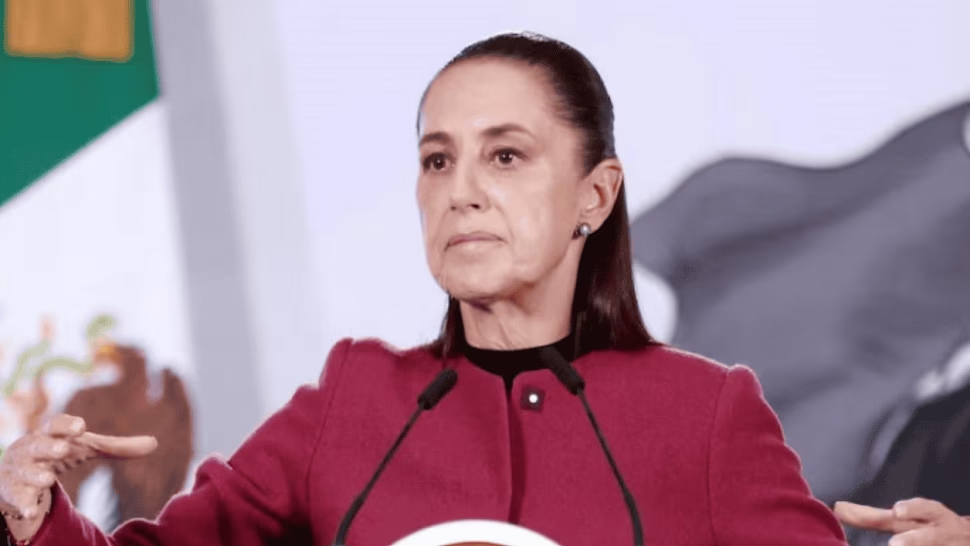
“The call to local authorities to firmly punish sexual abuse will be reinforced,” says the government from the Women’s Secretariat.
The plan has several fronts. First, community dialogue to eradicate the normalization of forced unions. The message is forceful: laws are above any custom when it violates dignity or freedom.
They will also seek to harmonize criminal codes in all states to establish a minimum floor of protection. And they will work directly in schools, speaking with teachers and families to protect the girls’ life projects.
All this will be financed with resources from the Women’s Welfare Fund (FOBAM).
The final goal is on the horizon: completely eradicate by 2030 births among girls aged 10 to 14, and reduce them by half among adolescents.
It is a huge promise. A commitment that seeks to repair decades of normalized violence. The government says it wants to give girls back their right to a future. The question that remains floating in the air is whether this focused plan will be enough to change such a deep-rooted reality.