León Larregui defends Mexican sovereignty on networks
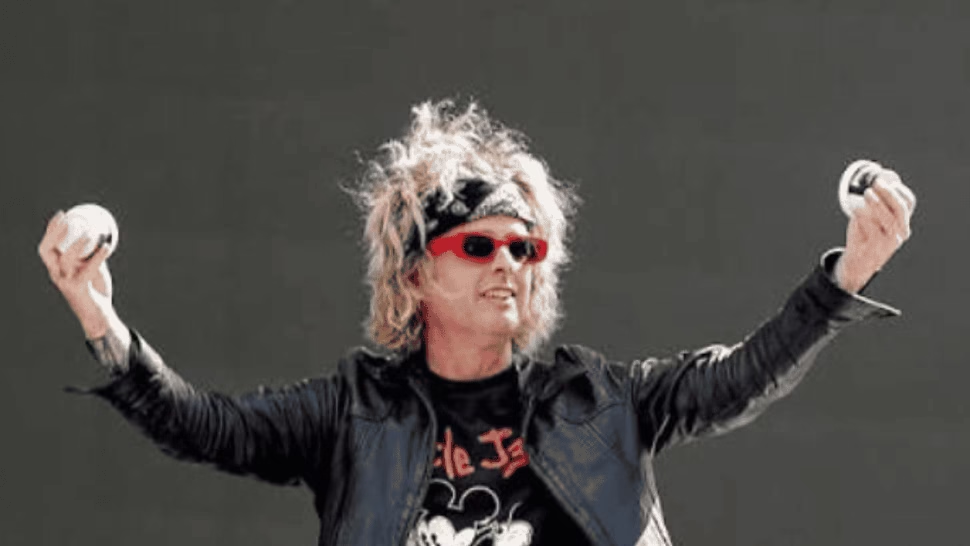
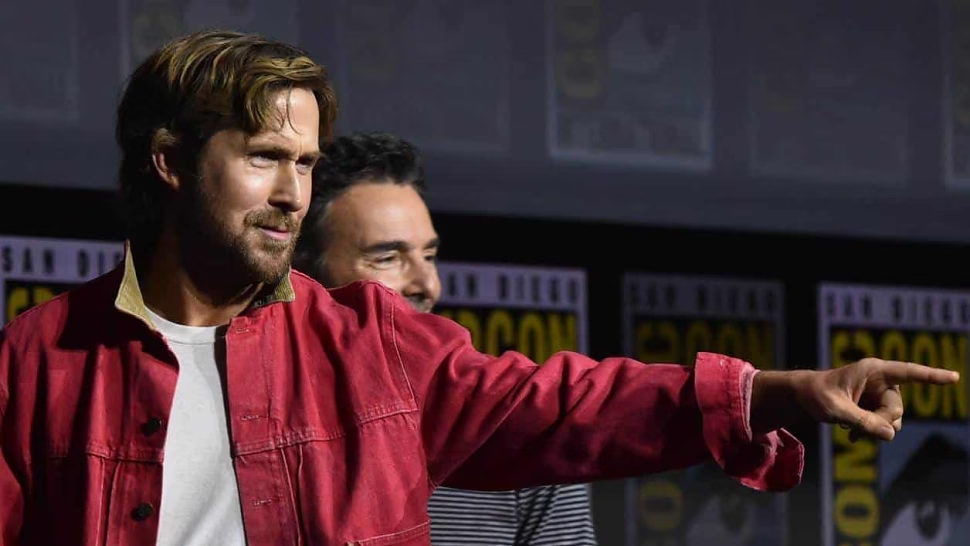
The conversation about national security and international relations between Mexico and the United States has just jumped from the diplomatic sphere to social networks, with an unexpected protagonist: León Larregui. The vocalist of the band Zoé intervened directly in a debate started by British politician Jim Ferguson, who warned that Mexico is “in the crosshairs” of the United States after former President Donald Trump’s recent statements about possible military operations against drug trafficking cartels.
The musician’s intervention in the geopolitical debate
Through his official account on
It was then that Larregui decided to intervene with a forceful response that quickly went viral. Instead of addressing musical or personal issues as he usually does, the singer adopted a direct political tone:
“Mexico is a sovereign country. Do you know how many Americans live peacefully in Mexico? Do you know who the kings of the drug cartels in the world are? You. USA”
But it didn’t stop there. The artist went further by describing Trump’s accusations as fabricated lies and made clear his position on the willingness of Mexican citizens to defend their territory:
“Do not lie or invent stories, we Mexicans will fight against you until the end. Green go home”
This last phrase, a clear reference to the “Yankee go home” movement but adapted to the current context, encapsulates the feeling of resistance that Larregui wanted to convey.
Divided reactions and practical concerns
The responses to the singer’s publication immediately reflected the polarization of the issue. While some followers celebrated his position with comments such as “That’s just how you talk” and “I love you Léon”, others expressed very specific concerns about the possible practical consequences of his statements.
One of the most revealing comments stated: “León, I admire you, but the country is full of blood. Besides, because of this post they can take away your visa and cancel the tour.” This observation highlights a fundamental tension that public figures face when they intervene in international political debates: the balance between expressing personal convictions and protecting professional interests that depend precisely on those bilateral relationships.
Another follower appealed to the artist’s historical character: “I love you very much, hippicito. Don’t lose your fighting spirit”, recognizing how this political intervention aligns with the countercultural image that Larregui has cultivated for years, but now applied to a specific and highly sensitive geopolitical context.
What is interesting here is how this intervention illustrates a broader phenomenon: the increasing politicization of cultural figures in debates about national sovereignty and international relations. Larregui is not the first Mexican artist to speak out on these issues, but he is one of the most direct when specifically confronting the statements of foreign political figures.The context behind this intervention is crucial to understanding its impact. US-Mexico relations have undergone significant strains in recent years, particularly during the Trump administration, where threats of military intervention were not new rhetoric. However, what has changed is the scenario where these debates occur: they are no longer limited to traditional diplomatic channels or conventional media, but rather take place publicly on digital platforms where anyone with a significant audience can intervene and shape the conversation.
Larregui’s response also touches on sensitive points about shared responsibility in the problem of drug trafficking. By pointing out that “the kings of the cartels” are in the United States (referring to both mass consumption and arms trafficking), the singer articulates a common criticism in more specialized analyzes of the topic: that this is fundamentally a binational problem that requires genuine bilateral cooperation, not unilateral threats.
Finally, this episode raises important questions about the role cultural figures should play in complex political debates. Should they limit themselves to their artistic sphere or do they have the right—even the responsibility—to speak out on critical national issues? The divided reactions to Larregui’s statements suggest that there is no consensus on the matter, but the truth is that when artists with their level of influence intervene, they inevitably amplify certain perspectives and bring complex debates to mass audiences.
Have you already shared this perspective? Spread this analysis to expand the conversation about sovereignty and cultural diplomacy.