The UIF launches a format to spy on suspicious transfers

The financial bureaucracy is updated with a new format to monitor the flow of capital, just when it is needed most.

Because nothing says “trust” like a new form to report your money

Starting this glorious December 1, our beloved and always transparent financial institutions will have the honor of filling out another tedious form. Their mission, if they decide to accept it (and they have no other choice), is to send to the Financial Intelligence Unit (UIF) the reports of international transfers of funds with a new and improved design. Because, clearly, what was missing in the fight against organized crime was a better spreadsheet.

We are talking, of course, about the famous FTI reports, the same ones that played such a good role when the Financial Crimes Enforcement Network (FinCen) of the United States pointed out Intercam, CI Banco and the Vector brokerage house for their alleged and perhaps too creative maneuvers with cash. What a coincidence that the format is being renewed just now, right? It’s like changing the locks after the banker has fled, but with more acronyms.

RelatedThree financial institutions are transformed after international sanctions

Bureaucracy at its finest

In a show of regulatory compassion, the authorities have decided that a single provision, 3.1.7 (because naming them with complete sentences would be too humane), wait until March 1, 2026 to come into force. This regulatory gem refers to filling out the field where the name of the countries or jurisdictions involved must be entered. Apparently, automated banking systems need three more months to learn basic geography. You would think that with what they charge in commissions, they could afford a faster update, but what do we know.

Every month, banks and brokerage houses, among other privileged members of the financial club, must prepare a report for each transfer equal to or greater than one thousand dollars. Because, as everyone knows, sophisticated criminals always send exactly $999 to remain undetected. The report reaches the FIU through the National Banking and Securities Commission, in what is undoubtedly a very efficient process of exchanging PDFs with passwords that are impossible to remember.

But the paperwork party would not be complete without the busy attendance of exchange houses, Popular Financial Companies, money transmitters and Financial Technology Institutions. Because when it comes to slowing down the system, the more hands-on, the better.

Global migration, or how to justify a software update

According to the Secretariat of Finance and Public Credit (SHCP), this exciting change is due to the “global migration” towards harmonized payment standards. Translation: It turns out that the entire world is upgrading their SWIFT messaging systems (that retro-sounding MT format) to the shiny new ISO 20022 messages. The deadline for this epic migration was November 22, 2025, which explains why the new format appears now, right on time… or a little late, depending on your level of cynicism.

So, with the noble purpose of having information on the countries involved in international fund transfers and aligning the types of SWIFT messages with the ISO 20022 certification, it was absolutely essential to modify the official format for the International Fund Transfer Report. Because we all know that what really stops professional money launderers is a change in the reporting format. Surely the bosses will now scratch their heads in confusion at the new fields to fill, wondering if their dirty money goes in “observations” or in “payment concept.”

In short, while you prepare for the holidays, the Mexican financial system is dressing up with a new form that promises… well, it promises to be a form. Perhaps more colorful, perhaps with more modern typography, but at the end of the day, another procedure in the fascinating world of anti-money laundering regulation. Because if there is something that moves slower than dirty money, it is the bureaucracy that tries to chase it.

Do you know someone who loves bureaucratic formats? Share this regulatory gem on your social networks and surprise them with the latest in financial entertainment! Explore more content about the curious ways the system tries to stay one step ahead… or at least, tries to appear that way.

Reynosa reanudará fumigación contra el dengue tras lluvias

Autoridades retoman fumigación en Reynosa tras pausa por lluvias para frenar el dengue.

Campaña contra el dengue

Las autoridades de Salud Bienestar en Reynosa reanudarán en breve la fumigación en distintas colonias, una vez que las condiciones climáticas lo permitan. Las lluvias recientes obligaron a suspender las labores, pero el terreno debe secarse para retomar la eliminación de mosquitos.

“Cuando se ausenten las lluvias y seque el terreno, volveremos a recomenzar los trabajos porque sabemos que están proliferando los zancudos. Vamos a seguir trabajando en la eliminación de estos insectos para prevenir más casos de dengue”, explicó Iliana Villarreal Cantú, titular de Salud Bienestar en la ciudad.

La funcionaria informó que en lo que va del año se han detectado tres casos de dengue con síntomas graves, además de varios sospechosos. Hasta ahora, ninguno de los pacientes ha requerido hospitalización.

RelatedJulión Álvarez conquers Reynosa with a historic concert

Medidas de prevención

Villarreal Cantú recomendó a la ciudadanía evitar acumular agua en recipientes para eliminar criaderos de mosquitos. También pidió deshacerse de objetos en desuso donde los insectos puedan anidarse, y cambiar el agua de floreros con frecuencia.

El personal de fumigación regresará a las colonias una vez que cese la lluvia, para continuar la campaña contra el mosquito en todas sus etapas.

Continue reading

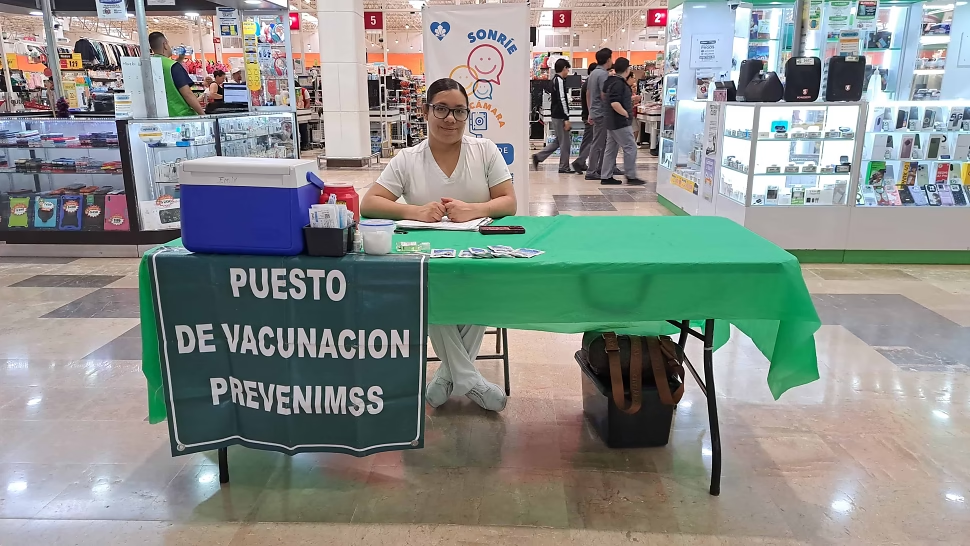
PrevenIMSS aplica vacunas en centro comercial del Bulevar Morelos

PrevenIMSS instala módulos en centros comerciales para vacunar contra sarampión, neumococo y más.

Jornada de vacunación en espacio comercial

Personal de PrevenIMSS mantiene puestos de inmunización en distintos centros comerciales. Además de aplicar dosis, ofrecen acciones preventivas.

El módulo instalado sobre Bulevar Morelos atendió este viernes a niños de 0 a 9 años. Se suministraron vacunas contra rotavirus, hexavalente y DPT para menores de 4 años.

RelatedMexico contains measles outbreak with 8.8 million vaccines

También se administró la vacuna contra sarampión a personas de 10 a 49 años. Adultos mayores de 60 años recibieron la dosis contra neumococo.

Mujeres embarazadas accedieron a la vacuna TDPA, que protege contra tos ferina, difteria y tétanos tanto a la madre como al bebé.

Acciones complementarias

El equipo de salud distribuyó vitamina A, sobres de Vida Suero Oral y preservativos masculinos. Todo forma parte de una estrategia integral de prevención.

El horario de atención fue de 9:00 a 15:00 horas. La comunidad respondió acudiendo al módulo para vacunarse.

Continue reading

Niños de primaria arrasan en certamen de innovación tecnológica

Dos alumnos de primaria ganan primer y segundo lugar en etapa regional del certamen de innovación.

Logros que trascienden el aula

Dos estudiantes de la Escuela Primaria “Narciso Mendoza” obtuvieron el primer y segundo lugar en la etapa regional del Certamen Estatal de Creatividad e Innovación Tecnológica. El resultado les asegura un pase directo a la fase estatal.

Saúl Azarel Martínez García se llevó el primer sitio con su proyecto. Luis Damián Martínez García consiguió el segundo lugar. Ambos demostraron talento, preparación académica y capacidad innovadora.

RelatedMexico promotes technological sovereignty with fund for students

Los proyectos fueron guiados por el docente Héctor Escobedo Hernández. Él acompañó a los alumnos desde el desarrollo hasta la presentación final, fortaleciendo sus habilidades en investigación y creatividad.

Reconocimiento al esfuerzo colectivo

Autoridades educativas señalaron que estos logros son fruto de la disciplina y el compromiso de los menores, así como del respaldo de maestros y familias. Ahora, los campeones regionales se alistan para representar a su institución en la fase estatal.

Con estos resultados, los alumnos ponen en alto el nombre de su escuela y evidencian el potencial de la niñez en el ámbito de la innovación tecnológica.

Continue reading