EU imposes new sanctions on Iran over arbitrary detentions and repression

The EU expands its list of sanctions against Iran for arbitrary detentions and systematic violations of fundamental rights.

New EU measures against Iran hostage diplomacy

The European Union has implemented this Monday a series of restrictive measures aimed at nine Iranian individuals and entities linked to the so-called “hostage diplomacy”. This practice consists of the illegal detention of European citizens, used as bargaining chips to negotiate the release of Iranian prisoners or to obtain political concessions from Member States.

Context and scope of the sanctions

The decision responds to recurring hostile actions by Tehran, which include the unfounded imprisonment of European nationals. According to an official statement, the EU expresses its “deep concern” about the systematic use of these tactics for political purposes, highlighting cases where access to a fair judicial process has been denied.

RelatedThe European Union reactivates nuclear sanctions against Iran

Among the entities sanctioned are the Shiraz prison and the First Chamber of the Shiraz Court, identified as key centers in the repression of opponents and ethnic minorities. The EU documents serious violations, such as forced confessions and extrajudicial executions of activists and dissidents.

The list now includes 232 people and 44 organizations, whose assets have been frozen, in addition to being prohibited from entering European territory. At the same time, an embargo is maintained on the export of equipment that could be used for mass surveillance or internal repression.

Are you interested in international politics? Share this analysis on your social networks and discover more about how sanctions shape global relations.
Poland accuses Ukrainian of sabotage in favor of Russia

Polish prosecutor accuses a young Ukrainian of sabotage for Russia.

Destabilization charges

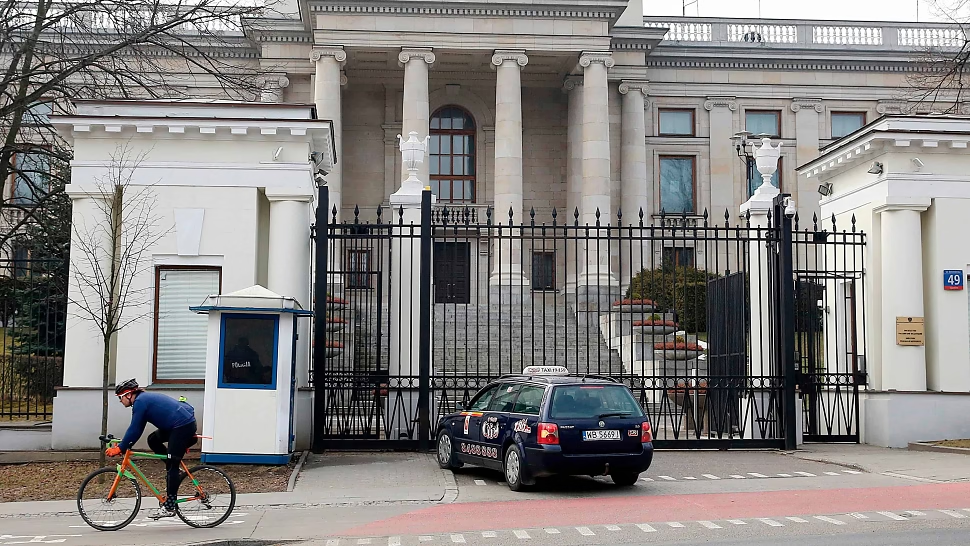
Polish prosecutors have filed charges against an 18-year-old Ukrainian citizen for alleged acts of sabotage and destabilization for the benefit of Russian intelligence. According to the authorities, the young man would have been recruited through the internet and received payments in cryptocurrencies to carry out actions that sought to damage relations between Poland and Ukraine.

According to the Polish Internal Security Agency, the accused faces 47 charges for acts committed between November 2024 and August 2025. Among them is the alteration of monuments dedicated to Polish victims of tragic events that occurred during World War II, actions that were intended to fuel historical tensions between both nations.

Investigations indicate that the young man was operating under direct instructions from Russia. No additional details regarding his identity or current whereabouts were revealed.

Continue reading

Fedorov’s replacement sparks mobilizations in Ukraine

Change in Ukrainian defense generates discontent in kyiv and other cities.

Relay that divides Ukraine

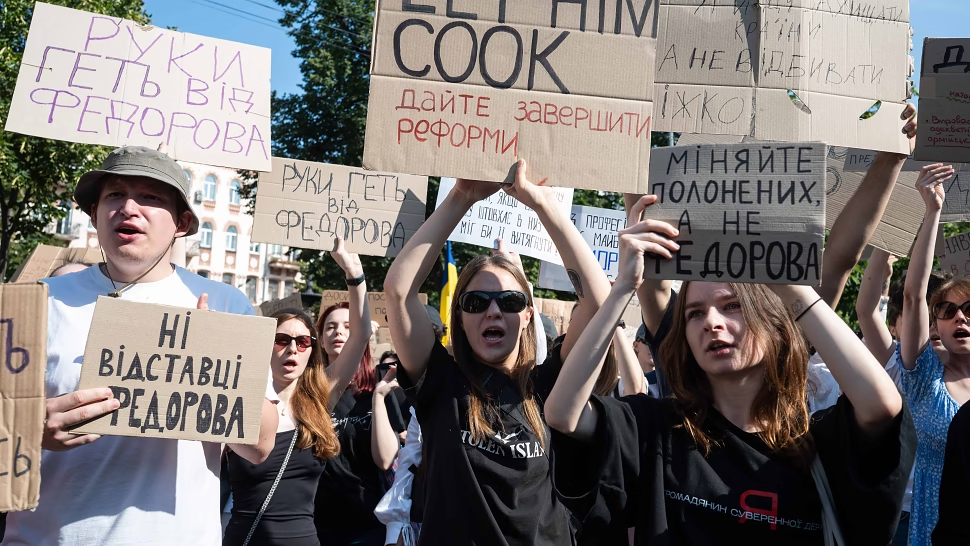
This Thursday, Volodymyr Zelenskyy relieved Mykhailo Fedorov, Minister of Defense, within the framework of a broad government restructuring. The decision sparked mobilizations in kyiv and other cities, where thousands supported the official, considered one of the main drivers of military technological innovation in the country.

The president justified the change by pointing out differences between Fedorov and the commander of the Armed Forces, Oleksandr Syrskyi. According to Zelenskyy, these disagreements hindered coordination in the midst of an armed conflict against Russia. Major General Yevhen Khmara will take over the portfolio.

Fedorov’s departure generated discomfort among citizens, who consider his work in the development of defensive strategies essential. The demonstrations reflect concern about the government’s direction in this context of hostilities.

Continue reading

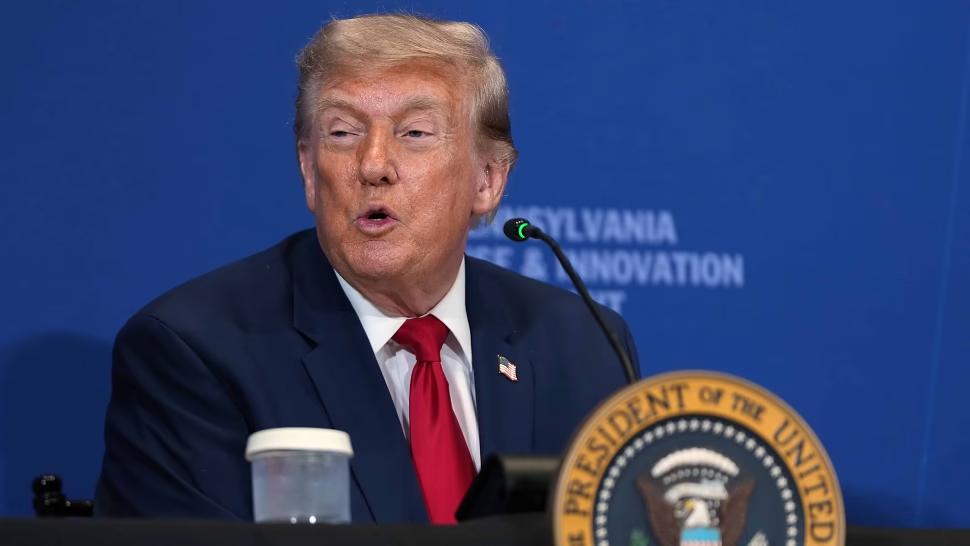
Trump maintains his accusations of 2020 electoral fraud without evidence

Trump insists on debunked claims about the 2020 elections. New investigations generate controversy.

Almost six years after the 2020 presidential election in the United States, Donald Trump continues to claim that there were irregularities. Multiple official investigations, audits and courts concluded that there was no widespread fraud or foreign interference that altered the result, won by Joe Biden.

In a recent message to the nation, Trump anticipated “really big news” about the elections. Electoral integrity experts are concerned that the president could repeat already debunked claims. Members of his administration avoid explicitly recognizing Biden’s victory and only point out that he was declared president.

Official conclusions and new investigations

Then-Attorney General William Barr claimed to have found no evidence of significant fraud. Chris Krebs, former director of the federal election cybersecurity agency, described the elections as secure. An intelligence assessment at the end of Trump’s first term ruled out foreign tampering with the results.

However, since his return to the White House, Trump ordered new investigations. Federal agents have reviewed election records in counties in Georgia and Arizona. Kurt Olsen, a lawyer linked to fraud theories, is leading part of the investigations. Critics point out that these actions imply a high expenditure of public resources without presenting conclusive evidence until now.

Continue reading