The energy transition in Mexico advances despite everything

The director of IER-UNAM reveals how collaboration between sectors, sometimes in spite of themselves, is driving an unstoppable change in the national energy matrix.

Mexico and its epic (and sometimes comical) race towards renewable energies

It seems that Mexico, in a burst of collective lucidity, has decided that it does have the infrastructure and knowledge to promote renewable energy projects. The funniest thing? The magic recipe for this miracle is not a presidential decree or an extraterrestrial discovery, but something that sounds like therapist advice: bonding. Yes, that thing that everyone promotes in PowerPoints but that in practice usually looks more like a dialogue of the deaf. Miguel Robles Pérez, the director of the Institute of Renewable Energy (IER) of UNAM, dared to affirm that bringing together the government, industry and academia is the key. An idea so revolutionary that, who knew, it could even work.

During his brilliant intervention at the Latin America C&I Greenovation Summit 2025 in Cancun (because what better place to talk about sustainability than a massive tourist destination, right?), Robles Pérez dropped the pearl that the objective of his institute is to generate specific knowledge. Wow, quite a revelation. They are not satisfied with generic knowledge or pretty ideas to fill out reports; They want good knowledge, which accelerates the energy transition. “We want to insert ourselves into the knowledge for the transition,” he declared. A phrase that, without a doubt, will remain for posterity and that makes us ask ourselves: and what else would one insert oneself into if not knowledge? In ignorance?

RelatedMexico promotes its energy transition with social justice

Unstoppable growth: A miracle or simply the world realizing the obvious?

The good Mr. Robles assured with an optimism that borders on the mystical that the adoption of clean energy in Mexico shows systematic growth. That is, it grows even though sometimes it seems that the forces of the universe conspire against it. His star statement was: “It’s as if, regardless of what we want, things move anyway.” Translation: the renewable energy ship has sailed, and if you don’t get on, you’ll stay on the dock watching it sail away, even if you continue dreaming of the coal era. The best thing is that, according to him, this development is sustained and tends to go faster and faster. Sure, like a snowball going downhill, but in a country where bureaucracy sometimes acts like a wall of ice.

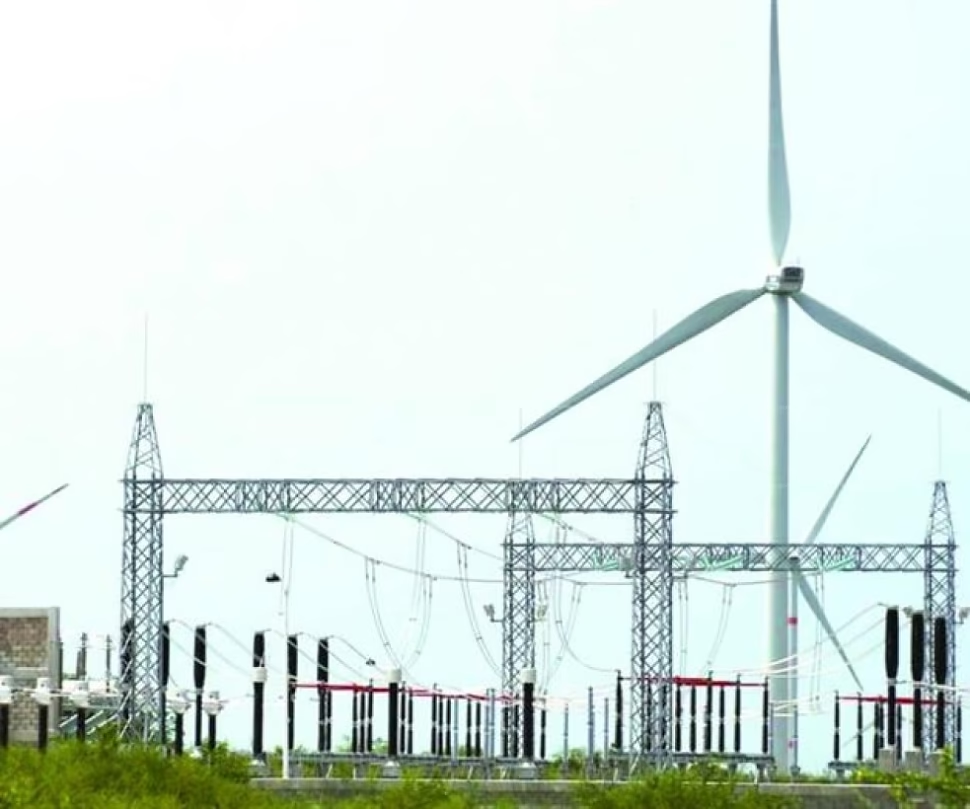
And in case anyone doubted it, the specialist proudly listed the jewels in the crown: thermal solar, wind, photovoltaic and hydroelectric plants that are already supplying the population in a sustainable way. Or at least, a part of it. This technological deployment has allowed, in an almost magical act, to move towards a more diversified energy matrix. That is, we are stopping putting all our eggs in the same fossil basket, a strategy that, surprisingly, is giving results.

Innovative alternatives: Because putting a solar panel on your roof is almost mainstream

But the industry, in an effort not to be left behind, is implementing what they grandly call new distributed generation alternatives. This includes everything from the now ubiquitous solar thermal panels to batteries and electrical generators. Basically, they want each citizen to feel a little like Tony Stark generating their own clean energy, seeking what they long for: efficiency and better results. Robles Pérez, closing his intervention like a modern prophet, concluded that this comprehensive collaboration is fundamental. In other words, if everyone pretends to work together, in the end maybe, just maybe, they will manage to consolidate the long-awaited energy transition in the country. A happy ending that, for now, is still in the writing process.

Did you like this ironic look at Mexico’s energy future?Share this article on your social networks and help spread these sometimes hilarious revelations about our path to sustainability.Explore more content related to innovation and energy policies on our platform so you don’t miss any details of this epic journey.
Massive security reinforcement and alcohol ban at the Azteca

56,000 police officers and alcohol restriction for the game at the Azteca.

Measures for the Mexico-Czech Republic match

The government of Mexico City announced an unprecedented security operation for this Wednesday’s game at the Azteca stadium. 56,000 personnel will be deployed, five times more than the 11,219 employed last week.

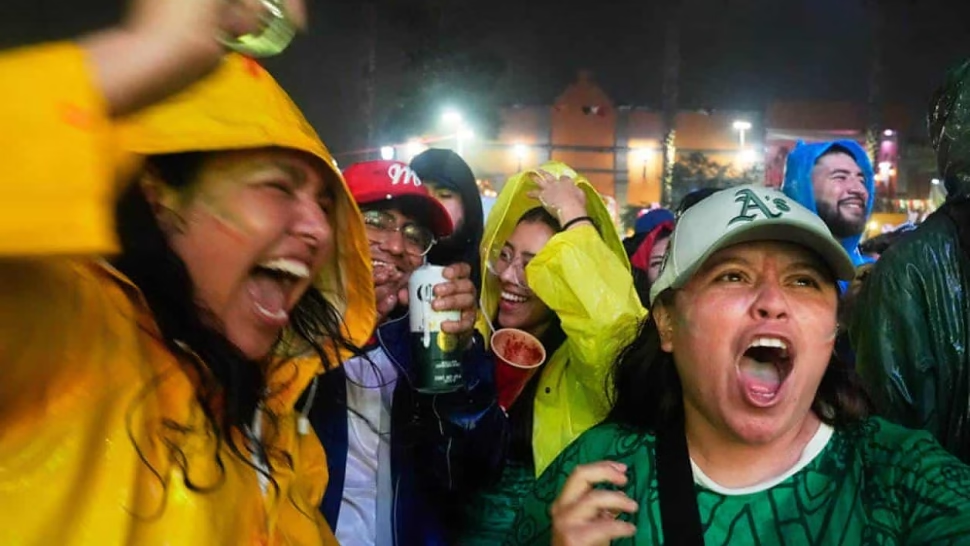
The decision responds to the celebrations of the previous Thursday, when some 700,000 people gathered in the capital after Mexico’s victory over South Korea. Although there were no injuries, nearly 40 tons of garbage were collected in the Ángel de la Independencia and the Zócalo.

The Secretary of Security, Pablo Vázquez, detailed that 7,500 police officers will guard the Azteca stadium. Another 3,275 will be in the Zócalo and 4,200 on Reforma Avenue. The objective is to protect players, referees, authorities and fans.

In addition, the Secretary of Government, César Cravioto, reported that starting at 3 p.m. on June 24, a ban on the sale of alcohol will take effect for sixteen hours. Applies to the Historic Center and five neighborhoods of Cuauhtémoc.

Sales will only be allowed in restaurants, hotels and private clubs, accompanied by food. Convenience stores and supermarkets are excluded. The fines for non-compliance amount to up to 293,275 pesos (about $17,251).

The Mexican Alliance of Transporters Organization (AMOTAC) called for mobilizations on highways in the 32 states and blockades in the capital to protest against the violence. The operation also considers these protests.

Continue reading

UNAM, new WHO collaborating center in oral health

The WHO recognizes UNAM as a reference in oral health and aging.

International recognition for UNAM

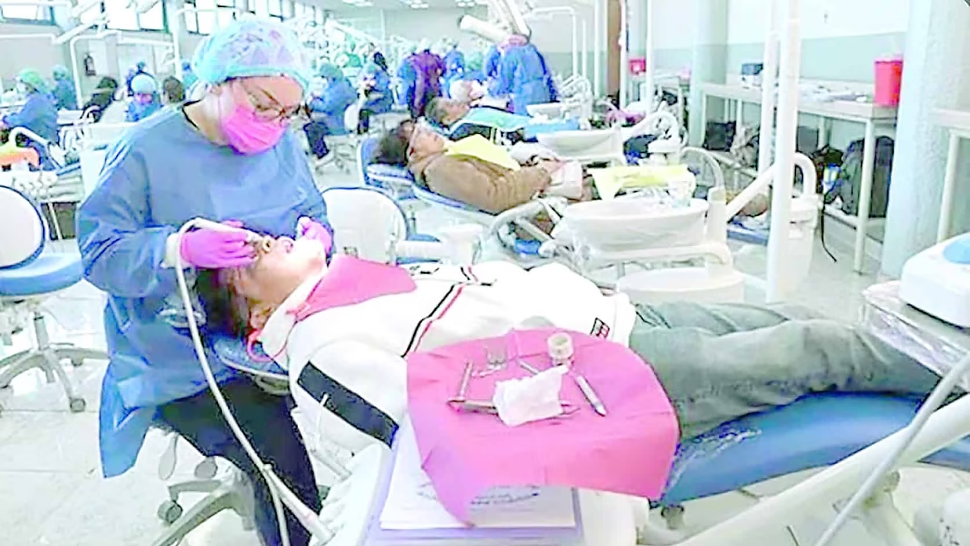
The World Health Organization (WHO) designated the Department of Oral Public Health of the UNAM Faculty of Dentistry as a Collaborating Center in Oral Health and Aging. The distinction is valid for four years.

With this appointment, the highest educational institution consolidates itself as a regional reference in the comprehensive care of older adults.

Implications of the appointment

The recognition will allow university specialists to participate in the development of public policies focused on improving the quality of life of the elderly.

In addition, they will promote strategies to promote among older adults and caregivers the importance of maintaining adequate oral health as an essential part of general well-being.

The designation places UNAM on a level of technical cooperation with the WHO, which opens opportunities to influence global guidelines on aging and oral health.

Continue reading

Digital sexual exploitation affects 1.6 million adolescents in Mexico

1.6 million adolescents in Mexico suffer online sexual exploitation every year.

The report reveals alarming figures

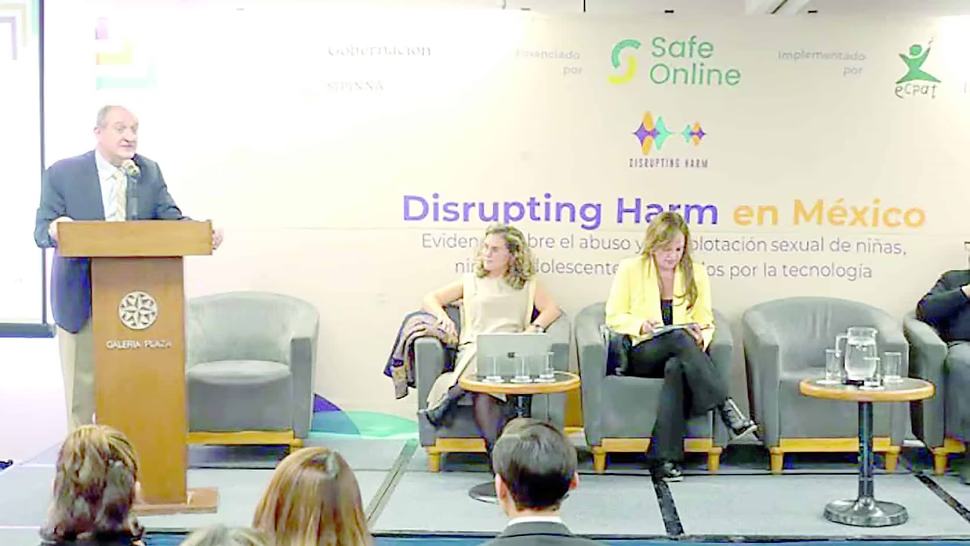
Unicef, ECPAT International and Interpol published the study “Disrupting Harm México”, which indicates that one in eight adolescent Internet users in the country – around 1.6 million – experienced sexual exploitation facilitated by digital technologies for a year.

67% of cases occurred online only, mainly on social networks and platforms. However, violence is not limited to the virtual sphere: in almost two out of every three situations, the victims knew their attackers, who were usually friends, partners or family members.

The report documents serious under-reporting. 32% of victims did not tell anyone what happened out of shame or fear, and less than 1% filed a formal complaint. This reflects normalization and silence around these attacks.

Consequences and call to action

In mental health, the consequences are profound. Those who suffered this type of violence are 15 times more likely to self-harm and 12 times more likely to have thoughts about their own death, compared to those who did not have that experience.

Fernando Carrera, Unicef ​​representative in Mexico, asked to reinforce prevention and responsibility of digital platforms. Lorena Villavicencio Ayala, from SIPINNA, stated that the State must guarantee the safety of girls, boys and adolescents in digital environments.

Continue reading