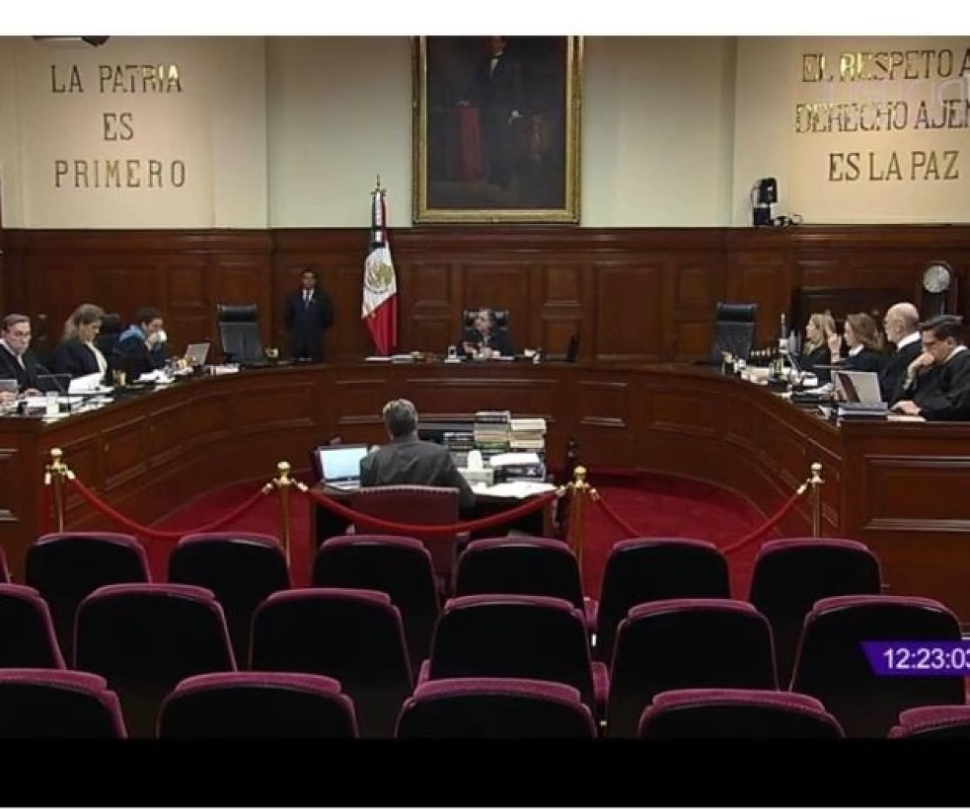
Historic ruling on animal welfare and criminal law
The Supreme Court of Justice of the Nation (SCJN) this Wednesday invalidated a controversial provision of the Morelos Penal Code that punished pet owners with up to four years in prison for not complying with specific standards of care, such as walking them or facilitating their socialization. The decision, supported by eight votes to one, marks a precedent on the limits of criminal law in matters of animal protection.
Details of the annulled rule and legal arguments
Section XVI of article 327, in force since February 2024, criminalized behaviors such as “not allowing essential social interactions” for the emotional well-being of animals or “depriving them of stimulating environments”. The Court determined that this wording violated two fundamental principles:
- Minimum intervention: Only the most serious actions should be classified as a crime.
- Taxativity: The ambiguity of the norm opened doors to arbitrary interpretations.
Minister Juan Luis González Alcántara emphasized that “criminal law is the last resort”, describing the sanctioned omissions as “criminally irrelevant”. In contrast, Minister Lenia Batres, the only dissident, defended the initiative as progress in the face of “social demand for animal welfare.”
Practical implications and legal alternatives
Experts consulted agree that the application of the standard was unfeasible:
- Prosecutors lack the resources to verify if a dog “runs or jumps enough.”.
- It did not establish alternative penalties to prison, such as fines or community work.
Minister Javier Láynez proposed that these offenses be resolved through administrative sanctions, not criminal proceedings. It should be noted that the ruling does not affect other 15 sections of the same article that criminalize acts of explicit violence against animals.
National context and reactions
The Morelos reform was challenged by the National Human Rights Commission (CNDH), which alleged disproportionality. This case reflects a global debate: while countries like Germany include “emotional rights” for pets in their laws, Mexico prioritizes avoiding saturation of the judicial system.
Data from the Environmental Prosecutor’s Office reveal that 60% of complaints of animal abuse in 2023 involved negligence, but only 12% led to convictions. Organizations like Animal Heroes are now calling for strengthening non-criminal mechanisms, such as education or registries of responsible owners.
What’s next? The Morelos Congress must reformulate the rule adjusting to the Court’s criteria, while the SCJN analyzes five other similar resources in entities such as Jalisco and CDMX.
Explore more about animal law and share this analysis to encourage informed dialogue. #AnimalWelfare #CriminalLaw