


Undercover operation against drug trafficking
The Central Intelligence Agency (CIA) of the United States carried out an attack operation with unmanned aerial vehicles in Venezuelan territory last week. The target was a dock allegedly used by drug cartels for their logistics activities. According to sources with direct knowledge of the events, who requested anonymity, this represents the first direct and known action on Venezuelan soil since Washington began a broader campaign against drug trafficking vessels in the Caribbean Sea last September.
Official confirmations and silences
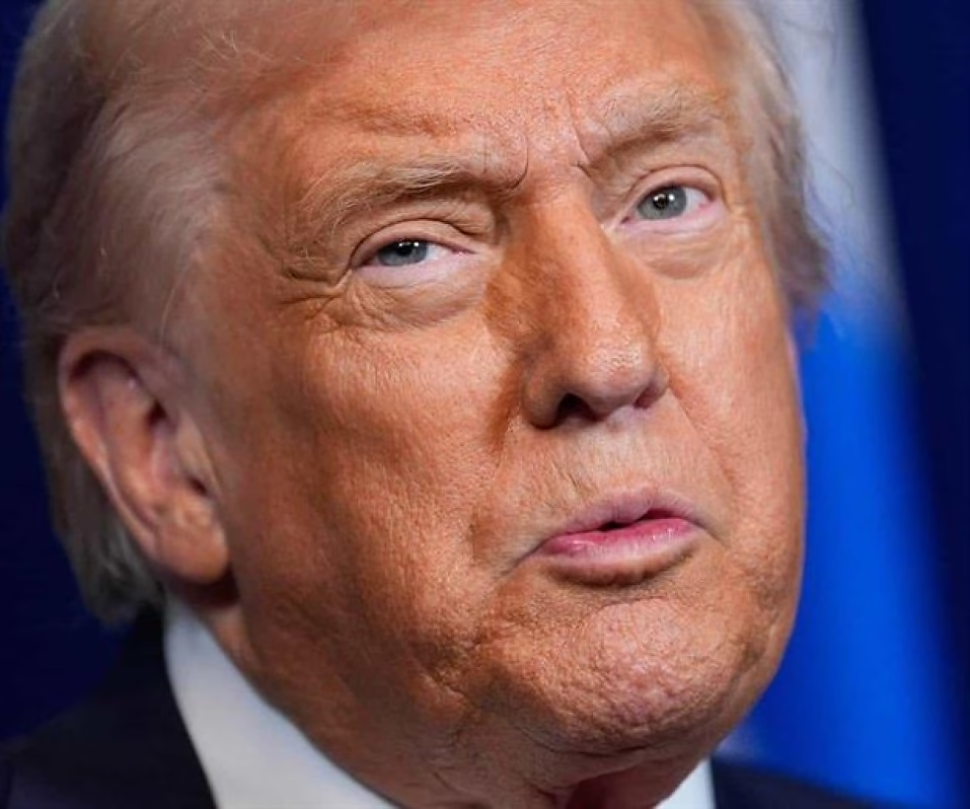
Then-President Donald Trump offered partial confirmation of the incident. In his statements, he described that the assault destroyed a “large facility where the boats come from” and that the target was a “docking area where the boats are loaded with drugs.” However, the president refrained from specifying whether the action was carried out by conventional military units or by the intelligence services. For their part, both spokespersons for the CIA and the White House declined to make additional comments, maintaining the confidential nature of the mission.
A significant technical element was the clarification from US Special Operations Command (SOCOM), which denied any involvement or provision of tactical intelligence support for this particular operation. This attack is part of a series of more than 30 offensives against vessels linked to drug trafficking in the waters of the Caribbean and the eastern Pacific Ocean, which began in August.
Strategic context and geopolitical repercussions
Trump has publicly justified the authorization granted to the CIA to operate in Venezuela, arguing that the measure is crucial to combat drug trafficking and to put pressure on key figures of the Nicolás Maduro regime. These personalities are formally accused by US courts of crimes such as narcoterrorism. The Venezuelan president, for his part, omitted any mention of the drone attack in a recent speech and has systematically rejected all accusations coming from Washington.
This covert intelligence action is not an isolated event, but rather a component of a comprehensive pressure strategy by the US administration. This strategy includes a quasi blockade of sanctioned oil tankers and the offer of million-dollar rewards for information that leads to the capture of senior Venezuelan officials. The immediate operational impact on drug trafficking networks remains to be fully evaluated, but the political and strategic message is clear: it marks a significant escalation in intervention and a precedent in the use of covert military capabilities in the region, redefining the limits of the war on drugs and geopolitical pressure tactics.
Are you interested in understanding how global security strategies evolve?Share this analysis on your social networks and explore more specialized content on geopolitics and defense on our platform.


