A Judicial Plot Twist that Nobody Expected
It seems that the scriptwriter of the Bolivian political soap opera decided that it was time for a plot twist. This Tuesday, a judge in La Paz dropped the bomb: he ordered the release of Luis Fernando Camacho, the suspended governor of Santa Cruz and emblematic figure of the opposition. Yes, the same one who had been in preventive detention for more than two years and eight months, basically an eternity in TikTok years.
The star accusation that kept him behind bars was the crime of sedition, for his leading role in the 2019 protests. That year in which Evo Morales resigned after an election that had more complaints of fraud than an Instagram giveaway. The post-election chaos was so intense that it deserved its own meme, and Camacho was one of its most visible protagonists.
A Marathon Hearing and Decisions that Redefine the Board
This decision did not come out of nowhere. It was the result of a court hearing that lasted more than ten hours, which is equivalent to marathoning a full season of your favorite series, but with lawyers and togas instead of popcorn. Days before, the Supreme Court of Justice had ordered a review of the deadlines for the precautionary measures for Camacho, former president Jeanine Áñez and another opposition leader, Marco Antonio Pumari. Spoiler alert: Pumari was also released after three years in detention.
Speaking of Áñez, her plot also had a crucial chapter. A judge annulled a trial against her for the deaths of protesters, although she is already serving a ten-year sentence for other charges. In this parallel universe of judicial processes, the judge ordered that he face a liability trial reserved for former presidents. Nothing is simple here.
And Now What? Conditional Release and More Hearings
But this is not a “happily ever after” without conditions. Camacho’s freedom comes with asterisks and a suspenseful soundtrack. His lawyer, Martín Camacho, explained that the opposition leader returned to the prison after the hearing and that in three or four days he will return to Santa Cruz to resume his position as governor. Sounds good, right? Well, hold on, because this Wednesday he has another hearing, this time virtual, for another trial.
It is expected that at that hearing the judge will ratify the release so that he can defend himself in freedom, but with a condition that sounds like an episode of Black Mirror: he will have house arrest with work release. Basically, slipper freedom. In addition, he is still being prosecuted on charges of alleged terrorism and sedition, and has another trial for criminal association and illegal use of public property. In other words, the party is not over.
Reactions: Celebration, Protests and a Touch of Dramaturgy
Meanwhile, on the streets of Santa Cruz, his supporters decided this was cause for celebration. They went out to celebrate as if their team had won the final, because in the game of politics, a judicial victory is as valuable as a goal in the 90th minute.
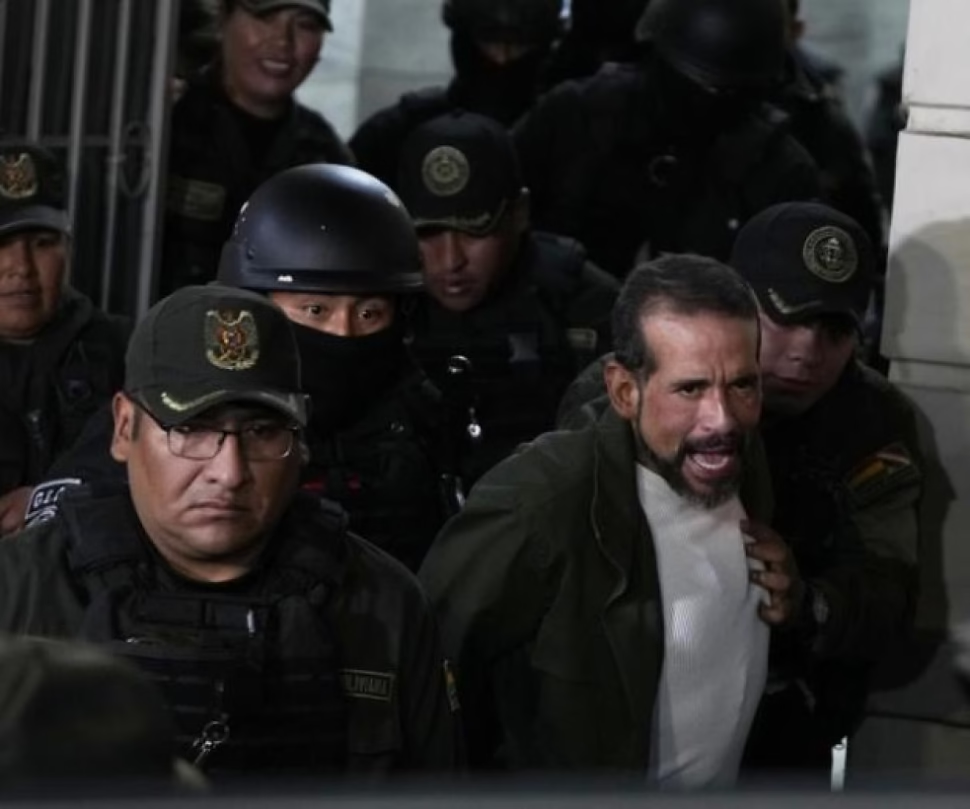
The scene outside the court in La Paz was worthy of a movie. Camacho arrived handcuffed but with his governor’s band on his chest, a symbolic detail that did not go unnoticed. Outside, two groups with conflicting slogans clashed vocally: some shouted “Freedom for Camacho and Pumari!” and others responded with “Justice for the victims!”. The country, as always, divided into a script that seems to have no end.
This judicial movement not only changes Camacho’s personal situation, but also redefines the Bolivian political landscape at a critical moment. It’s a reminder that in politics, like social media, trends can change overnight.
Were you surprised by this turn of events? Share this news on your social networks and stay up to date with our analysis of the Latin American political landscape.