A memory that gets out of hand
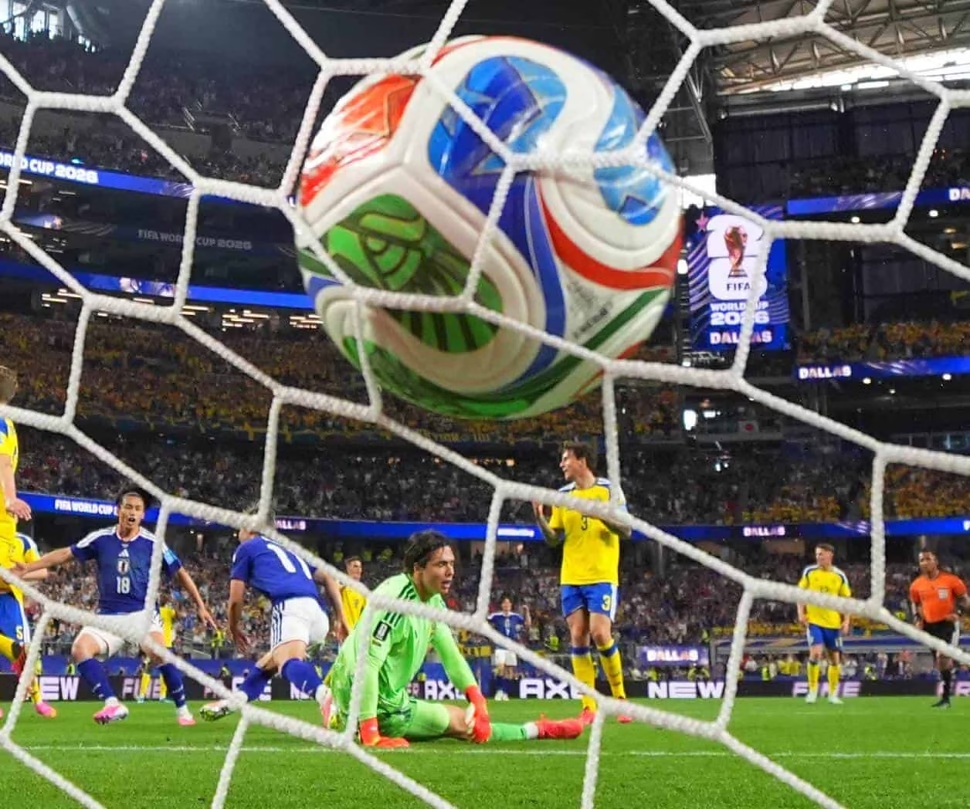
The World Cup balls have made headlines for their technology, but also for a rule that surprises many: fans must return them to the field immediately. Curiosity is great, especially for those who spend fortunes on trips and tickets.
“With the amount of money I spent, I should definitely be able to keep a ball,” said England fan Jack Goodwin, who used his house down payment to travel with his father from London.
In football, the tradition is different from baseball, where catching a ball is a lifelong memory. One Congo fan summed it up: “We didn’t come here for an award, we came to see our country.”
Why does FIFA demand to return them?
FIFA did not officially respond, but historian Charles Cutton points to economic reasons and the pace of play: “In the past there used to be only one ball per game. You had to recover it to continue.”
Official balls cost between $60 and $180 in stores, but the real cost of match balls is higher due to their technology. The Adidas Trionda of this World Cup has a 500 Hz motion sensor that sends data to the VAR to determine offsides and goals.
Professor Jud Ready of Georgia Tech explains: “They have evolved from leather to polyurethane. It doesn’t absorb moisture, it improves performance.” His colleague Manos Tentzeris adds that the sensor has 99.99% accuracy and works with cameras to locate any point on the field.
Technology that does not work outside the stadium
Ready points out that the ball depends on the stadium infrastructure to communicate. Additionally, it must be charged before the game with a wireless system similar to that of a smart watch. This makes it almost impossible for a fan to take advantage of it as a functional souvenir.
“The balls have radio frequency transmitters and accelerometers,” details Ready. But outside the stadium, those components are useless.
Although some dream of keeping one, FIFA remains firm in its policy. The ball, for now, only shines on the court.