Analysis of Extreme Meteorological Events and their Impact on Morelos and Sinaloa
An episode of high intensity rainfall, recorded between the night of Wednesday the 25th and the early morning of Thursday, September 26, 2025, significantly impacted the Mexican territory, with particularly severe consequences in the states of Morelos and Sinaloa. This meteorological phenomenon caused a series of affects to residential infrastructure, interruptions in roads and the immediate implementation of emergency protocols by state and federal authorities. This analysis meticulously examines the scope of the event, the institutional responses deployed and the context of vulnerability that these events reveal.
Evaluation of Damage and Immediate Response in the State of Morelos
In the state of Morelos, the magnitude of the damage forced the state government to activate an Incident Command System, an operational structure designed for the efficient coordination of resources during crises. The preliminary balance, provided by local authorities on Thursday, quantified the damage to at least 140 flooded homes distributed in 11 municipalities. The southern region of the entity was the hardest hit, with red lights in municipalities such as Zacatepec, Jantetelco, Ayala and Yecapixtla.
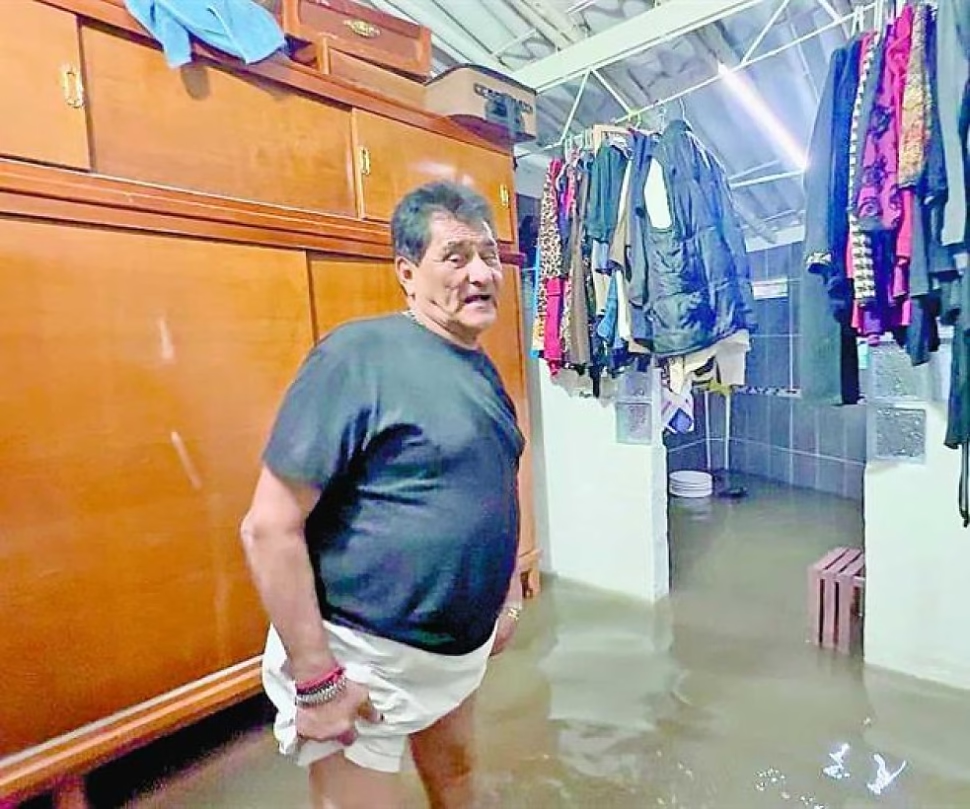
A paradigmatic case of the severity of the event was recorded in the Lázaro Cárdenas colony of Zacatepec. Residents of Sufragio Efectivo Street reported the infiltration of water into their homes during the early hours of the morning, with flood levels that, in several cases, exceeded one meter in height, which resulted in the loss of household goods and furniture. Initially, the inhabitants expressed a perception of the absence of authorities at critical moments; However, the government response later materialized with an operation that included personnel from the state Civil Protection, Health Services and the System for the Comprehensive Development of the Family (DIF). As an immediate relief measure, the state administration reported the distribution of 100 food baskets and emergency kits.
The complexity of the situation demanded the intervention of federal authorities. Brigades of Plan DN-III-E were deployed, an aid protocol for the civilian population executed by the Mexican Army and the National Guard in coordination with state authorities. In parallel, the National Water Commission (Conagua) and Civil Protection teams from surrounding municipalities carried out desilting work, cleaning work and evacuation of stagnant water through the use of motor pumps. Additionally, and as a fundamental prophylactic measure, health brigades began epidemiological evaluations to identify and prevent outbreaks of diarrheal and respiratory diseases and diseases transmitted by vectors, such as dengue, the risks of which increase exponentially after flood events.
Impact of the Remnant Tropical System on the Sinaloa Coast
Simultaneously, on the Mexican Pacific coast, the state of Sinaloa faced the consequences of the remnants of a tropical system. The intense rains were concentrated in the southern area of the entity, generating floods and a latent risk of collapse in critical infrastructure. In the port of Teacapán, the force of the rainfall caused water to enter the bedrooms of homes located in the lowest topographically areas, in addition to making vehicular traffic impossible on dirt roads, isolating several communities.
One of the most relevant incidents from the perspective of civil protection occurred just half an hour from Teacapán. More than 800 individuals, including students, faculty and administrative staff of the Technological University of Escuinapa (UTESC), were evacuated preventively. The decision was made due to the imminent risk of collapse of a drainage channel, whose structural failure had already begun to affect the asphalt strip of the access road to the educational institution. The accumulated precipitation in this municipality reached an extraordinary volume, exceeding 226 millimeters in a period of 12 hours. Other communities, such as El Trébol 1 and Palmillas, reported flooding with water levels between 30 and 40 centimeters. The force of the runoff also led to an incident that illustrates the underlying dangers: a farm truck fell into a ditch that opened as a result of a pond overflowing.
These events in Morelos and Sinaloa are not isolated phenomena, but must be framed within broader and recurring climate patterns. The recurrence and intensification of extreme rainfall episodes raise critical questions about the adaptation capacity of urban and rural infrastructure, the effectiveness of early warning systems and the need for public policies aimed at comprehensive risk management. Emergency response, although crucial, is a reactive phase; Mitigating future disasters requires territorial planning and investment in resilient infrastructure that addresses the underlying causes of vulnerability.
Do you know the emergency protocols for flooding in your area? Share this information to promote collective awareness and explore more content related to natural disaster management on our website.