INE and OPLES present proposals for electoral reform

The electoral body and local authorities present their ideas to transform the voting system in Mexico, seeking greater inclusion.

INE and electoral organizations deliver their ‘wishlist’ for democracy

This Monday, in a move that reminded us to hand in the group task at the last minute, the head of the National Electoral Institute (INE), Guadalupe Taddei, passed the baton (or rather, a mountain of documents) to Pablo Gómez, president of the Presidential Commission for Electoral Reform. The package included the proposals of all Local Public Electoral Bodies (OPLEs) and civil society. Basically, the institutional equivalent of a shared Google Drive, but with more formality and, we assume, fewer memes.

The president advisor, with the energy of someone trying to motivate a team in a Monday morning meeting, made it clear that the best way to participate to improve the electoral system is by contributing ideas. In a speech that mixed civic wisdom with a touch of “take advantage now or later and don’t complain,” Taddei declared: “Every time a door is opened to us and we remain silent, tomorrow we are unable to make any kind of suggestions.” I mean, it’s like when in the WhatsApp group they ask where to go and they only make faces, and then they complain about the place. She was clear: “Let’s be part of this story, let’s not stay on the sidelines.” A call to action that even the most apolitical person would understand.

RelatedINE demands participation in electoral reform due to its technical experience

The OPLES raise their voices: “We also exist, eh”

Accompanied by representatives of the 32 OPLEs (yes, those of all the states, because federalization is real), Taddei came out to defend the work of these organizations. Come on, it gave them their moment in the spotlight. He argued that his knowledge is “vast” and fundamental, especially in areas of specialized care. In Christian: they are those who know the lands, the communities and the logistical details that we could not even imagine in Mexico City. “Both parties, the OPLEs and the INE, reached the last corner of the towns to be able to install the boxes,” he stressed. In other words, they are the delivery heroes of democracy, taking the urn to your ranchería.

On the other hand, Pablo Gómez, in “recipient of suggestions open 24/7” mode, pointed out that the collection of proposals is still alive. With the attitude of someone who knows he has a complex puzzle on his hands, he invited more people and organizations to send their ideas: “It is of the greatest interest to the commission… if there are any others who can help us resolve some issues that are no small thing… I would greatly appreciate it.” A very diplomatic way of saying: “Send help, this has more edges than a diamond.”

The event, which brought together the local electoral leadership and a dozen civil society organizations, made it clear that the Mexican electoral reform is intended to be a collective effort. It is not a dark decree, but an open call (or at least, that is the narrative). The underlying message is that modernizing the rules of the democratic game requires listening to those who operate it in the trenches. It remains to be seen whether these proposals will be the roadmap to revamping the system or simply lost PDFs on a government portal. The ball, for now, is in the court of the presidential commission.

Are you interested in how the way of voting in Mexico could change?Share this note on your social networks and explore more content about politics and democracy in our analysis section.
Jóvenes Construyendo el Futuro: 3.5 millones de beneficiarios en ocho años

Sheinbaum detalla los alcances del programa social en Xalapa, Veracruz.

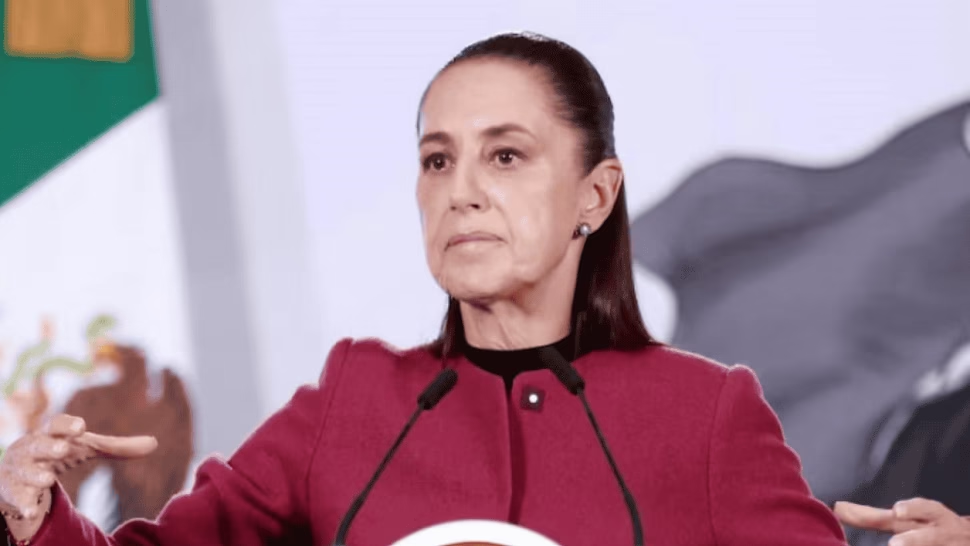
La presidenta Claudia Sheinbaum informó que el programa Jóvenes Construyendo el Futuro ha beneficiado a más de 3.5 millones de personas entre 2019 y 2026. El anuncio lo hizo durante una asamblea en el Museo Kaná de Xalapa, Veracruz.

Cifras del programa

El programa ofrece un año de experiencia laboral pagada por el gobierno. Los participantes son considerados aprendices y reciben un apoyo mensual equivalente al salario mínimo, además de seguridad social.

“Ese año de experiencia a los jóvenes les ha permitido encontrar de mejor manera un empleo”, afirmó Sheinbaum.

La subsecretaria de Empleo, Quiahuitl Chávez Domínguez, precisó que la inversión total supera los 170 mil millones de pesos en los últimos siete años.

RelatedYoung People Building the Future opens 45 thousand training places

Inversión educativa

Sheinbaum también destacó que su administración trabaja en la creación de 200 mil nuevos espacios para Educación Media Superior y 330 mil para Educación Superior, a través de instituciones públicas.

A la reunión asistió la gobernadora de Veracruz, Rocío Nahle García, quien reconoció el impacto de la estrategia en la entidad. El beneficiario Diego Armando Gallardo Castillo agradeció la continuidad del apoyo económico para el sector de las artes escénicas.

Continue reading

70% de alumnas en medicina, pero solo 30% en puestos directivos

Persisten brechas de género en el sector salud pese a la feminización de la matrícula.

La matrícula de la Facultad de Medicina de la UNAM está compuesta en un 70% por mujeres. Sin embargo, en los puestos directivos del sector salud apenas alcanzan el 30%. Así lo informó la directora de esa entidad, Ana Carolina Sepúlveda Vildósola.

Al encabezar la graduación de la primera generación del Programa de Formación de Liderazgos de Mujeres Médicas, señaló que persisten barreras estructurales que limitan el acceso femenino a la toma de decisiones.

“La medicina se está feminizando”, subrayó.

El programa, impulsado junto con Aúna y Roche, capacitó a 48 médicas y profesoras de pregrado y posgrado para fortalecer su liderazgo. Sepúlveda Vildósola las invitó a proyectarse como futuras directoras de hospitales, jefas de servicio y diseñadoras de políticas públicas.

RelatedUNAM protects its Faculty of Medicine from attempted takeover

La directora general de Roche México, Mónica Palomanes Seoane, destacó la relevancia de incorporar más liderazgos femeninos en un sector donde la participación de las mujeres es cada vez mayor. Su directora médica, Maryet Pérez Barahona, señaló que el programa busca mejorar la atención a pacientes y fortalecer equipos de trabajo.

Mónica Tapia Álvarez, coordinadora estratégica de Aúna A.C., consideró que México vive un momento favorable para ampliar la presencia femenina en liderazgo, gracias a generaciones con mayor escolaridad y participación en espacios públicos.

Continue reading

Profeco advierte: no descuides tus finanzas en el Mundial 2026

Profeco emite guía para evitar deudas durante la Copa Mundial 2026.

A meses del Mundial 2026, la Procuraduría Federal del Consumidor (Profeco) lanzó una serie de recomendaciones para evitar que la emoción del torneo afecte tu bolsillo.

Compras responsables

La dependencia sugiere fijar un presupuesto antes de adquirir artículos, boletos o servicios relacionados con el evento. Comparar precios es clave. Para ello, está disponible la plataforma Quién es Quién en los Precios, donde se revisan costos de distintos productos.

RelatedProfeco demands that Sony show PlayStation prices in pesos

Evita compras impulsivas. Define cuánto puedes gastar y qué realmente necesitas.

Cuidado con el crédito

Profeco recuerda que las tarjetas de crédito generan intereses. Si usas promociones a meses sin intereses, el total no cambia. Evalúa tu capacidad de pago antes de comprometerte.

“Los pagos mensuales pueden parecer reducidos, pero el monto total de la compra permanece sin cambios”, advierte el comunicado.

Cumple puntualmente con las fechas de pago para evitar recargos.

Canales de atención

La institución mantiene su correo y líneas de atención habituales para recibir reportes, consultas o denuncias relacionadas con el Mundial.

Proteger tu economía también es parte del juego.

Continue reading