Restructuring of Internal Oversight at the Pentagon
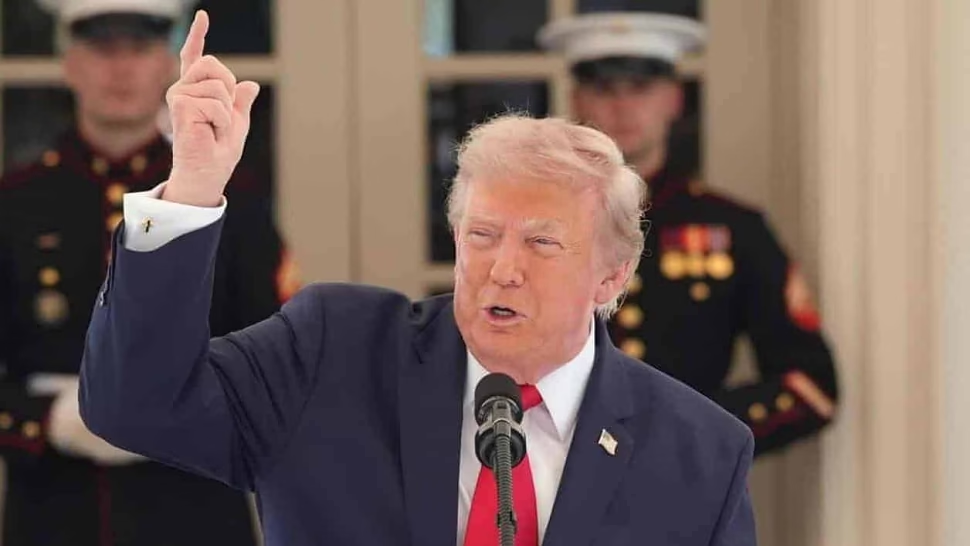
The Secretary of Defense of the United States, Pete Hegseth, has initiated a structural transformation in the oversight mechanisms of the Department of Defense. In a speech before hundreds of high-ranking military leaders, Hegseth presented a comprehensive reform of the office of the inspector general, an institution that he described as having been instrumentalized as a “weapon” against the military institution. This modification substantially alters the protocols through which military personnel can report abuses, administrative irregularities and operational problems within the chain of command.
The directive, formalized through an official memorandum, establishes three substantial modifications: the mandatory identification of complainants instead of allowing anonymity, the immediate dismissal of those complaints that the supervisory body considers “not credible”, and the implementation of peremptory deadlines for both the presentation of claims and the conclusion of the corresponding investigations. These provisions are complemented by a parallel decree that redefines military policies on hazing, harassment and intimidation, considered by the current administration to be excessively broad in their scope and application.
Political Context and Expert Concerns
This initiative is part of a broader strategy by the Trump administration aimed at radically reconfiguring the government oversight ecosystem. Since the beginning of the presidential term, there has been a significant dismantling of public integrity mechanisms, with the firing of more than a dozen inspectors general responsible for rooting out waste, fraud and abuse in federal agencies. Analysts specializing in military governance have expressed serious concern that these modifications could reverse years of institutional progress aimed at protecting women and minorities within the Armed Forces, while also obstructing channels for filing legitimate complaints.
The chronology of events becomes more complex when considering that Hegseth is promoting these reforms while facing an internal investigation conducted precisely by the inspector general’s office. This investigation examines his use of the Signal messaging application, where he shared classified information about military operations in a group chat that inadvertently included a journalist. Additional documentation reveals that the Secretary also distributed sensitive material in conversations that included his spouse and brother. Pentagon spokesman Kingsley Wilson confirmed in August that Hegseth has already given a statement as part of this investigation, placing him in the final phases of the examination process.
Analysis of Institutional Implications
Don Christensen, who served as Chief Prosecutor of the Air Force and currently serves as an attorney representing whistleblowers before the inspector general, has severely questioned the basis of the directive. “These measures seem to respond to subjective perceptions of individuals close to the Secretary who express dissatisfaction with the process, rather than to any systematic study or empirical evidence that demonstrates unjustified delays in investigations or the existence of serial whistleblowers,” said Christensen. The expert added categorically: “I am unaware of the existence of any set of data that supports the narrative of a crisis due to recurring complaints.”
Christensen’s perspective is echoed in the warnings of Rachel VanLandingham, former Air Force legal advisor and specialist in military justice. VanLandingham expresses deep concern about the deterrent effect that these modifications will have on troops. The elimination of anonymous reports, according to his analysis, would eliminate a mechanism that has historically proven effective in highlighting significant problems that affect morale and discipline in military units. “Survey after survey has consistently revealed that service members express apprehension toward their own chain of command. When this structural fear exists, the underlying problems remain unresolved,” the expert said.
This evaluation takes on special relevance when considering that, despite years of institutional initiatives and the creation of specialized response teams, the Armed Forces continue to face persistent challenges regarding sexual assault and violence against women. The available statistical data suggest that the proposed reforms could exacerbate these problems by creating additional barriers for potential victims. The debate thus illustrates the fundamental tension between the need for administrative efficiency and the preservation of robust channels of accountability within the complex national defense apparatus.
Was this analysis of the transformations in military supervision revealing to you? Share this content on your social networks to contribute to informed debate and explore more research on government transparency on our platform.