Hamas mulls truce proposal as Gaza deaths escalate

Progress in peace negotiations while civilian victims increase in the midst of the humanitarian crisis.

A ray of hope in the midst of the crisis

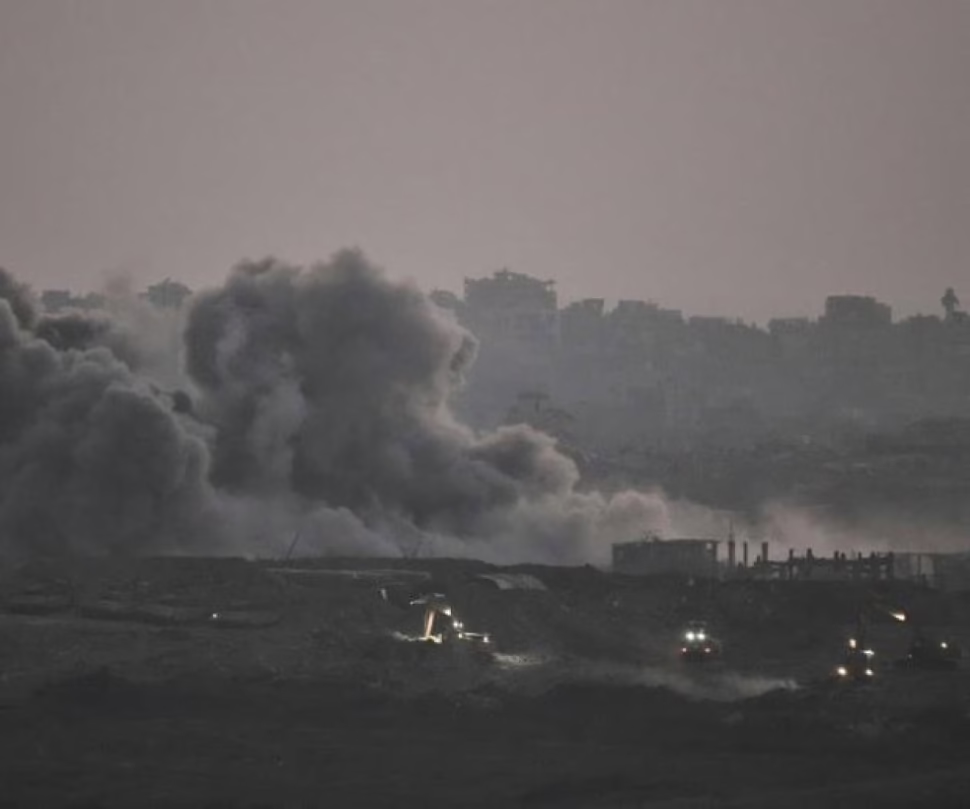
In the midst of the complex situation in the Gaza Strip, a possibility for change arises. Hamas is actively analyzing a ceasefire proposal put forward by international mediators, a crucial step toward the peace we all long for. Meanwhile, local people demonstrate inspiring resilience in the face of extremely difficult circumstances.

The humanitarian urgency that calls us to act

Recent incidents near aid distribution points remind us of the importance of redoubling humanitarian efforts. According to reports, at least 20 people lost their lives while waiting for life-saving assistance, a situation that calls us to reflect on the value of each human life. The Gaza Humanitarian Foundation, together with international organizations, works tirelessly to bring hope to those who need it most.

RelatedIsrael orders total evacuation of Gaza and Hamas analyzes Trump proposal

The UN has documented more than 600 tragic incidents in the last month, numbers that drive us to seek creative and compassionate solutions. As a global community, we have the power to transform these statistics into stories of improvement. Every gesture of solidarity, no matter how small, contributes to building a better future.

Ravina Shamdasani, human rights spokesperson, emphasizes the need for transparency in the investigation of these events. Their call to action inspires us not to remain indifferent: “The information keeps coming and this situation is unacceptable.” These words resonate as a reminder of our collective power to create positive change.

Towards a future of reconciliation

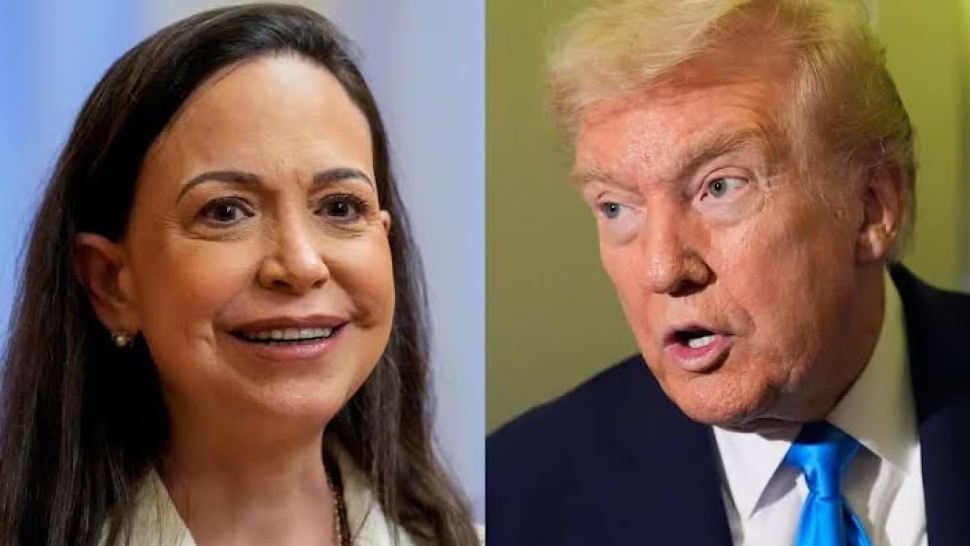
The recent dialogues between Palestinian factions and the mediation of Egypt and Qatar represent a historic opportunity. As former President Donald Trump pointed out, preliminary agreements exist and it now depends on the will of all parties to turn this possibility into reality. Every day of peace gained is a victory for humanity.

The figures from the Gaza Ministry of Health, although alarming, should not paralyze us but rather motivate us to act. Behind every number there are dreams, families and human potential. The majority of victims are women and children, reminding us of our shared responsibility to protect the most vulnerable.

As negotiations progress, local witnesses continue to document situations that require our immediate attention. The Israeli army claims to be investigating these incidents and maintains its position on the use of warning shots. This critical moment demands transparency and genuine commitment to human rights by all parties involved.

History teaches us that even the most deep-rooted conflicts can find a solution when the will to dialogue prevails. Every gesture of goodwill, every hour of truce, every life saved is a step towards the peace that Gaza deserves.

Your voice can make a difference! Share this message of hope on your social networks and let’s help make visible the importance of the peaceful solution. Together we can inspire positive change. What other initiatives do you think could help alleviate the humanitarian crisis? Explore more content on international diplomacy and peacebuilding on our site.
Earthquakes in Venezuela: humanitarian crisis and political struggle

Earthquakes in Venezuela unleash political and humanitarian crisis as Delcy Rodríguez's interim mandate expires.

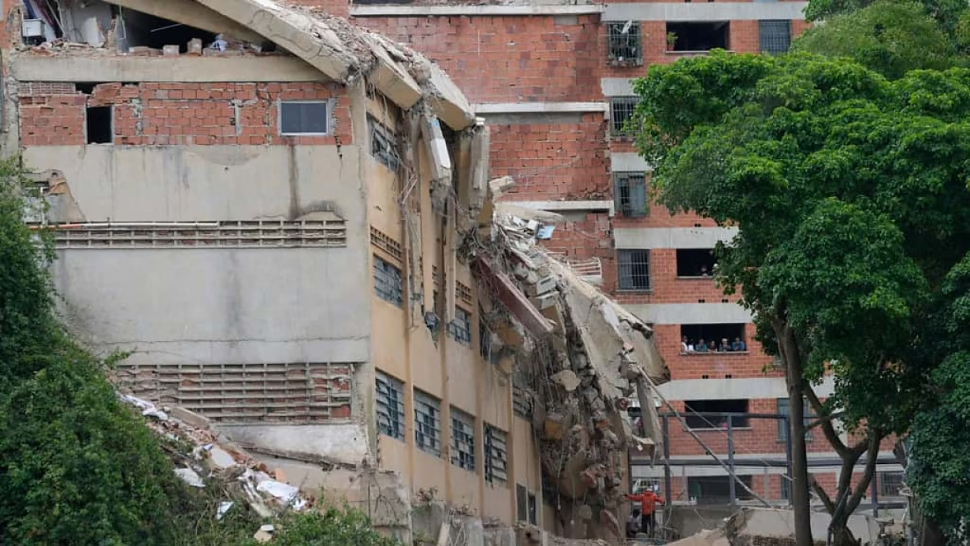
The consecutive earthquakes that shook Venezuela on June 24 left at least 2,645 dead and more than 12,500 injured, according to official figures. The catastrophe has tested the interim president, Delcy Rodríguez, whose interim term expires this Friday. While she defends her government’s response, exiled opposition leader María Corina Machado – Nobel Peace Prize winner – seeks to return to the country to press for a democratic transition.

Government response and political tensions

In his first press conference after the earthquakes, Rodríguez attributed the criticism to “media prepared in laboratories” and stated that rescue teams were deployed immediately. However, residents reported that during the first 48 hours there was no official support or heavy machinery. The government claims to have sent thousands of rescuers and 11 international field hospitals, and approved a reconstruction fund.

Machado, from Panama, maintained that the government response showed “the total absence of the State” and called for trust in alternative leaderships. His party has created a database with 36,000 missing people and mobilized volunteers to collect donations. Machado was prohibited from running in 2024, when Nicolás Maduro claimed victory, although opposition counts show that Edmundo González, his candidate, won by more than 2 to 1.

The United States has backed Rodríguez since Maduro’s capture in January, praising his oil sector reforms. Two U.S. officials, speaking on condition of anonymity, told The Associated Press that Washington discouraged Machado from returning after the earthquakes, fearing he would lead protests. Rodríguez closed commercial air traffic to Caracas, canceling humanitarian aid flights.

Expiry of mandate and uncertain future

The Venezuelan Constitution establishes that the president’s temporary absences can be covered by the vice presidency for up to 90 days, extendable for another 90. That period expires today, but the authorities have not announced what they will do. The National Assembly, controlled by Rodríguez’s party, can call early elections if it declares the position vacant.

International organizations have pledged hundreds of millions of dollars in aid. Doctors Without Borders warns that the magnitude of the suffering is still emerging. “We know there are still bodies under the collapsed buildings,” said Andreas Spaett, the group’s Venezuela coordinator. “This is one of the great natural disasters in human history.”

Continue reading

Putin downplays Russia fuel crisis

Putin downplays attacks on refineries as Russians face gasoline rationing.

Putin minimizes Ukrainian attacks on refineries

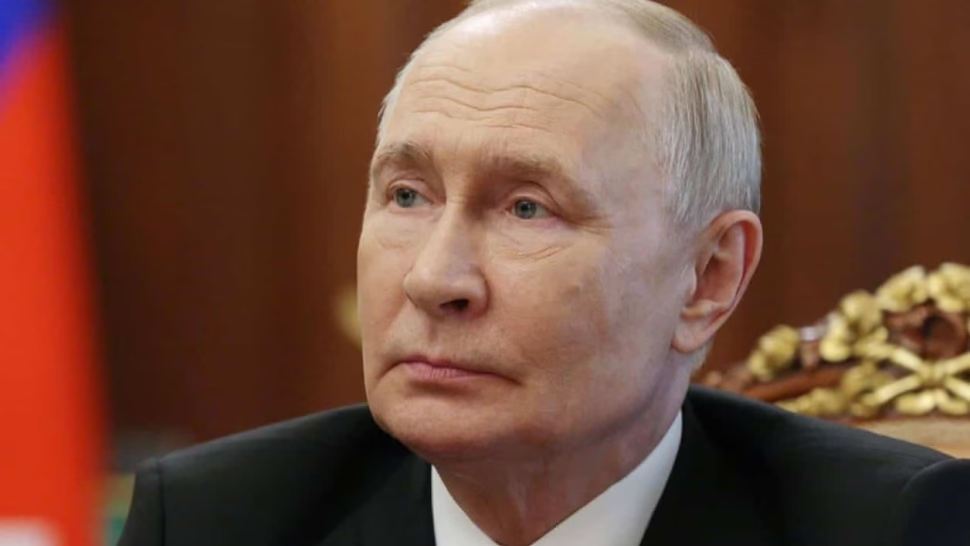
Despite serious fuel shortages in Russia, President Vladimir Putin downplays Ukrainian attacks on his refineries. He describes them as an attempt to divert attention from kyiv’s defeats on the battlefield. Analysts point out that the Russian advance has slowed in recent months.

The attacks have reduced almost a third of refining capacity. Gasoline production fell 17%, to 850 thousand barrels per day. Rationing has been implemented in many regions and motorists wait in long lines to fill up with fuel. Crimea, illegally annexed in 2014, suffers the worst shortages: gasoline sales to individuals have been periodically suspended.

Putin chaired a meeting last weekend to address the issue. In televised statements he acknowledged a “difficult period” and promised to speed up repairs. It also said it will increase production of anti-aircraft systems to repel future attacks.

Offensive in Ukraine and rejection of truce

On Thursday, a massive Russian bombing of kyiv left at least 30 dead, one of the deadliest attacks since the start of the invasion. The UN counts more than 16,000 Ukrainian civilians killed in the war.

Putin rejected Ukraine’s ceasefire proposal. It conditions any truce on Ukraine withdrawing from parts of Donetsk, abandoning its NATO aspirations and reducing its military. He also dismissed mutually stopping deep strikes, stating that the Russians are “much more powerful and destructive.”

On Friday, Putin visited military headquarters in Ukraine to receive briefings on the capture of Kostyantynivka, which he called “great strategic importance.” Ukraine has not confirmed the fall of the city and reported having repelled 24 Russian attacks nearby.

Continue reading

The US blocked the return of María Corina Machado to Venezuela

The return of the opposition leader to Venezuela was stopped by pressure from the US, according to reports.

Trip frustrated by American pressure

The return of the Venezuelan opposition leader María Corina Machado to her country was stopped by the opposition of the United States government, as revealed by The Wall Street Journal. Machado boarded a private jet on June 26 from Virginia bound for Curacao, but the airline was ordered to return to Washington as the aircraft flew over North Carolina.

Sources cited by the newspaper indicated that Donald Trump’s administration warned that an early return would put US support at risk, arguing that his eventual detention would unleash a crisis in foreign policy towards Caracas.

Trump held a call with the president in charge of Venezuela, Delcy Rodríguez, to ask her not to interfere with the opposition’s security. However, Secretary of State Marco Rubio insisted that “the time was not right” for the trip.

Stranded in Panama and accusations

The New York Times added that the White House told Machado that he was “on his own” after ignoring recommendations to wait. Stranded in Panama, Machado accused the Rodríguez government of blocking her entry into the country, which she left last December. In a television interview, he reaffirmed his intention to return and continue coordinating his return plans, expressing his commitment to the fight for democracy in Venezuela.

Continue reading