The maximum warning
António Guterres, the Secretary General of the UN, issued a clear warning: the war in the Middle East could escape everyone’s control. His message, published on social networks, was direct and urgent.
“It is time to stop the fighting and move towards serious diplomatic negotiations. The stakes could not be higher,”
Guterres said. It is not empty rhetoric. It is the official recognition that we are on the edge of the precipice.
A dangerous moment
The warning comes when tensions are through the roof. The latest attacks and counterattacks between the United States, Israel and Iran have set off all the alarms. The fear of a broader regional conflict is real and palpable.
The situation became even more complicated after Donald Trump publicly demanded Iran’s “unconditional surrender.” Washington talks about weakening infrastructure, but its allies in the region are already warning about the real risk: that this will spread like a forest fire.
From New York, UN spokesman Stéphane Dujarric was equally clear:
“The situation is horrible, but it can easily get worse, and the only way to resolve it is through negotiations,”
he explained. That is to say, the current disaster is just the floor. The ceiling could be much higher and devastating.
The human cost is already unbearable
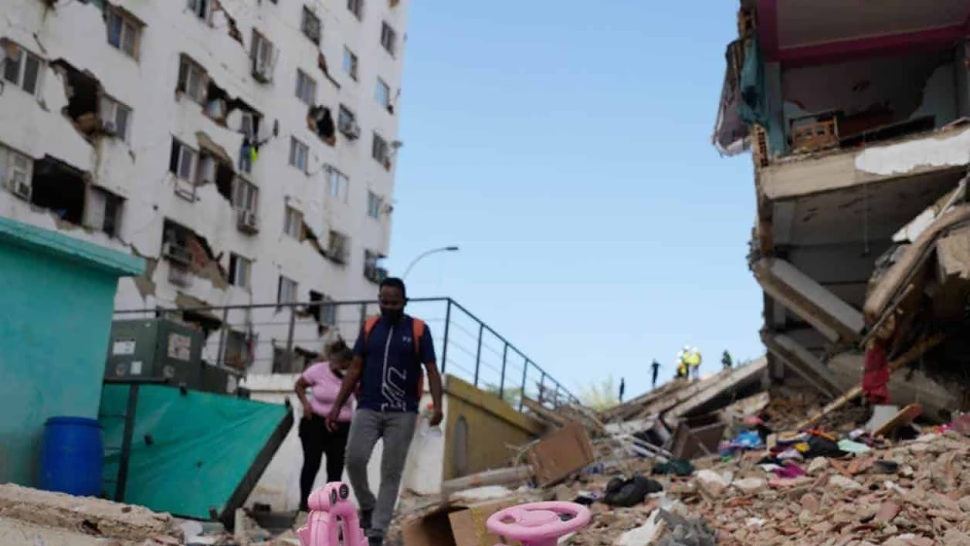
While leaders measure strength, civilians pay the price. Ravina Shamdasani, UN Human Rights spokesperson, made it clear: “civilians are paying an extremely high price.”
The organization called for swift investigations into recent attacks in Lebanon that left innocent victims. They want to know if the basic rules of international law were respected: distinguishing between military and civilian objectives, acting with proportionality and caution.
The final message from the UN is an alarm bell: without an immediate stop to military escalation, this war can expand. The consequences would be an even greater humanitarian crisis and a conflict whose effects no one can fully predict.
Guterres is not calling for a protocol ceasefire. He’s demanding it because he’s seen enough wars to know how they start… and how hard it is to stop them.