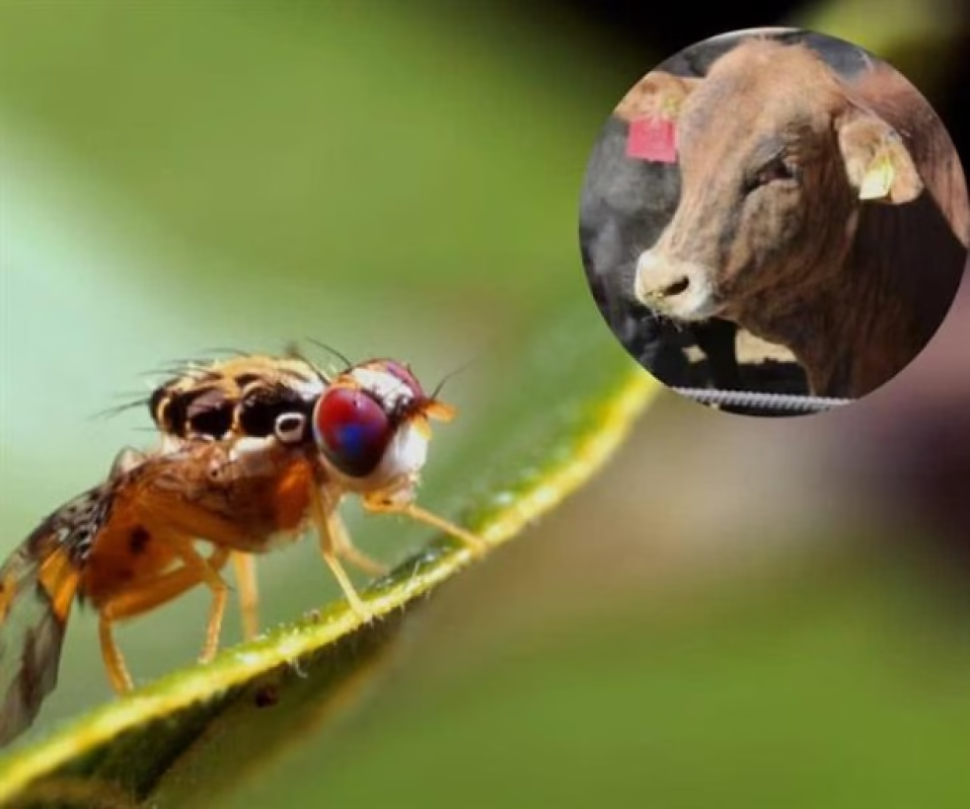
The flying solution: sterile insects against the worm that paralyzed livestock farming
Nine months after the border closure that froze livestock exports to the United States, the Mexican government is betting on a strategy that seems straight out of a science fiction movie. It will import up to 110 million sterile flies to combat the screwworm, the plague that unleashed this health and economic crisis.
The National Agri-Food Health, Safety and Quality Service (Senasica) already has everything ready. It has just awarded a contract for 9.4 million pesos to the company Agencias Aduanales Arjo to handle logistics. There will be daily arrivals from Guatemala and weekly arrivals from Panama.
“Includes the reception of biological material at strategic airports in Chiapas, as well as the attention of customs clearance even on weekends and holidays”
The theory is simple but brilliant: release sterile males to mate with wild females. Without offspring, the worm population plummets. It is pure biological control, without chemicals or poisons.
But behind this entomological war there are numbers that hurt. The livestock sector estimates losses of more than 15 billion pesos since last May, when Washington turned off the tap. Every day without access to the US market is money that evaporates.
Officials promise this is just the beginning. For the first half of the year they plan to inaugurate a sterile fly production plant in Chiapas. Self-sufficiency in warrior insects, that’s what they seek.
Meanwhile, the eggs and pupae will travel by air as priority cargo. The hope is that these little winged soldiers will achieve what diplomatic negotiations have not been able to: reopen a border that hurts the national pocket.