‘End privileges’, the official promise on water
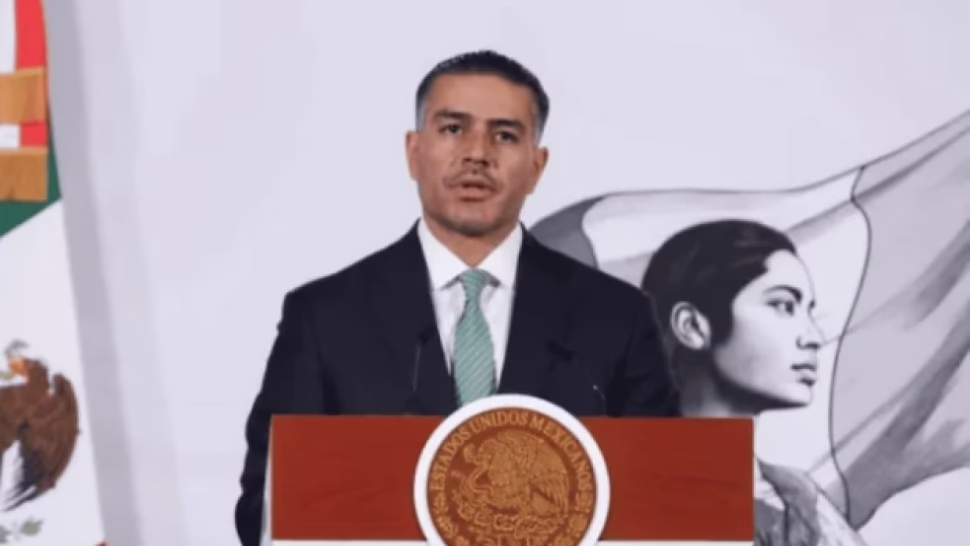
President Claudia Sheinbaum used World Water Day to sell an achievement. According to her, the new Water Law has allowed small producers to recover their rights and, above all, the privileges to end.
“As in other cases, our objective is that there are no privileges… the fight of Juárez and the Mexican liberals was to end privileges,” he declared.
A beautiful speech, wrapped in historical rhetoric. But what does it mean in practice? According to the authorities, everything changed.
What Conagua says: end of a ‘regime’
Efraín Morales López, director of the National Water Commission (Conagua), was more specific. He assured that the law brought a “profound change” by prioritizing the human right to water.
Its key points are compelling:
- The black market for liquid is ending.
- Changes from agricultural use to other for-profit uses are eliminated.
- Ends hoarding.
- The authority is given more power to combat illegal use.
Morales López added an element of social justice: community water systems in ejidos and indigenous towns are now recognized. It sounds like an administrative revolution.
This is where my legal skepticism kicks in. Declaring the end of a ‘regime of privileges’ is a powerful phrase. The uncomfortable question that remains floating at every press conference is: are the mechanisms to make it a reality equally powerful? Collective memory is full of wonderful laws that were drowned in bureaucracy or vested interests.
The real proof is not in the bulletins from the National Palace, but in the wells, in the dry communities and in who really loses their ‘rights’ now. Time, and not speeches, will tell if this law is a watershed or just another document.