New type of extortion in Edomex: false manager and closures
García Harfuch warns about a new floor collection method with fake inspectors.
| 1 min reading |252 vistas | por Sofía Ramírez
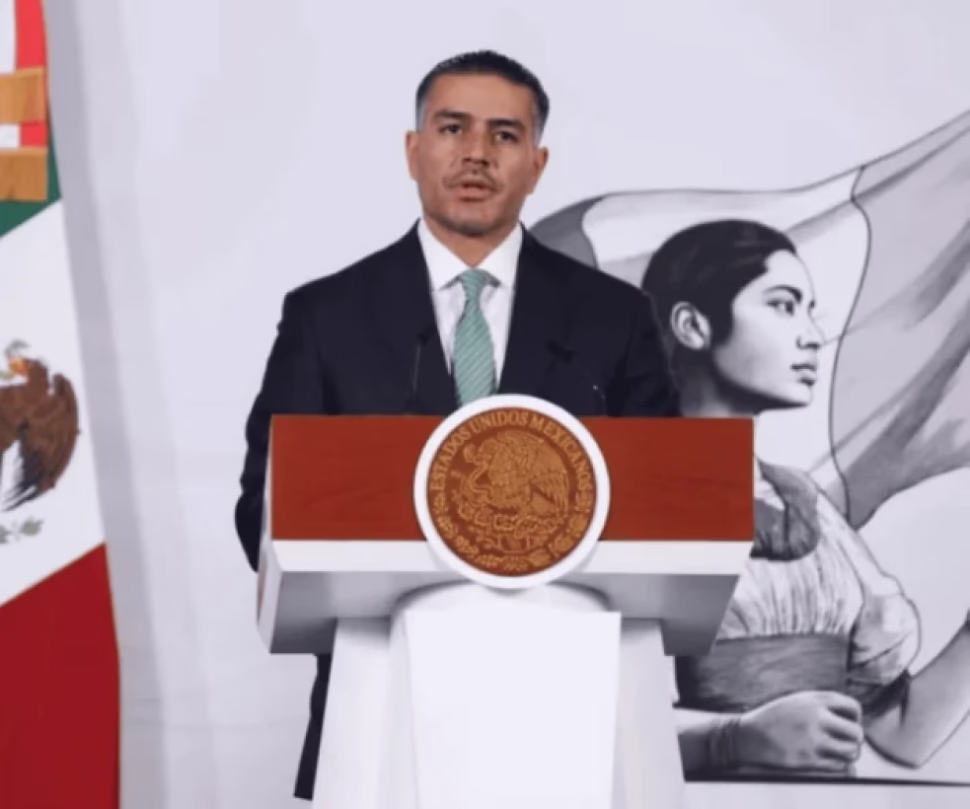
Omar García Harfuch, head of the SSPC, identified a new type of extortion in the State of Mexico. A supposed manager offers protection to merchants against legal actions by the municipality. If they don’t pay, fake inspectors close the business.
Call to report
This Tuesday morning, García Harfuch reiterated the call to report to 089. He guaranteed that there have been no leaks against the victims.
“Yes, we have already had cases and detainees of this type,” he confirmed.
Regarding confidentiality, he added:
“It is important that citizens know that when they report through the 089 mechanism, or in the institutions of the Security Cabinet, we have not had a single leak or repercussion against the victims.”
He insisted: “It is very important, please report and we will deliver results.”
Agency warns that extreme sexual violence persists in detention centers.
| 2 mins reading
The National Human Rights Commission (CNDH) called for strengthening actions against sexual torture in Mexico. He considered it one of the most serious forms of violence and discrimination that especially affects people in vulnerable situations.
Call for institutional coordination
During a symposium on the topic, Rosario Piedra Ibarra, president of the CNDH, stressed the need to improve coordination between federal, state and municipal authorities. The objective: to prevent, investigate and punish these events effectively.
The organization recalled that, through the National Mechanism for the Prevention of Torture, it maintains permanent surveillance in centers of deprivation of liberty. Since 2021, it has issued reports with recommendations to improve institutional practices with a gender focus.
Equity of the problem
Representatives of state human rights organizations warned that sexual torture continues to be a current problem. It requires specialized attention, active prevention and mechanisms that avoid impunity to guarantee justice for the victims.
The CNDH pointed out that, although Mexican legislation does not establish different modalities of torture, international instruments such as the Istanbul Protocol recognize it as an especially serious practice. Therefore, it must be combated with specific measures.
He emphasized the importance of addressing this problem from a gender perspective. The victims are, for the most part, people in vulnerable situations. The proposed actions seek not only to punish those responsible, but also to prevent future cases and ensure access to justice.
The Court determined that the tragedy in Sonora can be investigated without a time limit.
| 1 min reading
No expiration date
The Supreme Court of Justice of the Nation ruled that the crimes related to the fire at the ABC Daycare do not prescribe. The incident occurred in 2009 in Hermosillo, Sonora, and left 49 girls and boys dead.
The decision was made after analyzing an appeal from Sergio Antonio Salazar Salazar, former director of Economic and Social Benefits of the IMSS. He argued that the charges against him had already become invalid due to the passage of time. The highest court rejected that approach.
The Court noted that imprescriptibility seeks to avoid impunity, clarify the facts and guarantee comprehensive reparation for the victims. It also took into account the special protection that children and adolescents require.
The case will return to the corresponding Collegiate Court, which must apply the new criteria. The resolution opens a new chapter in one of the most sensitive human rights cases in Mexico.
Without concrete agreements, Mexico and the US are moving towards reviewing the T-MEC.
| 1 min reading
Conversations without progress
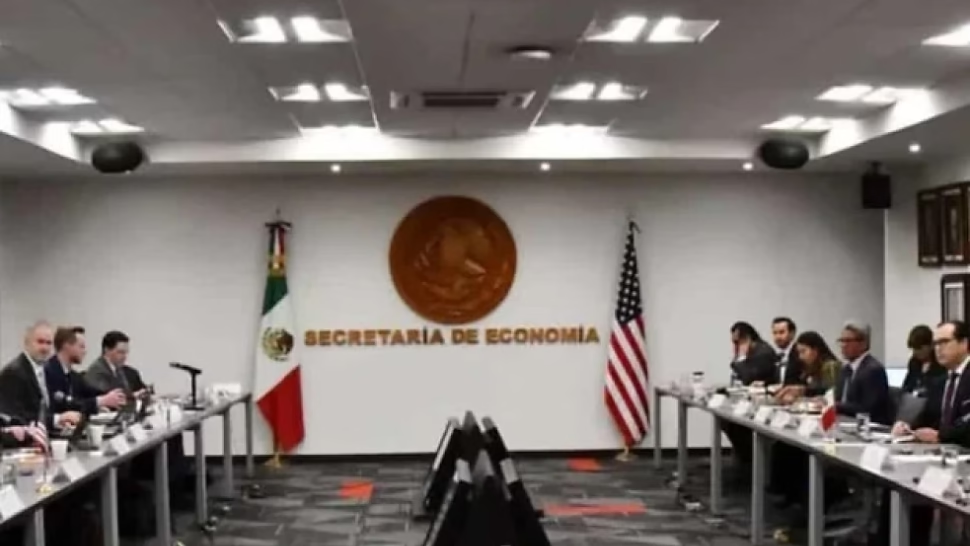
The second round of dialogues prior to the review of the T-MEC concluded without concrete agreements. The meeting was held in Washington, according to the Secretary of Economy, Marcelo Ebrard. The Mexican delegation presented proposals and points of view, but no agreements or additional details were released.
Topics addressed included rules of origin, economic security, agricultural sector and automotive industry. These issues are fundamental to the operation of the trade agreement between Mexico, the United States and Canada.
The formal review of the treaty will begin on July 1 with a virtual trilateral meeting. A third round of negotiations will take place on July 20. Everything occurs in a context of trade tensions, with tariffs imposed by the United States on various products.
Mexico and Canada have expressed interest in maintaining and extending the agreement. However, the doubts raised by US President Donald Trump generate uncertainty about the future of the USMCA.