An SOS with wings: the dramatic call from a tireless traveler
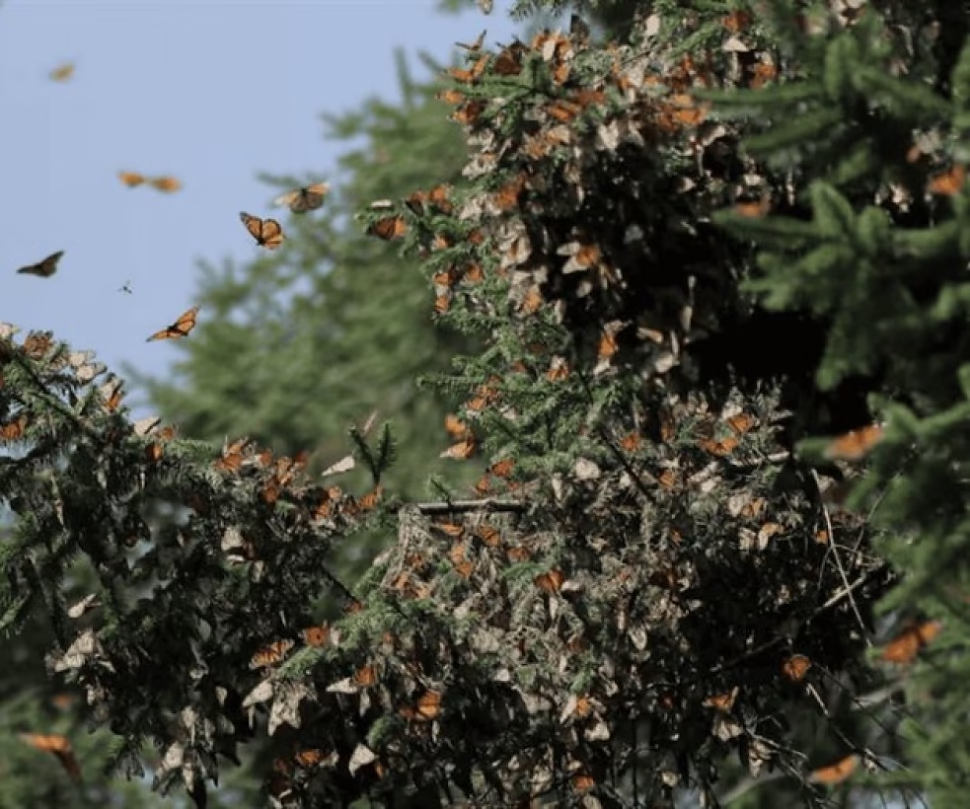
It seems that the epic journey of the monarch butterfly, that insect that travels more kilometers than a low-cost tourist on sales, is in trouble. In a scene that mixes international diplomacy with a desperate cry to heaven, the governor of Michoacán, Alfredo Ramírez Bedolla, and the Secretary of the Environment, Alicia Bárcena Ibarra, have raised their voices to ask the governments of Canada and United States to please stop poisoning the all-you-can-eat buffet of our beloved winged travelers. Because, of course, what would Mexico be without its favorite annual natural spectacle, free and with a better script than most streaming series?
The head of Semarnat released the informative pearl: “We are concerned to know that in Canada and the United States many pesticides are being used that are preventing the massive arrival of the monarch butterfly”. Wow, wow. It turns out that our neighbors to the north, while worrying about their perfect lawns and pristine crops, are accidentally (or willingly, who knows) liquidating the milkweed plant, the only acceptable menu item in the monarch restaurant. That’s right, the 4,000 kilometer migration, a feat that leaves any Olympic athlete breathless, runs into the invisible wall of agricultural chemistry. Ironies of modern life!
Conservation is essential, or so they say while asking for help
At the official inauguration of the sanctuaries in the Sierra Chincua, Governor Ramírez Bedolla, with the solemnity of someone announcing that his car has broken down just before a long trip, declared that “conservation is essential.” Quite a revelation. He then passed the ball to the opposing field with enviable elegance: “Not everything depends on us, a lot depends on them.” Translation: “We are protecting the forests, but if you up there exterminate their food, this becomes a one-way trip to extinction.” It’s as if you made an effort to have the house spotless to receive guests, but it turns out that the guests have gotten poisoned along the way with the takeout food. A nonsense.
The state president, remembering with nostalgia that the alarms already sounded two years ago, assured that in Michoacán “they are doing their part.” Bravo. They preserve the forest, the communities and the ejidos. Very commendable. But one can’t help but wonder if, in the grand scheme of things, this amounts to putting a bandage on a wound while the patient bleeds out elsewhere. The logic is simple: without milkweed, there are no monarchs. And without monarchs, what do we put in tourist brochures?
Ecological tourism and shared prosperity, the bright side of the drama
And here is where tragedy meets box office. Ramírez Bedolla, in a Machiavellianly practical turn, pointed out that “because of the spectacular nature of the monarch butterfly, it is a natural attraction”. Come on, it is not only a question of love for nature, but also of business. He proudly announced that they have three sanctuaries ready for the season, waiting with open arms for more than 800,000 visitors and an economic impact of more than one billion pesos. The Secretary of Tourism, Josefina Rodríguez Zamora, crowned it all with the mantra of “shared prosperity”. How nice it sounds. Traditional cooks, artisans and local communities are all happy thanks to a butterfly that, without knowing it, has become the main employer in the region. Who would have thought.
Meanwhile, Mrs. Bárcena profusely thanked the 121 agrarian nuclei, the “great guardians” of the reserves. He praised their vigilance to prevent clandestine logging. “I want to thank the community structures of Ocampo, Áporo, Angangueo, Zitácuaro very much, because you are the ones who maintain the health of the forests,” he declared. It’s moving. While abstract policies are being debated in other parts of the world, here there are gentlemen with machetes and good hearts protecting the winter hotel from butterflies that are, without a doubt, more travelers than they are. The secretary spoke of a “trinational articulation that is so complicated.” Wow, discovering that coordinating three countries is difficult must have been as surprising as discovering that water is wet.
His great dream is “to enhance and guarantee that this migratory corridor, this transit between Canada, Mexico and the United States, is protected.” A laudable dream, without a doubt. But in a world where we can’t even agree on which side of the sidewalk to walk, getting three nations to align their agricultural and conservation policies to save an insect… sounds like the plot of a sci-fi movie with a happy ending, right before the credits roll.
So you already know. The next time you see a monarch butterfly, remember that it is not just a beautiful orange insect. She is a transnational traveler, an economic engine, a diplomatic headache and the symbol of how absurdly complicated it is to preserve natural magic in a world obsessed with pesticides and economic returns. A drama with wings that is repeated every year, hoping that this time, the script will change.
Did you like this ironic look at conservation? Share this article on your social networks and help more people learn about the surreal world of butterfly diplomacy. And be sure to explore more content about our planet’s fascinating challenges!