Gianni Infantino: the FIFA president marking the 2026 World Cup

His journey from lawyer to world football leader and the changes he promoted.

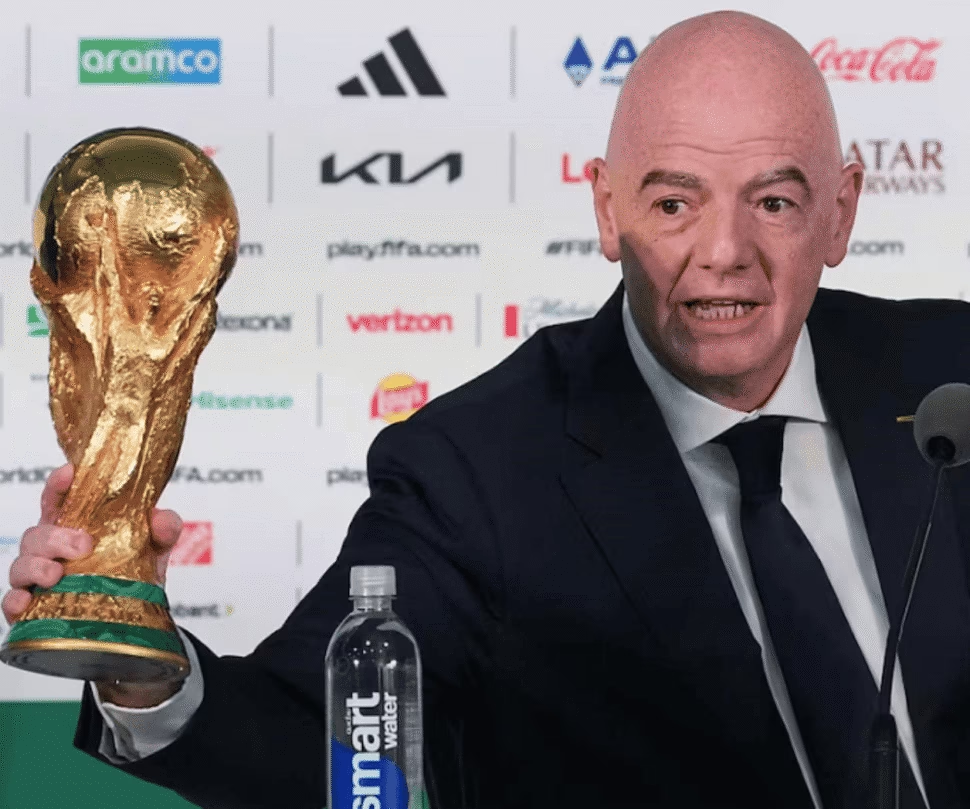
The 2026 World Cup final will not only define the champion. He has also put the spotlight on Gianni Infantino, the president of FIFA who heads the organizing body of the most important soccer tournament.

Giovanni Vincenzo Infantino, known as Gianni Infantino, was born on March 23, 1970 in Switzerland, the son of Italian parents. He grew up in Brig and was inclined towards sports management from a young age. At the age of 18 he presided over the local club, then studied Law and worked at the International Center for Sports Studies (CIES) before arriving at UEFA.

RelatedFIFA announces record prize of 50 million for the 2026 World Cup champion

Career

In August 2000 he joined UEFA in legal matters. In 2004 he was director of Legal Affairs and Licensing, and in 2007 deputy general secretary. By 2009 he was already secretary general, a position from which he promoted Financial Fair Play, the expansion of Euro 2016 to 24 teams and the creation of the League of Nations.

In October 2015 he announced his candidacy for FIFA. On February 26, 2016, he was elected president in Zurich, with 115 votes in the second round, beating Sheikh Salman bin Ibrahim Al Khalifa. He took office after an institutional crisis due to previous controversies.

World Cups under his management

Infantino has presided over the 2018 Russia and Qatar 2022 World Cups, both surrounded by debates about their choice as venues. He also promoted the expansion of the 2026 World Cup from 32 to 48 teams, a format that will debut in Mexico, the United States and Canada.

He is fluent in seven languages: Italian, French, German, English, Spanish, Portuguese and Arabic. He is married to a woman of Lebanese origin and has four children.
Argentina and Spain draw 0-0 in an intense final

Argentina and Spain tied without goals in an intense final including expulsion.

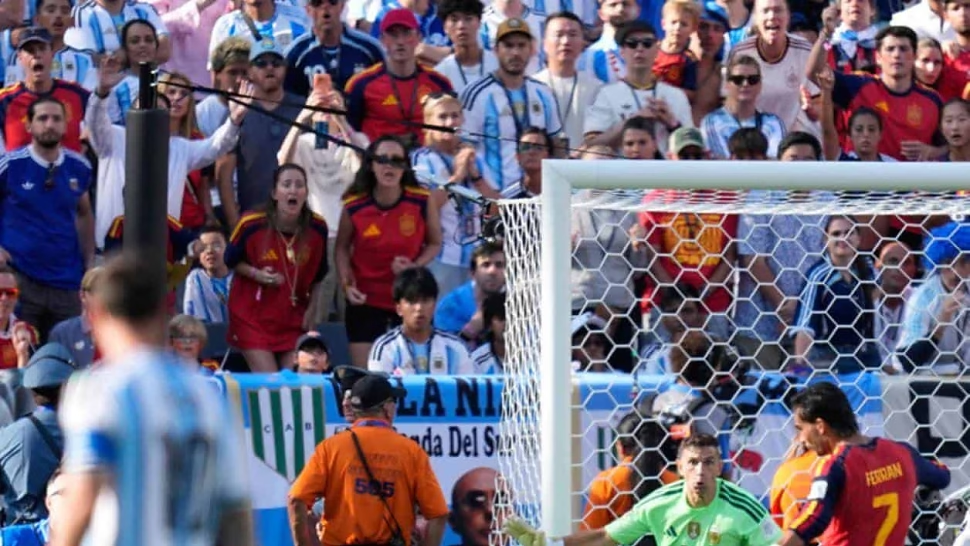
The duel for the world title between Argentina and Spain remains goalless at the end of the first extra time. The final, played in East Rutherford, New Jersey, is a tactical duel where Spain dominates possession but cannot beat Argentine goalkeeper Emiliano Martínez.

Lionel Messi looks for a goal to equal Kylian Mbappé as the all-time top scorer in World Cups. Argentina aspires to its fourth title, while Spain seeks its second title after 2010. A curious detail: in 2007, Messi, in a UNICEF campaign, bathed a child who turned out to be Lamine Yamal, today a member of the Spanish team.

Spain controlled the game, but ran into key saves from Martínez. In addition, they have played with numerical superiority since the second half, when Enzo Fernández received a red card for a foul on Pau Cubarsí. Argentina, which won the 2022 World Cup on penalties, will now have to resist with ten players.

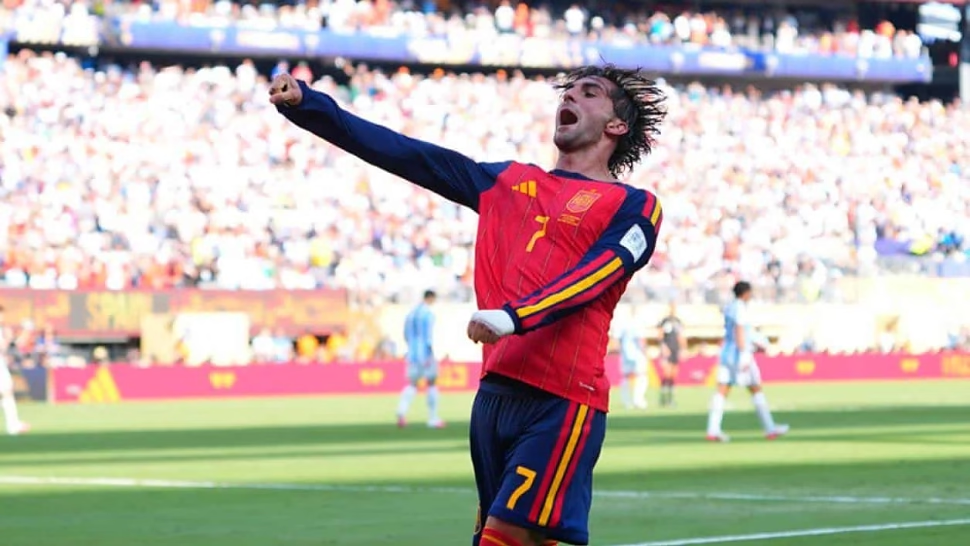
In the second extra time, Spain managed to open the scoring: Ferran Torres defined a cross from Nico Williams in the 106th minute. However, minutes later a goal by Williams was disallowed due to a prior foul by Mikel Merino on Nicolás Otamendi.

If Argentina wins, Lionel Scaloni would be the second coach to win two consecutive World Cups (after Vittorio Pozzo). If Spain wins, Luis de la Fuente would become the oldest coach to win the tournament, at 65 years old.

Spain maintains an unbeaten streak of 37 games. Argentina has seven consecutive victories in World Cups. The halftime show included Madonna, Shakira, BTS and an orchestra conducted by Gustavo Dudamel.

Continue reading

Spain wins its second World Cup by beating Argentina in extra time

The Spanish team achieved a historic victory in extra time against Argentina.

Victory in extra time

Spain defeated Argentina 1-0 in extra time and won its second world title. The final, played in a packed stadium, had a very even development during the regulation 90 minutes.

Neither team managed to open the scoring in regulation time. The tension remained high, with chances for both sides but without success.

It was in extra time when the decisive goal came. A goal at a key moment gave the trophy to the Spanish, unleashing celebration in the stands and throughout the country.

A milestone for Spanish football

This victory places Spain in a prominent place in international football. It is only their second World Cup, an achievement that reflects the collective work and hierarchy of the team.

The Spanish fans celebrated the result as a show of unity and effort. The team showed character to win a close match against a high-level rival like Argentina.

The road to the title was not easy. Spain showed defensive solidity and patience to find just the right space in extra time. The victory also has symbolic weight: it consolidates a generation of footballers who leaves their mark on the history of sport.

Continue reading

Norway thanks Mexican hospitality during the World Cup

The Norwegian embassy highlights the support of the fans and the brotherhood between both peoples.

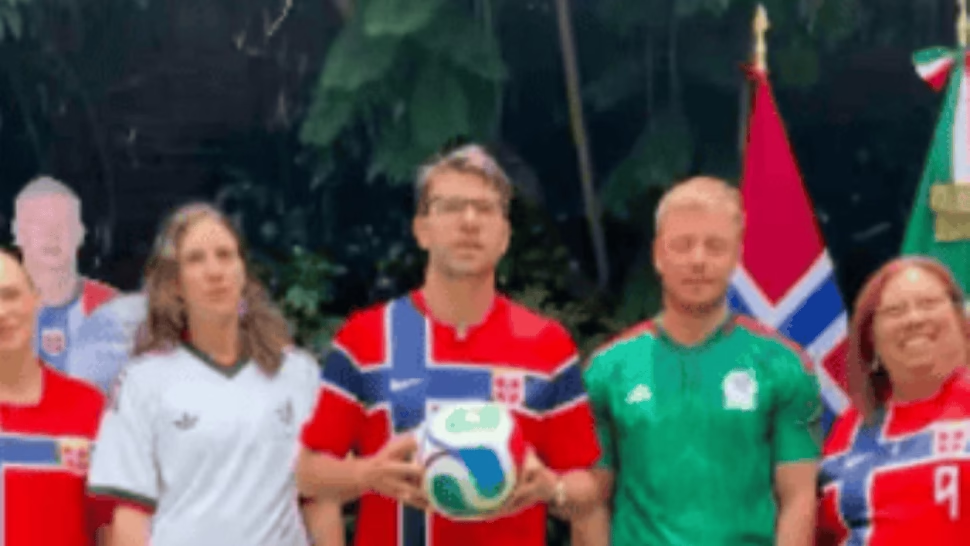
World Cup fever reaches its climax in Mexico. The Norwegian Embassy in the country published a video on social networks to thank the local fans. According to the diplomatic message, Mexican hospitality was key to the team’s experience during the tournament.

Thank you to the fans

The European body highlighted that Mexico not only opened its sports infrastructure, but also its plazas and homes. The Nordic delegation pointed out that the support of the fans went directly to the core of the team. During the weeks of competition, the Mexican community symbolically adopted the Norwegian team, celebrating its successes and accompanying it every minute.

Bilateral ties beyond sports

The diplomatic representation recalled that the relationship between both countries has historical pillars:

  • Norwegian cod is a central part of Christmas culinary traditions in Mexico.
  • Both governments collaborate to protect marine ecosystems and sustainable ocean economy.
  • The alliance extends to multilateralism with the UN80 initiative to strengthen international law.
  • Mexico is one of the world’s main consumers of Norwegian music, from black metal to pop and indie.

On social networks, Mexican users responded with Viking memes, images created by fans and expressions of gratitude. The embassy concluded that, beyond the trophy, the true triumph is the lasting friendship and brotherhood that this event leaves as a legacy.

Continue reading