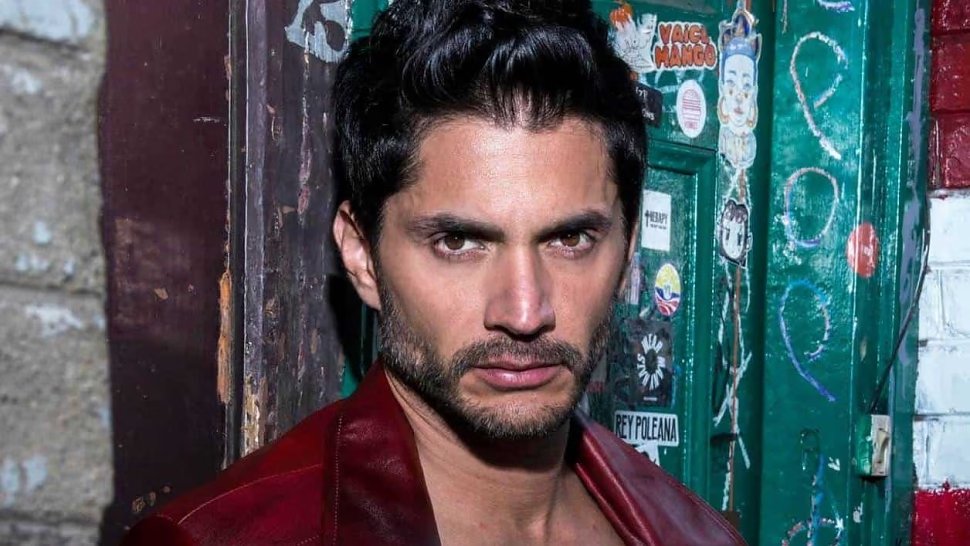
The earthquake that shook Venezuela on June 24 was also felt in Mexico, at least in the heart of actor Daniel Elbittar. Living in the country for 18 years, he followed from a distance the emergency caused by the two earthquakes that shook the central coast of Venezuela, with magnitudes of 7.2 and 7.5. The official toll exceeds 1,900 deaths, thousands of injured and entire families homeless.
Family safe
On the other end of the phone were his mother and sisters, safe although with material damage. “They were affected by the earthquake in Caracas. Thank God it didn’t get worse and they only suffered material damage,” says the actor.
That relief turned into indignation when he saw the images of rescues, collapsed buildings and families searching through rubble, while humanitarian aid advances amid restrictions that he considers unacceptable.
“It is unacceptable that they are not letting in humanitarian aid, that they want to force the moles to give statements limited by the imposed editorial line. It is good that the moles of Mexico are there and that they confront journalists,” he says.
Criticism of management
Elbittar maintains that those who suffer the most are the people who lost their homes amid controls that the Venezuelan government justifies as order and health security. “They do not allow the people who want to help in the rescue, from Colombia and Spain, to enter. Everything the government is doing is inhumane and the people are the ones who are suffering everything,” he says.
Faced with the emergency, the actor got involved in support work with the Venezuelan community in Mexico. “On the weekend we were at a collection center next to the Venezuelan embassy. We are also all carrying out activities to raise funds,” he explains.
His greatest relief is knowing that his mother and sisters are alive. The first intention was to bring them to Mexico, but for now it is impossible. “The issue is that right now the airports are collapsed, the entire air system. We are watching all the time.” Although he has been away for almost two decades, he says that today he feels more tied to his country than ever.