Fires in Canada force thousands to evacuate and affect air quality

Smoke from wildfires in Canada is crossing borders, leaving thousands homeless as authorities battle extreme weather.

Canada on fire (and it is not a metaphor)

If you thought that climate change was a problem of the future, the more than 25,000 evacuees in Canada due to the forest fires are looking at you with a “we told you so” face. The flames are not only destroying forests, but also the patience of those fleeing the smoke, heat and despair. And if that were not enough, the air in some areas of the US and Canada seems like something out of a post-apocalyptic dystopia. Who needs shows like The Last of Us when reality is stranger than fiction?

Manitoba, Alberta and Saskatchewan: the catastrophic trio

Manitoba bears the brunt, with 17,000 people evacuated and a state of emergency that sounds more like a movie script than an official bulletin. Alberta and Saskatchewan are not far behind, adding thousands more to the list of displaced people. Saskatchewan Premier Scott Moe summed it up with the elegance of someone who knows there is no respite from disaster: “The next few days are critical.” Translation: If it doesn’t rain soon, this is going to get worse than the final season of Game of Thrones.

RelatedEurope suffers historic heat wave with fires and maximum alerts

In Flin Flon, a town that sounds like the name of a comic book villain, more than 5,000 people had to run when the fire crossed the border from Saskatchewan like a tourist without a visa. And to make matters worse, an intrusive drone and thick smoke grounded the air tankers. Because, of course, what would a crisis be without a little extra chaos?

Smoke does not respect borders (or lungs)

The air in North Dakota, Montana and Minnesota reached “unhealthy” levels, which in real terms means that breathing there is like smoking three cigarettes in a row. Bryan Jackson of the US Weather Service warned that Canadian smoke will continue to tour the country in the coming days. Thank you, Canada, for the toxic “gift.”

Meanwhile, in Idaho, a separate fire burned more than 100 acres, closed roads and left some residents with the same expression of disbelief we wear when Netflix cancels our favorite series. The winds and terrain complicated the extinction efforts, because nature clearly decided to play hard this year.

Shelters full and hotels in “every man for himself” mode

Evacuation centers in Manitoba are at their limit, with people sleeping on the floor and waiting in hallways like they’re waiting in line for a Taylor Swift concert. Kyra Wilson, an indigenous leader, described it as one of the worst evacuations since the 1990s. “People are tired,” she said. And it’s no wonder: between the smoke, the heat and the uncertainty, even the most optimistic would be reconsidering their life choices.

The fire season in Canada has just begun (it runs from May to September), and if 2023 was bad, 2025 seems determined to surpass it. So, if you were planning a trip north, you might want to reconsider and stay home watching documentaries about glaciers… while they still exist.

Did this situation impact you? Share this note to raise awareness about the climate crisis and continue exploring more content on how to help in environmental emergencies. #PrayForCanada (but also demands action).
Iran fires Ayatollah Khamenei amid political uncertainty

Iran begins funerals for Ayatollah Khamenei, who led the country for more than three decades.

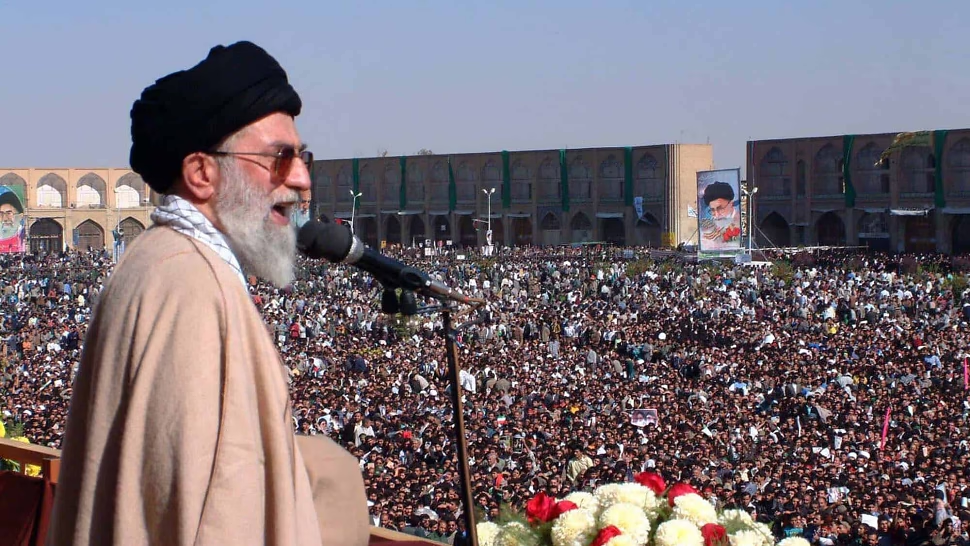
Iran began the funeral ceremonies this Saturday for Ayatollah Ali Khamenei, supreme leader of the Islamic Republic for more than three decades. His death occurred after the start of the war between Iran, the United States and Israel. The events will last for several days in an environment of uncertainty about the political future of the country.

Khamenei’s legacy

Khamenei assumed leadership in 1989, after the death of Ayatollah Ruhollah Khomeini. During his tenure he consolidated the power of the Revolutionary Guard, strengthened Iran’s regional influence and backed allied groups such as Hezbollah, Hamas and Yemen’s Houthi rebels. His government also promoted the development of Iran’s nuclear program, defying international sanctions for years.

Continue reading

Typhoon Bavi threatens Guam and Mariana Islands; could be super typhoon

The threat comes after the devastating passage of Sinlaku; authorities call to prepare.

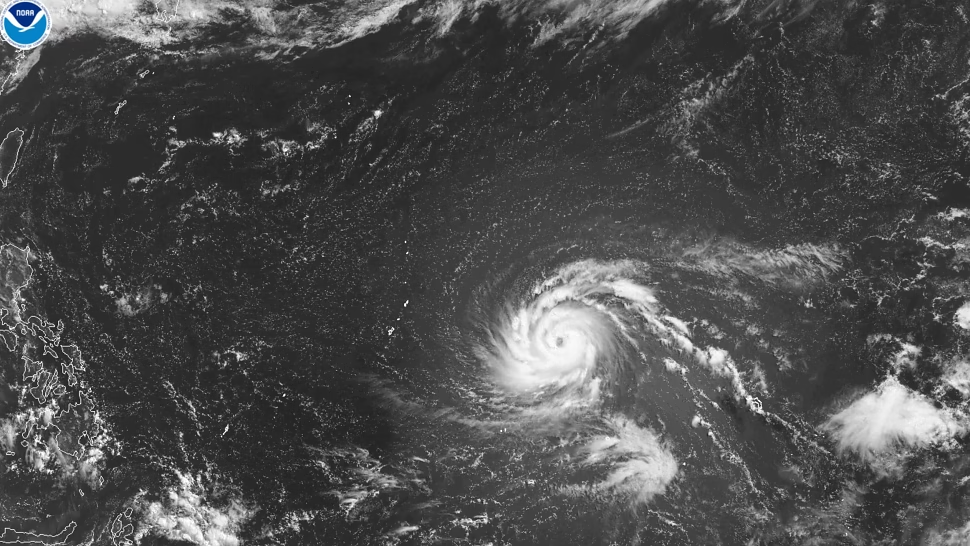
Typhoon Bavi advances strongly towards Guam and Mariana Islands

The authorities of Guam and the Commonwealth of the Northern Mariana Islands are on alert for the possible arrival of Typhoon Bavi. The system could become a super typhoon at the beginning of next week, according to reports from the National Weather Service.

This phenomenon occurs just months after the devastating passage of super typhoon Sinlaku, which left serious damage in the region and left thousands homeless.

Preparations and background

On Friday, Bavi was located about 1,223 kilometers east of Guam, with sustained winds of 129 kilometers per hour. Forecasts indicate that it could intensify rapidly, exceeding 241 kilometers per hour before approaching the Mariana Islands.

Faced with the risk, residents began to reinforce their homes with boards, stock up on fuel, and store food and water. On Saipan, many families have not yet fully recovered from Sinlaku: some remain without power and others remain in temporary shelters after losing their homes.

Meteorologists warn that Bavi could modify its trajectory, but recommend maintaining all prevention measures. Guam, where important US military bases are located, also remains under surveillance.

Specialists point out that the current cyclone season in the Pacific could be more active due to the influence of the El Niño phenomenon and the increase in global temperatures. While monitoring continues, authorities urge the population to stay informed and prepared for any changes in the trajectory or intensity of the typhoon.

Continue reading

Ukrainian attacks worsen energy crisis in Russia

Ukraine hits Russian refineries; Putin rejects truce and continues offensive.

The war between Russia and Ukraine intensifies with a new wave of cross attacks. Moscow faces a growing fuel shortage after the Ukrainian bombings against its refineries, while in Ukraine dozens of people are reported affected by the Russian bombings.

Impact on Russian energy

Since March, Ukraine has attacked more than 50 oil and energy facilities on Russian territory and on the Crimean peninsula. These attacks have affected about a third of the country’s refining capacity, according to analyst estimates.

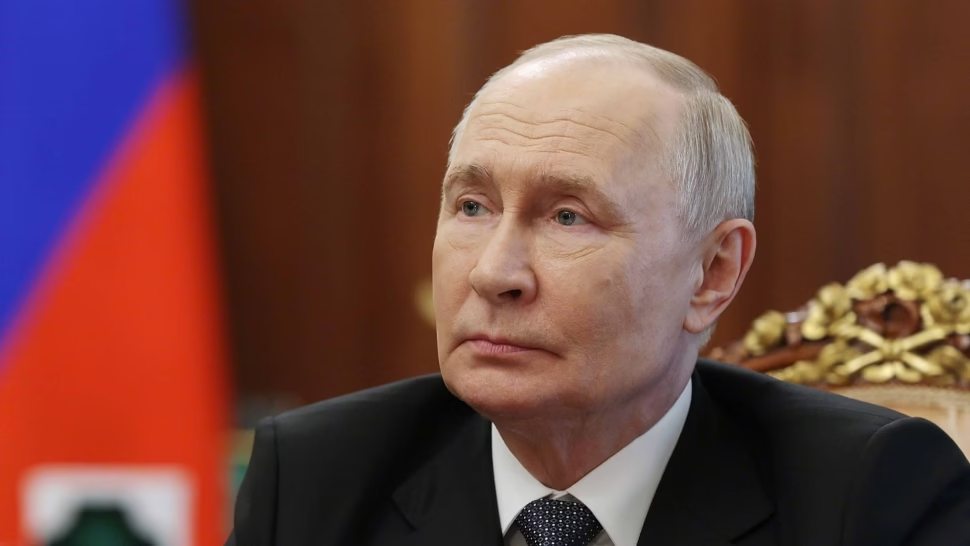
Russian President Vladimir Putin maintains his position of continuing the military offensive and rejects any ceasefire proposal. The lack of fuel is beginning to be felt in several regions, while Ukrainian forces redouble their blows to enemy energy infrastructure.

The conflict shows no signs of de-escalation. Both sides are preparing for more clashes in the coming days, with energy supplies a key strategic objective.

Continue reading