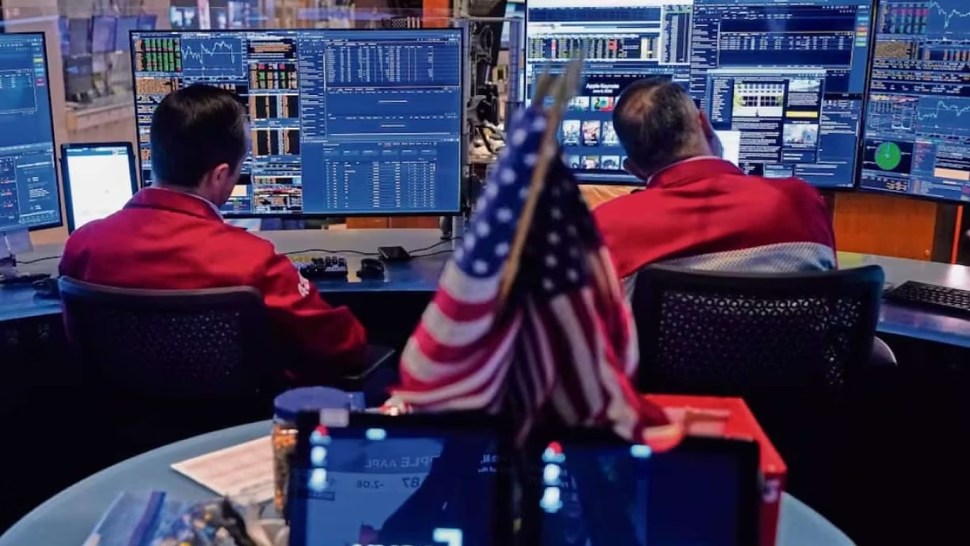
US stops 36 extraditions; Sheinbaum sets conditions for Rocha Moya

The US denies 36 extraditions to Mexico due to lack of evidence. Sheinbaum defends position.

The White House move that no one expected

The president dropped the bomb in the morning: the United States said ‘no’ to 36 extradition requests from Mexico. The reason? Simple and brutal: there is a lack of evidence. Like that, without further ado. Like when they ask for your credentials to enter a bar and you arrive without a wallet.

Sheinbaum explained it with that mixture of irony and firmness that we already know from him: “What is the vision of the State? What is the long-term vision? Beyond the political situation.” Translation: we are not going to release anyone just because the neighbor to the north asks for it.

RelatedExtradition of Rocha Moya: the ball is in Sheinbaum’s court

The Rocha Moya case: the governor who plays hide and seek

The case of the governor of Sinaloa, Rubén Rocha Moya, is the perfect example. The US Department of Justice wants him, but Mexico won’t let him go. The reason? Sheinbaum was clear: “If there is sufficient evidence, within the framework of our adversarial criminal system, of the Constitution, then we proceed; if there is no evidence, we do not proceed.”

Here’s the legal trick: extradition is not a favor between friends. It is a judicial process with standards of evidence. And if the US does not present what Mexican law requires, then there is no deal. That simple, that sovereign.

“That is the position we have and we are not going to change it” — Claudia Sheinbaum

The president promised that next week her cabinet will provide details of all those denied requests. Meanwhile, Rocha Moya remains in office, protected by a lack of evidence, not a lack of political will.

The moral of this story: power has better lawyers, but the truth has journalists. And sometimes, the truth is that the evidence is not there.
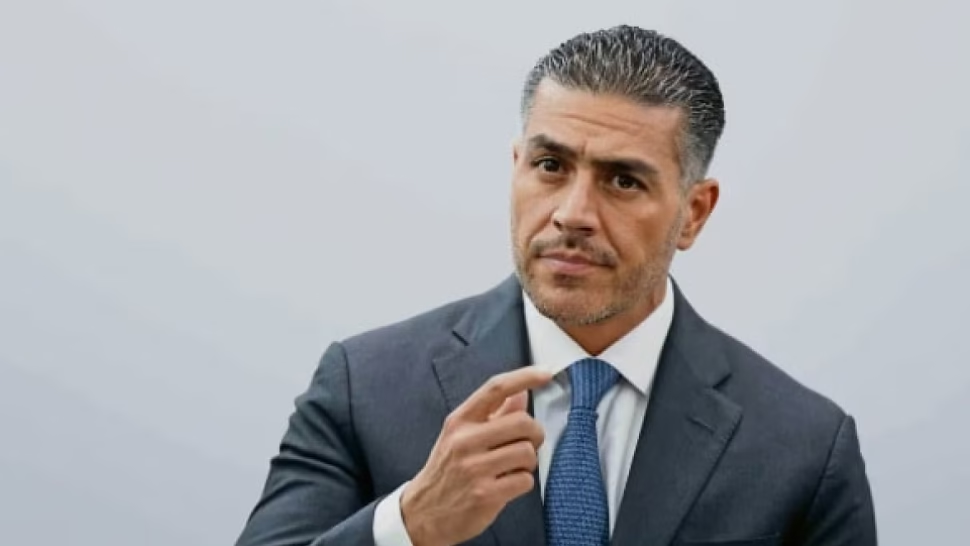

Colombians arrested for training in the manufacture of explosives in Michoacán

Colombian detainees linked to the manufacture of explosives in Michoacán.

The Security Cabinet has arrested Colombian citizens linked to the training and manufacturing of improvised explosive devices in Michoacán. This was reported by the Secretary of Security and Citizen Protection, Omar García Harfuch, during the morning conference on Friday, July 3 in Morelia.

These arrests are part of investigations that identified the entry of several people involved into the country, mainly through the Mexico City International Airport and other air entry points. The National Intelligence Center monitored these movements.

The entry of foreign people by land was also detected, who allegedly collaborate in the training of members of criminal groups to install these devices. García Harfuch pointed out that there is an ongoing investigation to locate the leaders of these networks in Michoacán, including alleged high-level members of the Jalisco Nueva Generación Cartel.

The head of the SSPC confirmed the participation of citizens from different countries, mainly from Colombia. We are working in coordination with Colombian authorities to strengthen the investigations. In the coming days, the exact number of people arrested related to the manufacture and use of these explosives will be specified.

Continue reading

PRI warns about digital fraud and asks to reinforce prevention

The PRI warns about the advance of digital fraud and demands greater protection for families.

PRI warns about digital fraud and demands greater action

The Institutional Revolutionary Party (PRI) in the Senate warned about the increase in telephone fraud and extortion in Mexico. He pointed out that these digital crimes affect the assets and security of millions of families.

PRI legislators detailed that criminal organizations have perfected their methods. They use techniques such as phishing, smishing, vishing, cloning of messaging accounts, kidnapping simulations, fake job offers and artificial intelligence to create manipulated audio and videos that facilitate deception.

Given this panorama, the PRI called on federal and state authorities to strengthen prevention, investigation and combat strategies against these behaviors. He emphasized the need to implement more effective measures to protect citizens.

The growing concern for security has led the party to demand a more rigorous approach in the fight against these crimes that affect the tranquility of the population.

Continue reading

The United States does not extend the T-MEC, markets without problems

Markets calm due to the non-extension of the T-MEC until 2042, according to analysis.

T-MEC: No extension until 2042, stable markets

The United States decided not to extend the validity of the USMCA until 2042. The treaty will remain in force until 2036 with annual reviews. The decision did not generate turbulence in the financial markets. Analysts were already anticipating this scenario, according to the Mexico organization How are we doing?

In its report ‘The T-MEC is still in force’, the organization detailed that annual reviews were a possibility contemplated. Therefore, variables such as the exchange rate did not show negative reactions. On July 1, the peso stood at 17.54 units per dollar, with no relevant movements after the announcement.

Productive integration in North America is key. Mexico maintains its role as the main supplier of fresh fruits and vegetables to the United States. This strengthens regional food security, especially in the agri-food sector.

Looking ahead to the next negotiations, the central issues will be the reduction of tariffs, the defense of the rules of origin and access to agricultural markets. The United States will seek to reduce its trade deficit, while Canada will try to protect its key sectors.

Continue reading