The electricity generation plan towards 2030
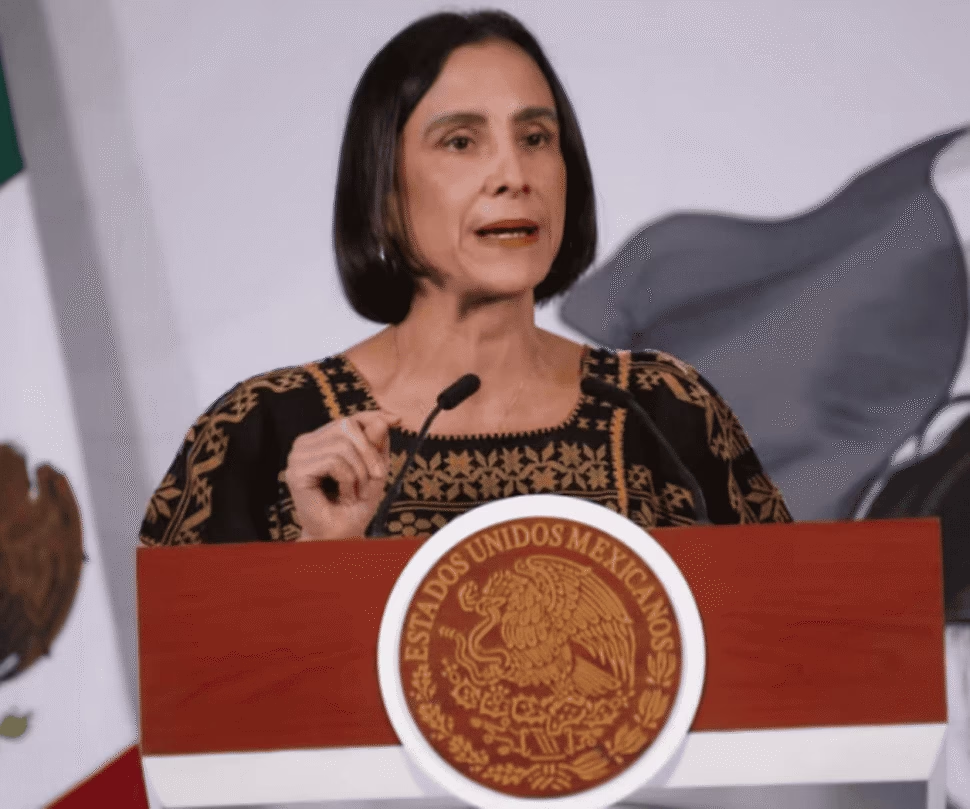
The Secretary of Energy, Luz Elena González Escobar, presented the progress of the Electric Power Generation Plan. The objective: add 32 thousand megawatts (MW) of new capacity by 2030. Of that figure, 70%—about 22 thousand MW—will come from renewable sources.
The official explained that the total investment amounts to 739 billion pesos. The CFE will participate in 79% of the new capacity, either with its own resources or mixed schemes. In all cases, ownership of the assets will remain in the hands of the State.
Among the planned technologies, solar photovoltaic (12,300 MW) and wind (6,800 MW) stand out. Geothermal, solar thermal and hydroelectric energy are also included. To guarantee the reliability of the system, the CFE will build five combined cycle plants, adding 9,900 MW of firm capacity.
González Escobar stated that the aim is to strengthen energy sovereignty through an orderly transition. Currently, renewables represent about 23% of generation; By 2030 it is expected to reach 38%. This implies a growth of 140% in photovoltaic, 90% in geothermal, 70% in wind and 18% in hydroelectric.
The plan will reduce dependence on natural gas and avoid the emission of 69 million tons of carbon dioxide equivalent. 50 public and private photovoltaic plants with a capacity of 7,859 MW have already been assigned. New permit processes will be completed in the coming months.
The secretary recalled that previous energy reforms reduced public participation from 99% in 2000 to 43% in 2023. The strengthening of the CFE begun in the previous six-year term and the purchase of plants from Iberdrola reversed that trend. By 2030, the public sector will contribute 61% of national electricity generation.
President Claudia Sheinbaum backed the plan. In his morning conference he highlighted that clean energies are essential to change the energy matrix: “The sun, the wind, geothermal energy are available energies that guarantee sovereignty. We do not emit greenhouse gases or pollutants that harm health.”
Sheinbaum stressed that the objective is to stop consuming fossil fuels, taking advantage of the cost reduction of renewables globally.