Diplomatic Posture on the Detention of Mexican Citizens
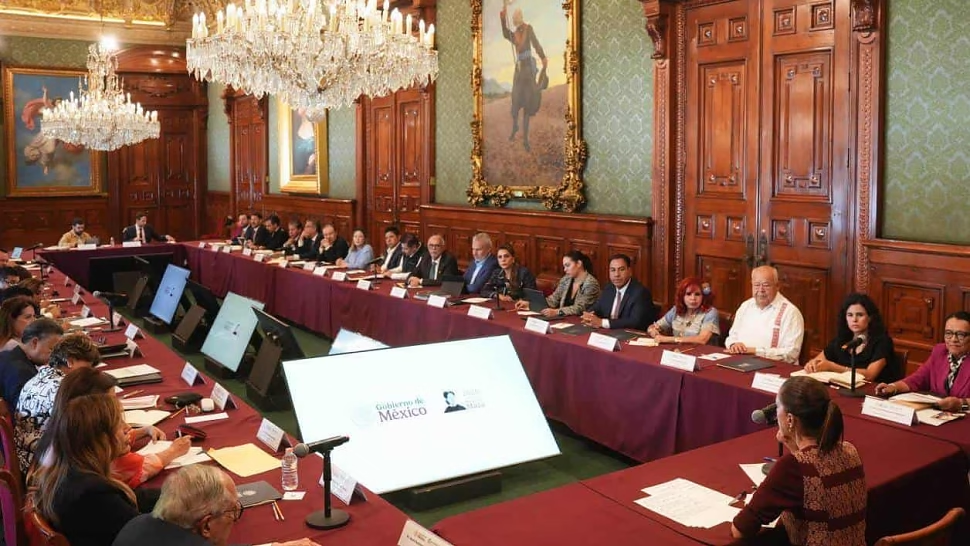
The Ambassador of Israel in Mexico, Einat Kranz Neiger, has spoken emphatically to deny any allegations of mistreatment towards the six detained Mexican nationals, as well as towards Ambassador Mauricio Escanero. During a virtual press conference that commemorated the two years of the conflict in the Gaza Strip, the diplomat directly addressed the Mexican government’s decision to take the case to the Human Rights Council of the United Nations (UN). This multilateral organization will be the forum where possible violations and consequent actions will be analyzed, a strategy that, according to Foreign Minister Juan Ramón de la Fuente, is aligned with the principles of international law and multilateral diplomacy.
The Israeli representative stated that, although she does not have an official response to the formal complaint, her government is prepared to present its position. He emphasized that Ambassador Escanero was able to personally visit the detainees and verified that they were in adequate conditions, ensuring that they received dignified treatment during their stay in custody. He stressed that there were no complaints or complaints from citizens during their stay in Israeli territory, which, from his perspective, consolidates the official version that there were no attacks.
Legal Context and Response to the Accusations
Kranz Neiger described the statements of some participants of the Sumud Global Flotilla as a strategy with the purpose of delegitimizing Israel, stating that his government categorically rejects these accusations. In this sense, the ambassador defended the legality of the maritime blockade imposed on Gaza, describing it as a legitimate and recognized measure at the international level by the United Nations. He argued that attempting to break a blockade of this nature constitutes an illegal action, and expressed his hope that the incident will serve as an isolated provocation that will not be repeated.
In the context of the second anniversary of the war, the diplomat referred to the peace plan proposed by then-US President Donald Trump, while reiterating that Israel did not initially seek the conflict. He regretfully acknowledged the loss of civilian life, but also celebrated the release of 48 Israelis who had been kidnapped on October 7, 2023. Among those released was Matan Zangauker, partner of the Mexican-Israeli Ilana Gritzewky, who remains in captivity under the Hamas group.
Regarding this exchange, the ambassador was clear in denying that it was a barter for nearly two thousand individuals considered terrorists, describing the cost for Israel as extremely high. He distinguished between the Palestinian population and militant groups, stating that the direct enemy is Hamas, the terrorist organization carrying out the attacks. He also highlighted the significant efforts made by his nation to facilitate the entry of humanitarian assistance to the besieged Gaza Strip.
On the political future of the region, the ambassador considered any debate concerning the creation of a Palestinian State premature, emphasizing that current conditions are not conducive to such negotiations. This position reflects the complexity of the geopolitical scenario and the profound challenges that persist in the search for a lasting solution to the conflict. The situation of detained Mexican citizens, therefore, is framed in a much broader and more delicate international context, where diplomatic narratives and legal procedures are critically intertwined.
Did you find this analysis of complex diplomatic relations in conflict contexts enlightening? Share this article on your social networks to keep your network informed and explore more content related to international politics and human rights on our platform.