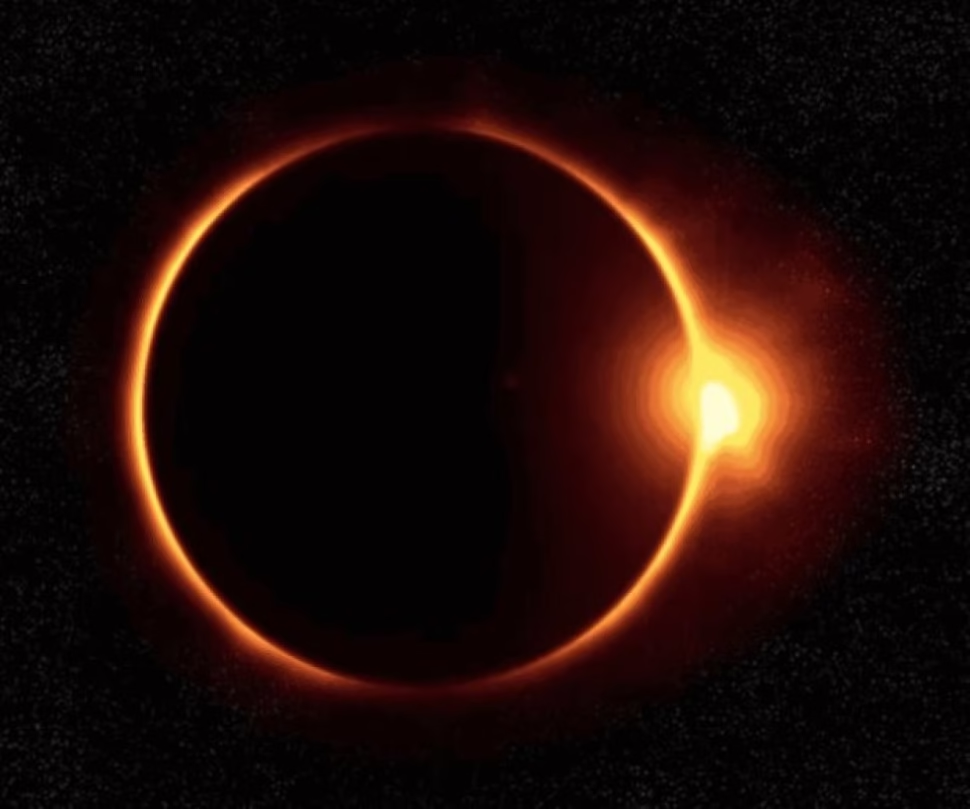
The great celestial spectacle that (almost) everyone will see… except Mexico
Oh, joy, this Saturday’s Solar Eclipse promises to be the most exciting astronomical event since someone decided that looking at the sun without protection was a bad idea. Scientists, amateur astronomers and even that neighbor who never picks up the trash will be glued to the sky, because what better plan than to see how the Moon plays hide and seek with the Sun?
Technical details (or how NASA ruins the magic with exact data)
According to the geniuses at NASA (yes, those who have telescopes more expensive than your house), the eclipse will begin on March 29 at 8:50 UTC and end at 12:43 UTC. Translation for mortals? At 02:50 AM Mexico time, just when everyone is sleeping or wondering why they are still awake watching memes.
The phenomenon will be visible in half the world: Europe, Asia, Africa, North America, part of South America and even in the Arctic (in case the polar bears also want a show). But, surprise!, Mexico is not on the list. Reason? Astronomy clearly enjoys playing favorites.
The solution for Mexicans: see it on screens like anything from the 21st century
For astronomy lovers in Mexico (and those who just want an excuse not to sleep), NASA will broadcast the event on its platforms. So get ready to experience the excitement… through a stream, because what would modernity be without pixelated images of a sun being devoured?
Isn’t it ironic? An event that occurs in the sky, but that many will only be able to see on a screen. Welcome to the future, where even eclipses are digital.
Don’t miss it! Share this article with that friend who always says “someday I’ll look at the stars” and explore more astronomical content (because, let’s face it, this is more interesting than your social media feed).