Miracle on the roads or official narrative?
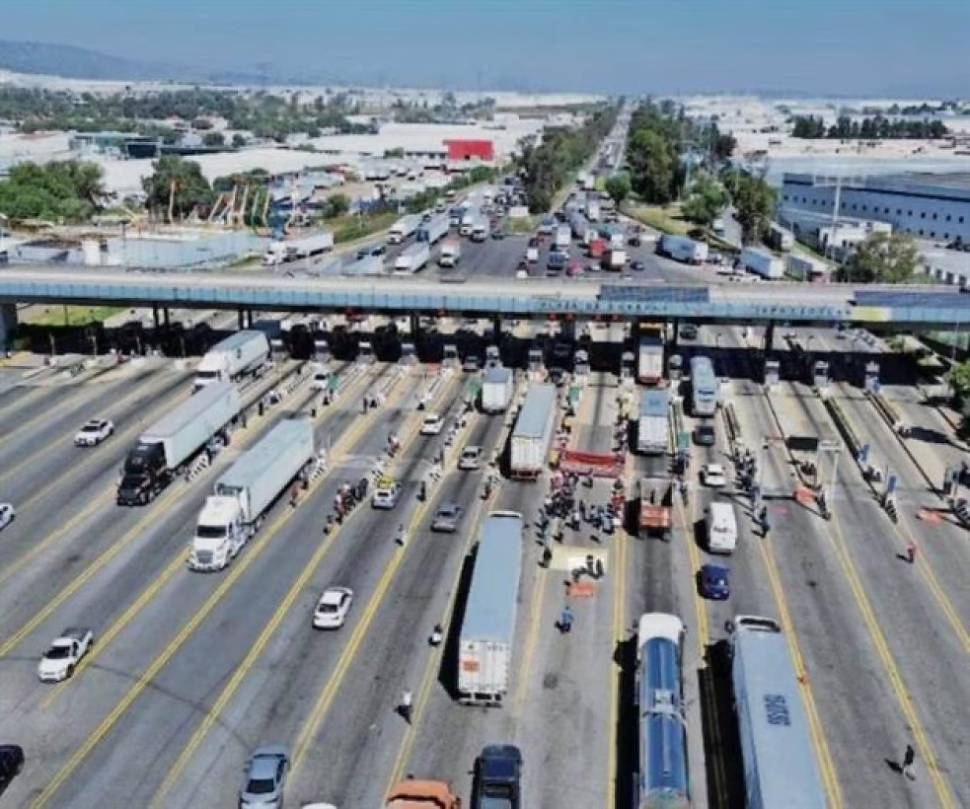
The figures from the Executive Secretariat are clear: from almost 12 thousand cases in 2019 to just over 6 thousand in 2025. A 46% reduction in assaults on carriers. Sounds good, right? Almost a security miracle.
But my legal brain, the one that studied law to detect traps, begins to ask uncomfortable questions. How do you really measure success? For open investigation folders, for complaints filed, for recovered merchandise?
“This drop responds to the implementation of security strategies on roads, airports, ports and borders,” says Colonel Rodolfo Blancas Osorio of the National Guard.
Sure. And I am the queen of England. Official statements always come with their own instruction manual: celebrate the positive, omit the uncomfortable.
Technology as a perfect alibi
That’s where the Balam system comes in, that application that allows drivers to share location in real time. It sounds futuristic. Drones, helicopters, patrols responding instantly. And LAICA, that WhatsApp line for companies and authorities.
Useful tools, no doubt. But they are also the perfect excuse: any future failure will be the fault of “technical problems” or “lack of adoption by carriers.”
The State of Mexico continues to lead the black list, followed by Puebla, San Luis Potosí, Michoacán and Nuevo León. All show reductions, they say. But reductions from stratospheric levels are still high levels.
My journalistic memory pinches me. Where have I seen this script before? Figures that improve in an election year or when there is a budget to be approved. Collective amnesia is the best ally of power.
I’m not saying there aren’t genuine efforts. I say that I deeply distrust when institutions congratulate themselves so vehemently. The real test is not in the press releases, but on the dark roads where drivers still tremble.