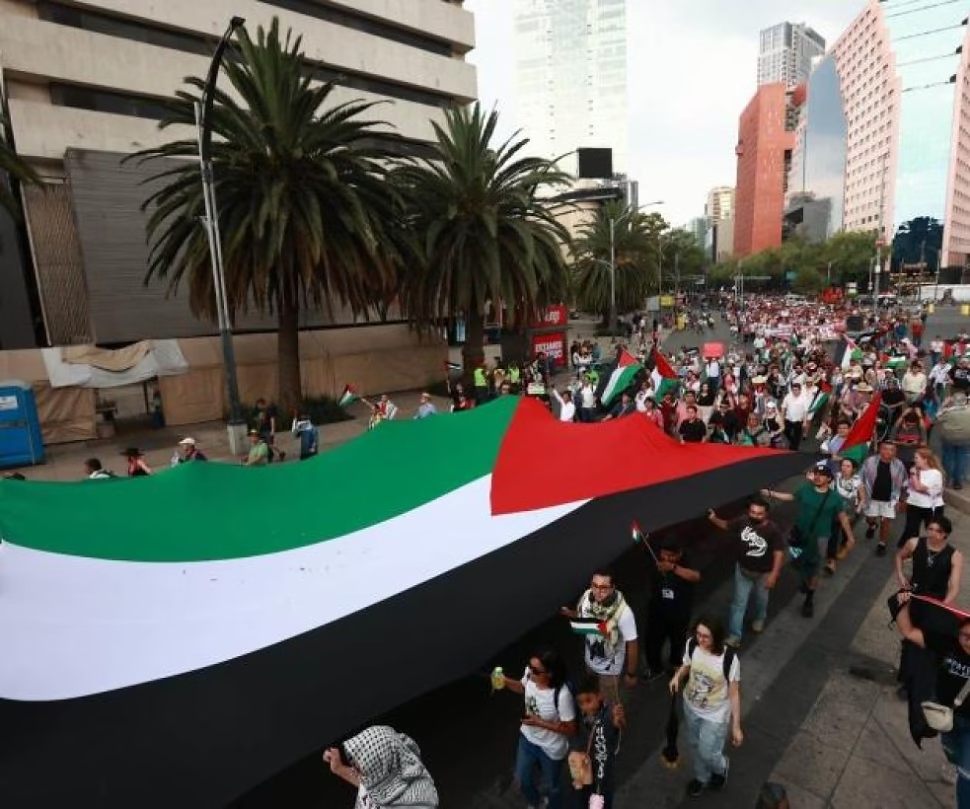
Teaching mobilization unites educational demands and solidarity with Palestine
A contingent of between 150 and 200 members of the National Coordinator of Education Workers (CNTE) joined the demonstration in support of Palestine in Mexico City this Tuesday. The protest, led by Elvira Vélez Morales, general secretary of section 14 of Guerrero, started from the Ángel de la Independencia towards the capital’s Zócalo, where educators have held a sit-in since May 15.
Political and educational demands
During the mobilization, the teachers demanded that President Claudia Sheinbaum immediately break diplomatic relations with Israel. “We condemn this genocide and appeal for the right to exist,” declared Vélez Morales, emphasizing that the CNTE’s position goes beyond labor demands. The union leader also criticized the 9% salary increase offered by the federal government, calling it insufficient, and rejected the vacation extension proposal: “We are not coming for another week of vacation.”
Among the main requirements are:
- Repeal of the reform to the ISSSTE Law of 2007
- Repeal of the educational reform implemented during the governments of Peña Nieto and AMLO
- Establishment of dialogue tables with the Presidency
Indefinite sit-in with a view to negotiation
When questioned about the duration of the sit-in, Vélez Morales indicated that they will maintain the pressure measure until the federal government presents concrete alternatives. “It depends on the political will of the president to offer solutions to our central demands,” he stated. The teacher protest coincides with a delicate moment in Mexican foreign policy, where the conflict in Gaza has generated divided positions.
Political analysts point out that this alliance between educational demands and international positions reflects an expanded pressure strategy on the part of the dissident teachers. “The CNTE seeks to capitalize on anti-Israel sentiment in progressive sectors to strengthen its negotiating position,” explained social movements specialist Rodrigo Mendoza.
The teaching movement has gained international visibility by linking its struggle to the Palestinian conflict, although some critics argue that this stance could dilute the focus on educational demands. Meanwhile, the federal government has not issued a formal response to the new diplomatic demands raised by protesters.
Are you interested in learning more about social movements and educational policy? Share this analysis on your social networks and explore our special section on teacher conflicts in Latin America.