Context of bilateral tension
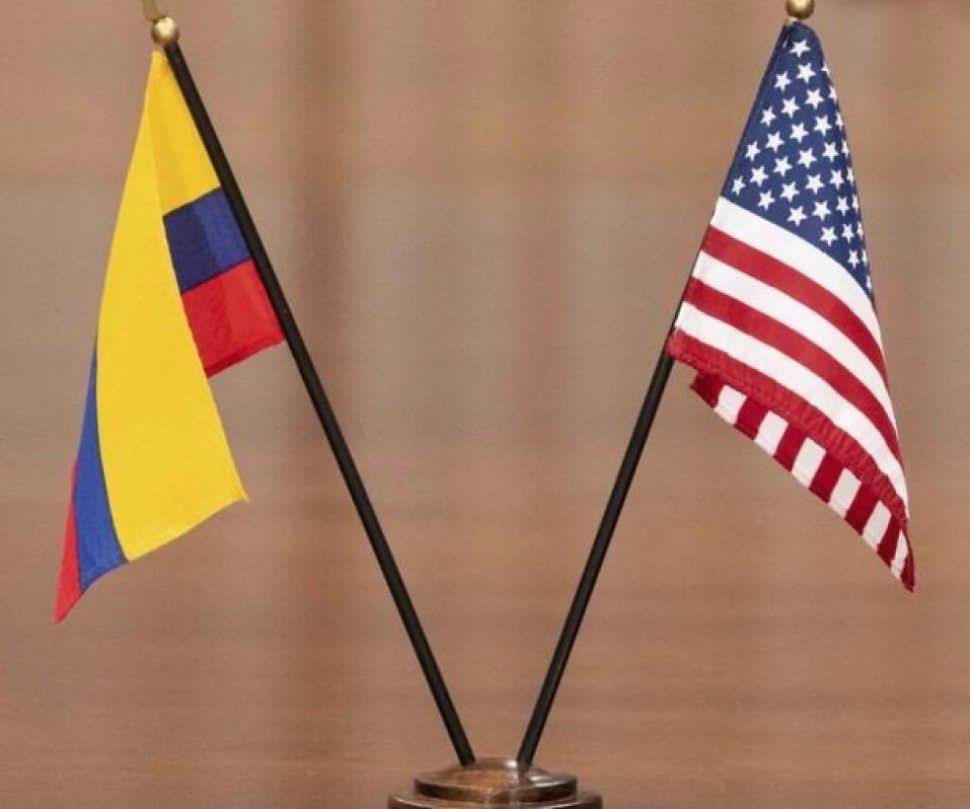
The United States Chargé d’Affaires in Colombia, John T. McNamara, returned to Medellín after being summoned for consultations in Washington. This movement occurred in response to the statements of the Colombian president, Gustavo Petro, who suggested without evidence the participation of Secretary of State Marco Rubio in an alleged plan to overthrow him. Although Petro later qualified his words in a letter addressed to former President Trump, the episode left a diplomatic fracture that both governments are trying to repair.
Statements and consequences
In an official statement, McNamara expressed that his government maintains deep concerns about the rhetoric and actions of the Colombian executive, which could weaken the historical alliance between both nations. “Our relationship has been mutually beneficial, but certain speeches from the highest level put this dynamic at risk,” he said. For its part, Colombia temporarily withdrew its ambassador in Washington, although he returned with the stated objective of strengthening cooperation and clearing up misunderstandings.
The incident highlights the fragility of ties at a politically sensitive time. The United States is Colombia’s main trading partner, with an exchange that exceeds $30 billion annually, in addition to being a key ally in security and the fight against drugs. Analysts point out that a prolonged escalation could affect sensitive areas such as investments and military cooperation.
Steps towards de-escalation
McNamara stressed the need for concrete actions by Colombia to prevent the situation from leading to major consequences. “We seek constructive dialogue, but also clarity in commitments,” he mentioned. Among the critical points are:
- Ensure that unfounded accusations are not repeated.
- Maintain open communication channels to avoid misinterpretations.
- Reaffirm bilateral agreements on economic and security matters.
The Petro government, for its part, insists that it does not seek confrontation, but its leftist rhetoric has generated friction with traditional partners. Foreign policy experts warn that, without gestures of rapprochement, diplomatic stability could deteriorate even further.
Impact and prospects
The crisis has generated concern in Colombian business sectors, fearful of tariff retaliation or reductions in investments. Although both countries have expressed their willingness to overcome the conflict, the process will require time and gestures of goodwill. The next bilateral meeting, scheduled for October, will be a key thermometer to measure progress.
Are you interested in Latin American geopolitics? Share this analysis on your social networks and discover more content on international relations in our specialized section.