San Lázaro approves, between dreams and reservations, the great tax reform
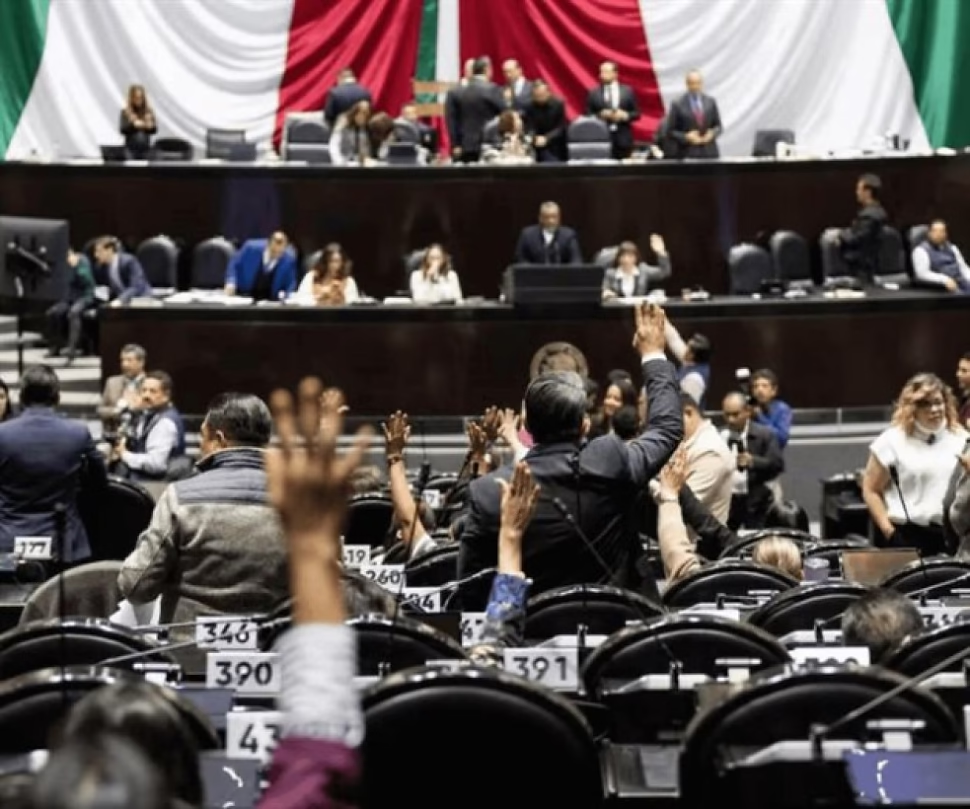
In an act of night-time legislative efficiency that can only be understood with several cups of coffee and the promise of a recess, the Plenary of the Chamber of Deputies decided that early Thursday morning was the perfect time to approve the reform to the Federal Tax Code. As expected, the Morenoist majority and their allied cronies passed the buck with the elegance of an express procedure, because what better time to debate the economic future of the country than when the majority of mortals are fighting their pillows?
The dictum, that legislative jewel, received its approval in general and in particular after the deputies discussed the reserved articles with the passion of someone who chooses the color of the curtains. Immediately afterwards, the package was sent to the Senate of the Republic, so that our senators can also enjoy marathon sessions and decide the fate of our portfolios.
The show must go on: more taxes on the lunch menu
The president of the Board of Directors, Kenia López Rabadán, in a burst of compassion for her late-night colleagues, declared a well-deserved recess. Because of course, passing a tax code is exhausting. The session would resume this Thursday at noon, ready to digest other delicious delicacies: the opinions to modify the IEPS Law and the Income Law of the Federation for 2026. A bureaucratic feast that promises to leave us all with a bitter taste in our mouths… and in our bank accounts.
To give a touch of emotion to the matter, a whopping 32 reservations were presented to the Tax Code ruling. Imagine the scene: five parliamentary groups in San Lázaro arguing heatedly, each defending their plot of power as if it were the last free territory in Game of Thrones. In an economic vote (a wonderful euphemism for “we approve this quickly because there is sleep”), they had the luxury of approving modification proposals from deputies such as Reginaldo Sandoval of the PT, Rubén Moreira of the PRI and Freyda Marybel Villegas of Morena. A nice example of partisan unity… or pure exhaustion.
Among the crown jewels, fraction X of Article 124 was eliminated. The original initiative, with a touching faith in the poor memory of taxpayers, sought to prevent a legal appeal if the citizen claimed ignorance of the contested act. Come on, if the SAT sends you a fine and you, with your busy life, say “I’m sorry, I didn’t remember”, then you’re screwed. Luckily, someone in the room thought that maybe, just maybe, that was a little unfair.
But the centerpiece of this circus, the netless trapeze act, came with Article 30-B. A glorious addition that permanently allows tax authorities to have online and real-time access to information from the systems of digital platforms. Yes, you read it correctly. The SAT wants to be the nosy friend who looks over your shoulder while you do your digital operations. And if they don’t comply, it threatens to block the services. Because in the digital age, the maxim is clear: either you pay with data or you pay with your access.
This is where fiction surpasses reality. Representative Verónica Pérez, of the PAN, uttered what is probably the most accurate phrase of the legislature: with this proposal, she said, “there will be the most expensive reality show of the six-year term that will allow the government to have eyes everywhere.” He couldn’t have been more right. Get ready for the new hit show: ‘Big Fiscal Brother’, where the SAT not only sees what you buy, but also judges your Netflix subscriptions and those inexplicable expenses on food delivery at 3 in the morning.
In an attempt to bring some sanity to this nonsense, PRI member Paloma Domínguez Ugarte presented reservations so that, before the authority blocks the issuance of digital certificatesinvestigation procedure. A radical idea, we know. She pointed out, with the lucidity of someone who sees a train derail in slow motion, that this modification of the SAT puts the privacy of users’ banking information at serious risk. According to the official view, this is not about being more intrusive, but about making tax justice “more effective.” Of course, because nothing is more effective than having a master key for every corner of your financial life.
And in case anyone doubted it, there was a reservation that was not even formally presented, but was registered so that it would be taken into account. A gem of bureaucracy. This requested that, although the decree will come into force on January 1, 2026, it would not be applied to digital platforms until April 1. An April gift? Or just recognize that the system won’t be ready in time and they need a few more months to fine-tune Big Brother? The world will never know.
So now you know, dear taxpayers. While you sleep, your representatives work tirelessly to ensure that the Tax Administration Service has more access to your lives than ever. Because in the Fourth Transformation, transparency is unidirectional: the government sees everything, and the citizen… to pay and remain silent.
Did you find the spectacle as surreal as we did? Don’t keep this pearl of legislative wisdom, share this article on your social networks and let your contacts also enjoy the tax reality show of the century. And if you want to explore more content about how your taxes become the best science fiction script, don’t hesitate to browse our economics section.