


Trump Administration Withholds Funding for Critical Infrastructure in Chicago
The administration of President Donald Trump has decided to withhold an allocation of $2.1 billion destined for infrastructure projects in Chicago, as confirmed on Friday by the White House budget director. This action expands a series of funding disputes that have targeted Democratic regions during the government shutdown, introducing an additional layer of political tension into the allocation of federal resources.
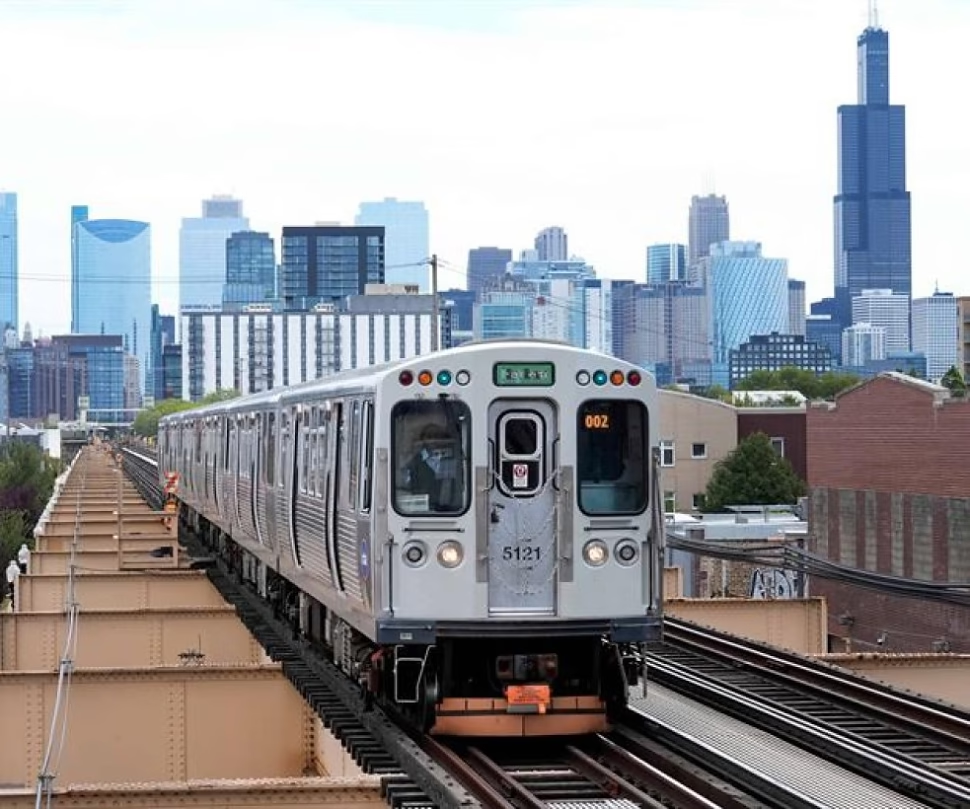
The measure is part of a broader budget strategy that prioritizes certain eligibility criteria. According to public statements, the administration will specifically pause the plan to extend the city’s red line elevated train with the stated goal of “ensuring that federal funds are not distributed through racially motivated contracts,” as Office of Management and Budget Director Russ Vought wrote on social media. This decision creates immediate operational uncertainty in a transportation project that had promised to connect some of the most disadvantaged and predominantly African-American neighborhoods in the metropolitan region.
A Pattern of Suspensions and its Impact on National Projects
The announcement regarding Chicago is not an isolated case. Vought made a similar statement earlier this week regarding projects in New York state, noting that $18 billion for infrastructure would be temporarily put on hold. This huge frozen item notably includes committed financing for a new rail tunnel under the Hudson River, a vital engineering feat for the congested transportation network in the northeast of the country. This pattern suggests a coordinated methodology for reviewing capital allocations.
President Trump, a member of the Republican Party, has adopted and publicly supported the tactics and justifications put forward by Vought. In a symbolic gesture, the president published a video on his social networks last night that represented him as the grim reaper, dressed in a black hood and brandishing a scythe. This audiovisual content, interpreted by many analysts as a metaphor for his firm stance in budget negotiations, reinforces the message of an administration willing to make forceful decisions regarding public spending.
The final loss of this funding would represent a significant setback for Chicago’s mobility plans. The long-awaited Red Line extension was planned to add four new train stops on the south side of the city, bringing the famous elevated train to sectors that have historically suffered from poverty and geographic isolation within the metropolitan area. This project was not only a work of engineering, but a promise of socioeconomic integration.
The Human and Community Cost of the Paralysis
Rogers Jones, director of a youth violence prevention center located next to the planned Roseland Red Line station, called the delay a severe blow to some of the area’s most vulnerable communities. In statements reported by local media, Jones detailed the tangible progress of preparations: authorities have already demolished houses, widened streets, carried out landscaping work and placed signage throughout the area in preparation for the new station.
“If you talk to any neighbor today, they want to curse, because they’ve been anticipating that,” Jones said. “I just don’t understand the Trump administration, causing harm like that. It’s devastating when people expect something good to come and it doesn’t come.” His words reflect the frustration of a community that sees a transformative project moving away.
The impact also extends to local economic expectations. Roseland resident Antonio Thomas has been working to help unemployed residents get training and certifications so they can apply for construction jobs tied to the rail extension project. For Thomas and his community, this work represented a unique opportunity for development.
“In our community, we really don’t have that kind of job push or opportunities of this magnitude,” Thomas explained. “It’s going to be a big economic and emotional blow if the project doesn’t go ahead. People are already economically stressed, and this was a light at the end of the tunnel.” The stoppage not only slows construction, but freezes hopes for revitalization in an area that desperately needs investment and connectivity. The situation illustrates the complex interaction between federal budget policy and tangible urban development, where decisions in Washington have direct and profound repercussions on the daily lives of communities.
Share this analysis of federal funding decisions and their impacts on urban development to spark more conversation. Explore more content related to infrastructure policies on our site.


